Introduction
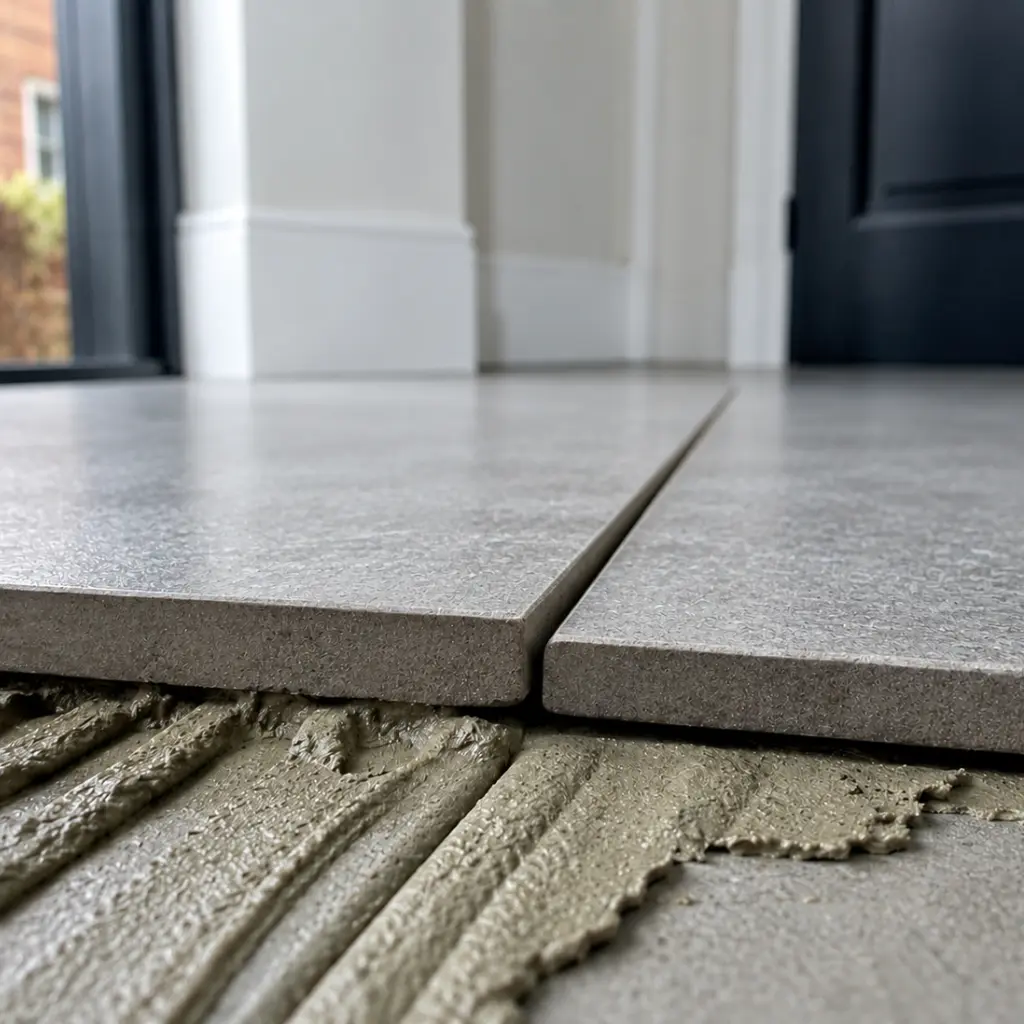
Tile lippage occurs when one tile sits slightly higher or lower than the tile beside it, creating a noticeable height difference across the surface. While it may seem like a minor issue at first, raised tile edges can affect both the appearance and practicality of a tiled area.
Tile lippage can occur on floors and walls, from bathroom refurbishments and kitchen splashbacks to hallway flooring and tile installations. In London homes, factors such as uneven floors, ageing properties, and complex renovation work can all contribute to the problem. Understanding what causes tile lippage helps homeowners identify potential defects early and avoid more extensive remedial work later.
Understanding Tile Lippage
What Is Lippage in Tile Floors and Walls?
Tile lippage refers to a difference in height between neighbouring tiles. Instead of forming a smooth and level surface, certain tiles sit slightly proud of those around them. This creates uneven tile surfaces that are often visible when viewed from certain angles.
Unlike chipped or cracked tiles, lippage is primarily an alignment issue. Although the tile itself may be undamaged, the finished installation lacks the flatness expected from a quality tiling project.
Why Homeowners Often Notice It After Completion
Tile lippage is not always obvious during installation. Once furniture, fittings, and lighting are in place, raised tile edges tend to become more noticeable.
Sunlight entering through windows can emphasise shadow lines across the surface, while everyday use makes even slight height variations easier to detect. What seemed insignificant during fitting can become difficult to ignore once the room is fully finished.
Uneven Subfloors and Walls
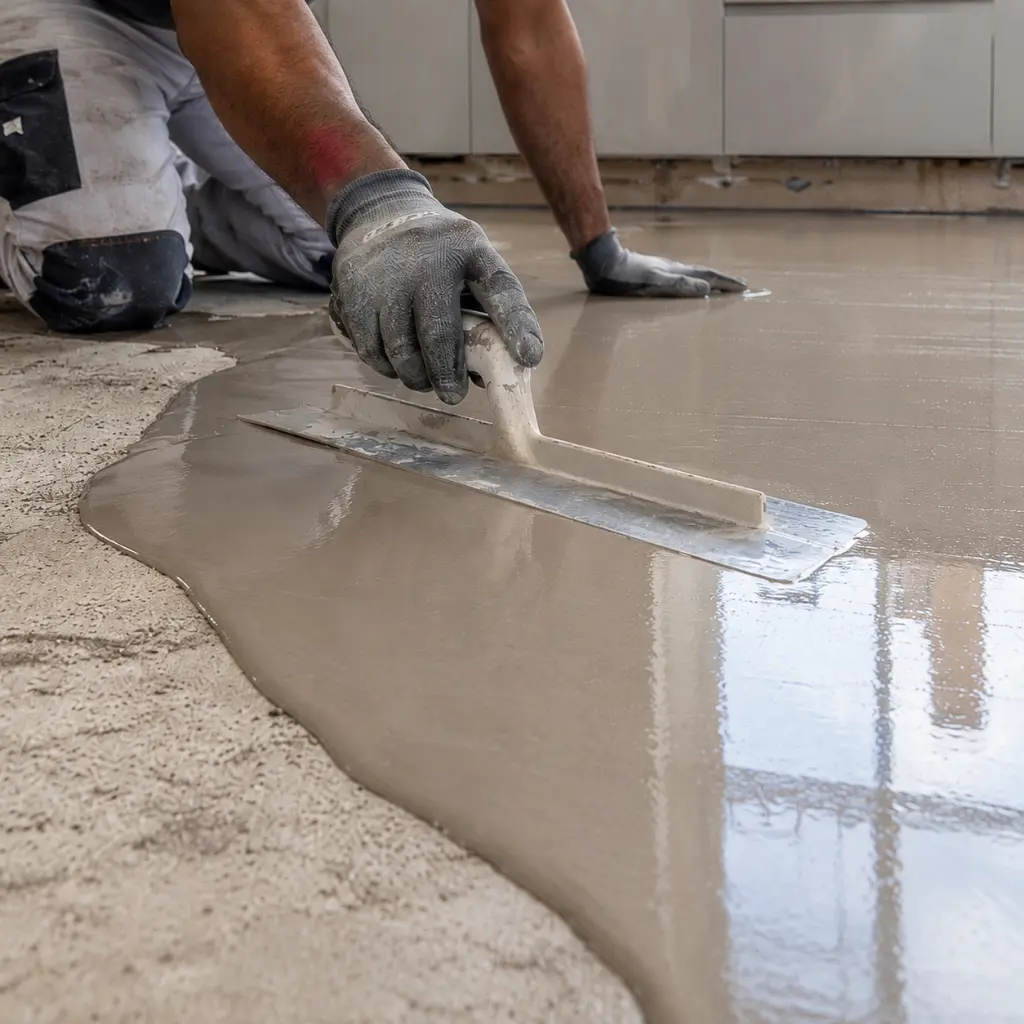
Tile lippage often occurs when floors or walls contain dips, high spots, or uneven areas. These surface irregularities can prevent adjacent tiles from sitting at the same height, resulting in noticeable differences along tile edges.
Even small imperfections beneath the tiled surface can create uneven tile alignment, particularly when larger format tiles are used. As tile size increases, variations in the substrate become more visible in the finished installation.
Older London Properties Can Increase Lippage Risk
Many London properties feature uneven timber floors, settled substrates, and walls that have shifted slightly over time. These irregularities can increase the likelihood of neighbouring tiles sitting at different heights, making tile lippage more common in older buildings.
The effect is often more noticeable where larger tiles are installed, as wider tile surfaces tend to highlight underlying unevenness more clearly.
This keeps both sections focused entirely on uneven surfaces causing lippage, without discussing how installers should fix the problem.
Tile Warpage and Manufacturing Variations
How Warped Tiles Contribute to Lippage
Not all lippage is caused by workmanship alone. Some tiles contain slight manufacturing variations that affect tile flatness. This is known as tile warpage.
Warped tiles may have subtle curves across their length or width. When neighbouring tiles are positioned together, these variations can create tile height differences even when the installer follows good practice.
Why Large Format Tiles Require Extra Care
Large-format tiles can make tile lippage easier to notice because any difference in height between adjacent tiles is spread across a larger surface area. What might appear minor on smaller tiles often becomes more apparent with larger formats, particularly when light reflects across the finished surface. This increased visibility is one reason why lippage is often more noticeable on installations using large-format tiles.
Adhesive Application Mistakes
Insufficient Adhesive Coverage
For tiles to remain secure, adhesive should be distributed evenly beneath the entire surface. When gaps are left underneath, sections of the tile may lack adequate support, making the installation more vulnerable to movement and stress.
Over time, these unsupported areas can contribute to issues such as hollow sounds when tapped, lifting at the edges, or a weakening bond between the tile and substrate. While these defects may not be obvious straight away, they often become more noticeable as the tiled surface is exposed to everyday use.
Common Installation Errors
Incorrect adhesive application remains a frequent cause of tile lippage problems. Using the wrong trowel notch size, applying uneven adhesive, or relying on spot bonding can all affect tile positioning.
Back buttering is often recommended for larger tiles because it improves adhesive bonding strength and helps achieve full adhesive coverage. Small adjustments during installation can make a significant difference to the finished result.
Problems with Tile Levelling Systems
Why Levelling Clips Are Not a Complete Solution
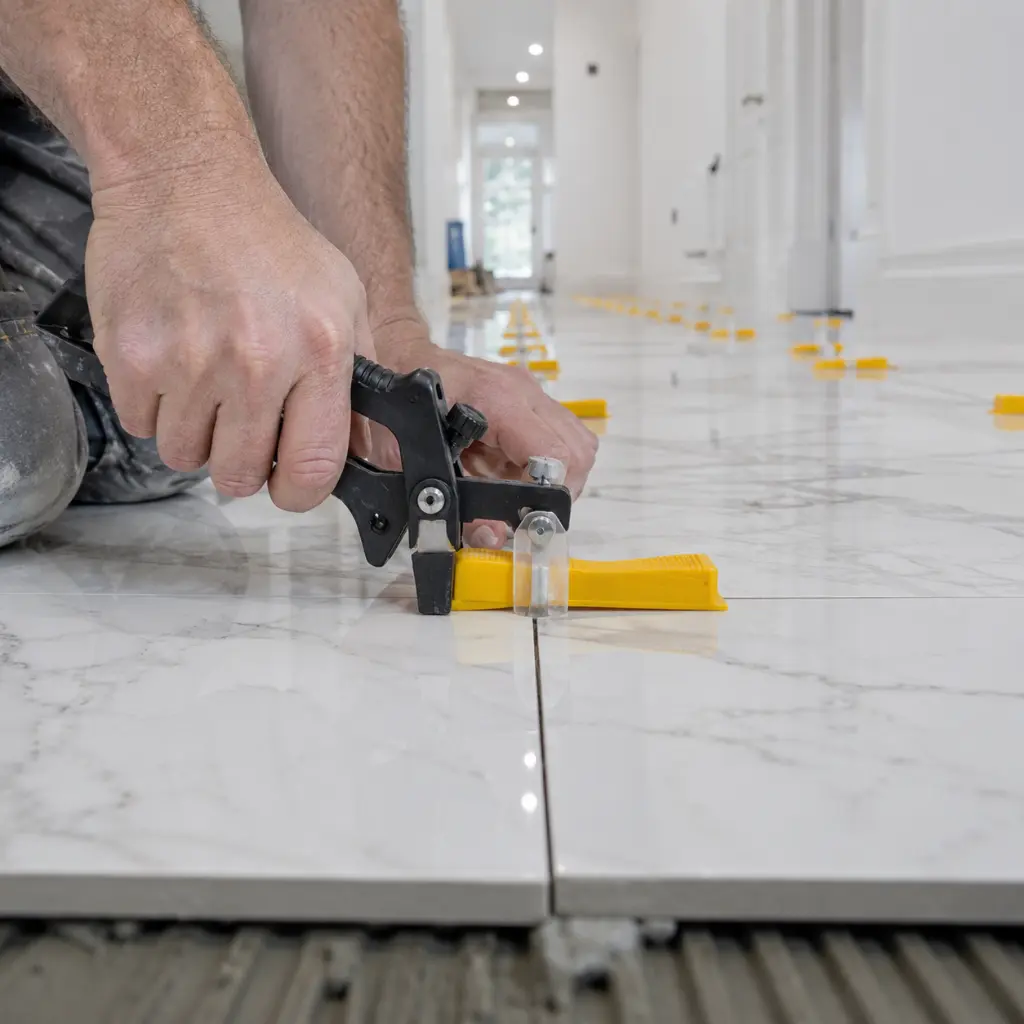
Tile levelling systems are designed to help control tile height differences during installation. Levelling clips and tile spacers can assist with alignment, but they do not replace proper preparation and workmanship.
If the substrate is uneven or adhesive coverage is inconsistent, levelling systems alone cannot eliminate every potential problem.
Mistakes That Still Lead to Lippage
Levelling clips are only one part of the installation process. Poor installation and alignment, inconsistent bedding, or a lack of regular checks during fitting can still result in uneven tile edges.
Achieving a flat finish relies on a combination of preparation, adhesive application, and attention to detail throughout the installation rather than any single product or tool.
Movement After Installation
Structural and Substrate Movement
Even well installed tiles can be affected by changes within the building over time. Seasonal conditions, minor settlement, and movement within supporting structures may place additional stress on the tiled area.
As these forces act on the substrate, previously level tiles can gradually develop slight variations in height, particularly where movement is concentrated in one section of the floor or wall.
Missing Expansion and Movement Joints
Movement joints allow tiled surfaces to accommodate natural expansion and contraction. Without them, stress can build within the installation.
Over time, this pressure may contribute to grout cracking, tile movement, and other floor tiling defects. Properly positioned expansion joints play an important role in maintaining long-lasting tile performance.
Why Tile Lippage Creates Ongoing Problems
Safety and Maintenance Concerns
Raised tile edges can create trip hazards, particularly in busy areas such as hallways, kitchens, and commercial premises. Even minor height differences may become problematic where foot traffic is frequent.
Uneven surfaces can also make routine cleaning more difficult. Dirt and debris often accumulate around raised edges and uneven grout lines.
Damage That Can Develop Over Time
Raised tile edges are exposed to greater wear than the surrounding areas. Repeated contact from footwear, furniture, and cleaning equipment can gradually affect the edge of the tile.
As wear increases, edge chipping, grout deterioration, and localised damage become more likely. Addressing lippage early helps protect both the appearance and durability of the installation.
Identifying Tile Lippage in Your Home
Signs Homeowners Commonly Notice
In many cases, tile lippage becomes noticeable through appearance rather than measurement. Light reflecting across the surface may highlight raised edges, while grout lines can appear uneven when viewed from certain angles.
On floors, the difference is often felt underfoot before it is measured. Homeowners frequently become aware of the issue during everyday use rather than immediately after installation.
Professional Inspection Methods
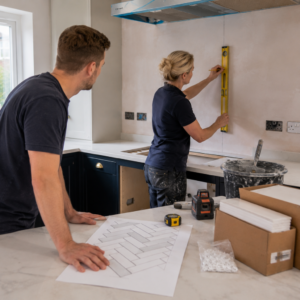
When lippage is suspected, measuring the surface provides a clearer picture than visual inspection alone. Straightedges are commonly used to identify high spots, while laser levels help assess larger floor and wall areas.
These checks help determine whether the issue is isolated to a few tiles or forms part of a wider installation concern that may require corrective work.
Repair Options for Uneven Tile Edges
When Minor Corrections May Be Possible
In some situations, specialist tile grinding or honing may reduce minor lippage, although replacement is often preferred where the height difference is significant.
Such repairs are generally suitable only where the height difference is relatively small and the tiles remain securely bonded.
When Tile Reinstallation Is the Better Option
Where uneven tile edges are widespread, replacing individual tiles may not resolve the underlying issue. Problems linked to poor preparation, inadequate support, or movement beneath the tiles often require a more comprehensive solution.
In these circumstances, removing and reinstalling the affected section usually provides a more reliable outcome than repeated localised repairs.
Preventing Tile Lippage from the Start
Best Practices During Installation
Reducing the risk of tile lippage requires attention throughout the fitting process. Surface levelling, accurate setting out, suitable adhesive coverage, and correctly positioned movement joints all contribute to a more consistent result.
Each stage supports the next, helping create a flatter tiled surface and reducing the likelihood of alignment issues developing later.
The Importance of Experienced Tiling Workmanship
Good workmanship is built on consistency from start to finish. Accurate setting out, careful adhesive application, regular alignment, and precise tile cutting during installation checks all contribute to a smoother finished surface.
For projects involving bathrooms, kitchens, hallways, or Victorian slate tiling, attention to these details helps reduce the risk of lippage and supports a longer-lasting finish.
Conclusion
Tile lippage can develop for a variety of reasons, ranging from uneven substrates and warped tiles to adhesive issues and structural movement. Understanding the underlying cause is essential when deciding how best to address the problem.
Where uneven tile edges become more noticeable over time, early investigation is usually worthwhile. Abel Tiler assists homeowners across London with floor tiling, wall tiling, Victorian slate tiling, and tile repair work, helping maintain attractive and durable tiled surfaces.