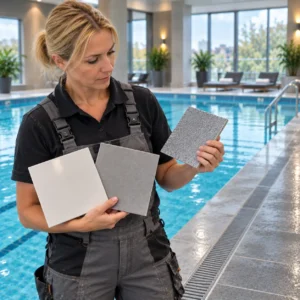
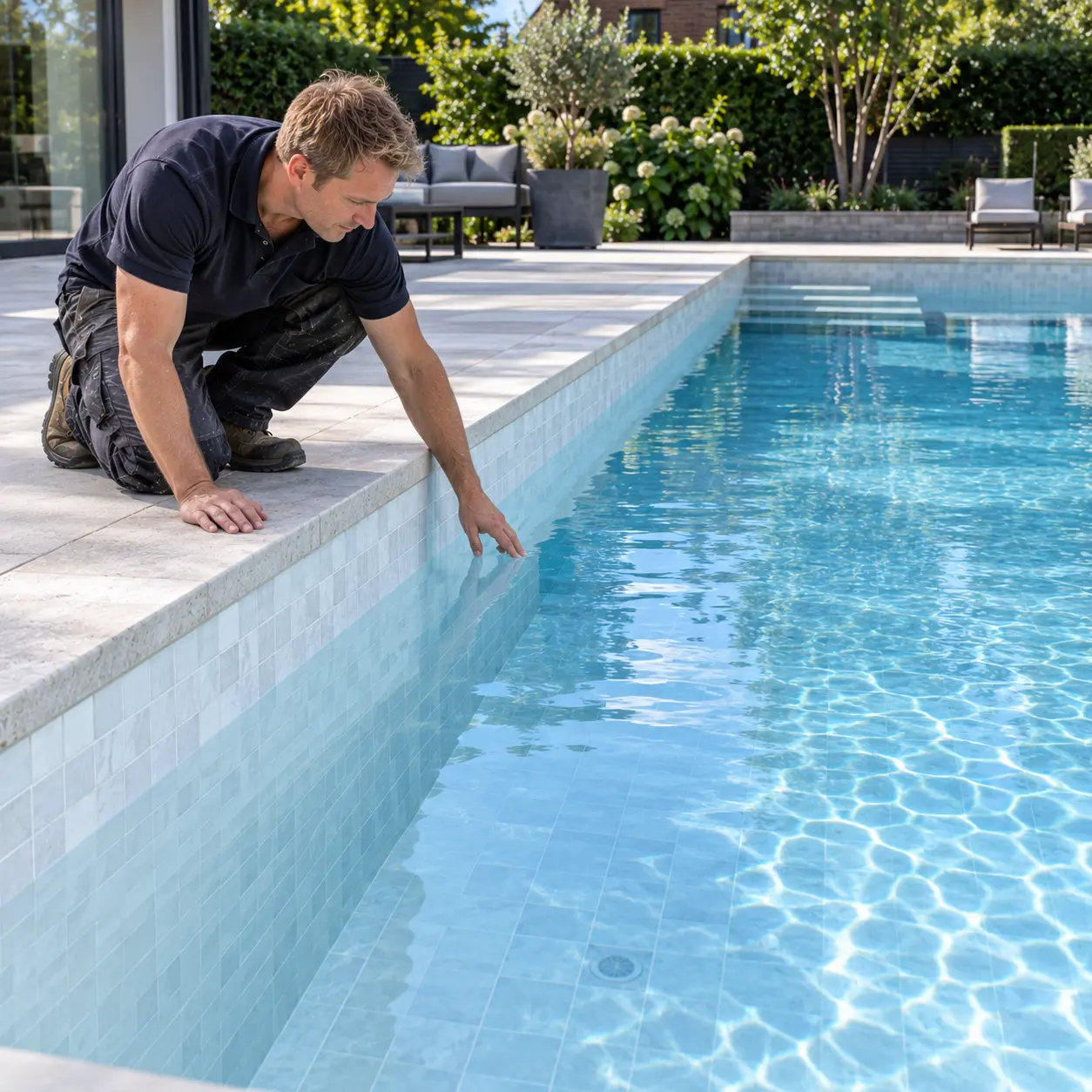
Quick Summary
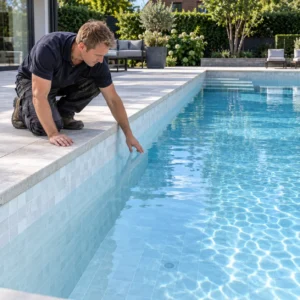
Swimming pool tiles are blue because the water is already blue before the tile does anything. Water absorbs light from the red end of the spectrum as it passes through, so any real depth of it returns blue-green light, even over a white surface.
Blue tiles work with that rather than against it. They strengthen the colour the water is producing, keep shadows and marks from standing out, and match what people expect a pool to look like.
Sky reflection adds the rest on a clear day. Which shade you choose, and whether to use blue at all, changes the finished water far more than most people expect. Expert swimming pool tilers in London can help you choose a tile colour and finish that suits the pool and its surroundings.
Why Swimming Pool Water Looks Blue
Fill a glass and the water looks clear. Fill a pool, and it does not, because colour in water depends on volume.
Light travelling through water loses its red and orange wavelengths first. What returns to your eye from a metre or more of water is weighted towards blue and green.
This happens regardless of what sits underneath. A white-plastered pool with no tile at all still reads pale blue in daylight, which is the clearest proof that the tile is not the source of the colour.
Why Are Blue Tiles Commonly Used in Swimming Pools?
Since the water supplies the colour, the tile decides how strongly it reads. A blue finish pushes the effect further and gives a consistent result across the whole pool.
Presentation is the second reason. A pale finish shows every shadow, streak and mark on the floor, while blue carries a pool through the days between cleans.
Safety matters as well. A swimmer or an object on the floor contrasts clearly against blue, which is why public and hotel pools rarely stray far from it.
Expectation finishes the argument. Guests and buyers read blue water as clean water, whatever the test kit says.
How Different Blue Tile Shades Affect Pool Water Colour
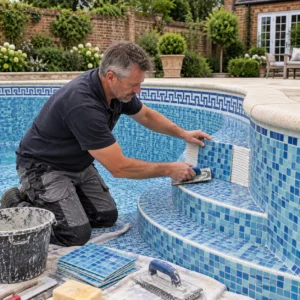
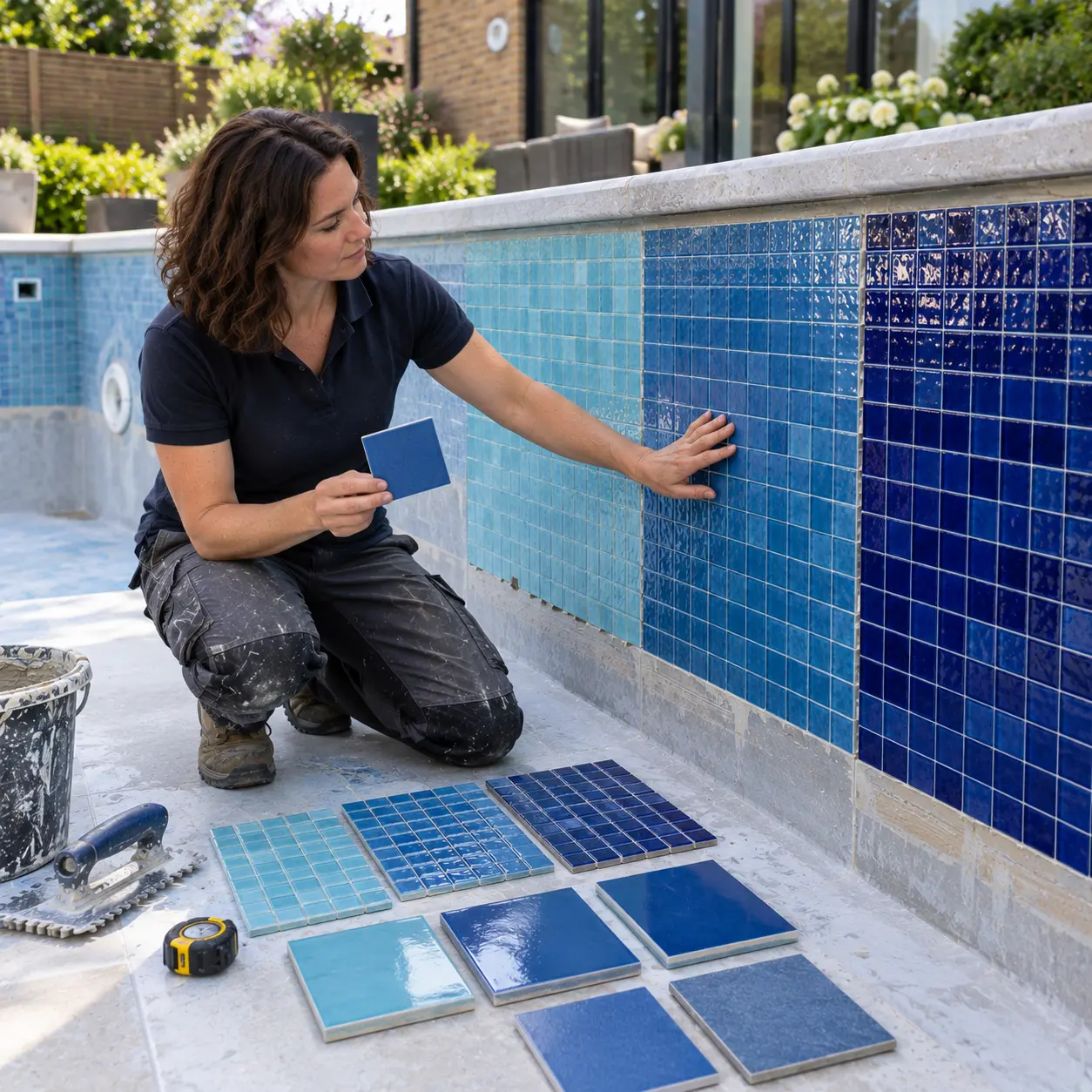
Different shades of blue can create noticeably different results, even when the pool has the same shape and lighting. Mid-blue tiles give the familiar swimming-pool appearance and tend to remain balanced in changing weather. Navy and cobalt tiles create a deeper, richer look, particularly in strong sunlight, although they can appear much darker on cloudy days. Turquoise and blue-green tiles introduce a warmer, more tropical feel and work particularly well with natural stone and planting.
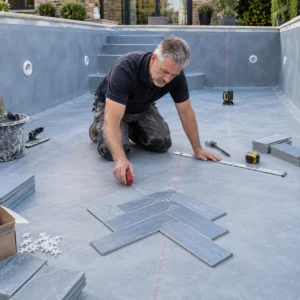
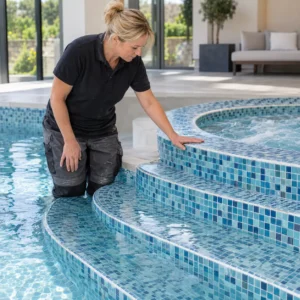
The tile finish also affects the final appearance. Glossy surfaces reflect more light and make the colour look brighter, while matt finishes give a softer and more subdued effect. The grout colour can influence the overall pattern too, especially with small mosaic tiles and with a directional layout such as herringbone in a pool interior, where the joints carry the design.
How to Choose Your Pool Tile Colour
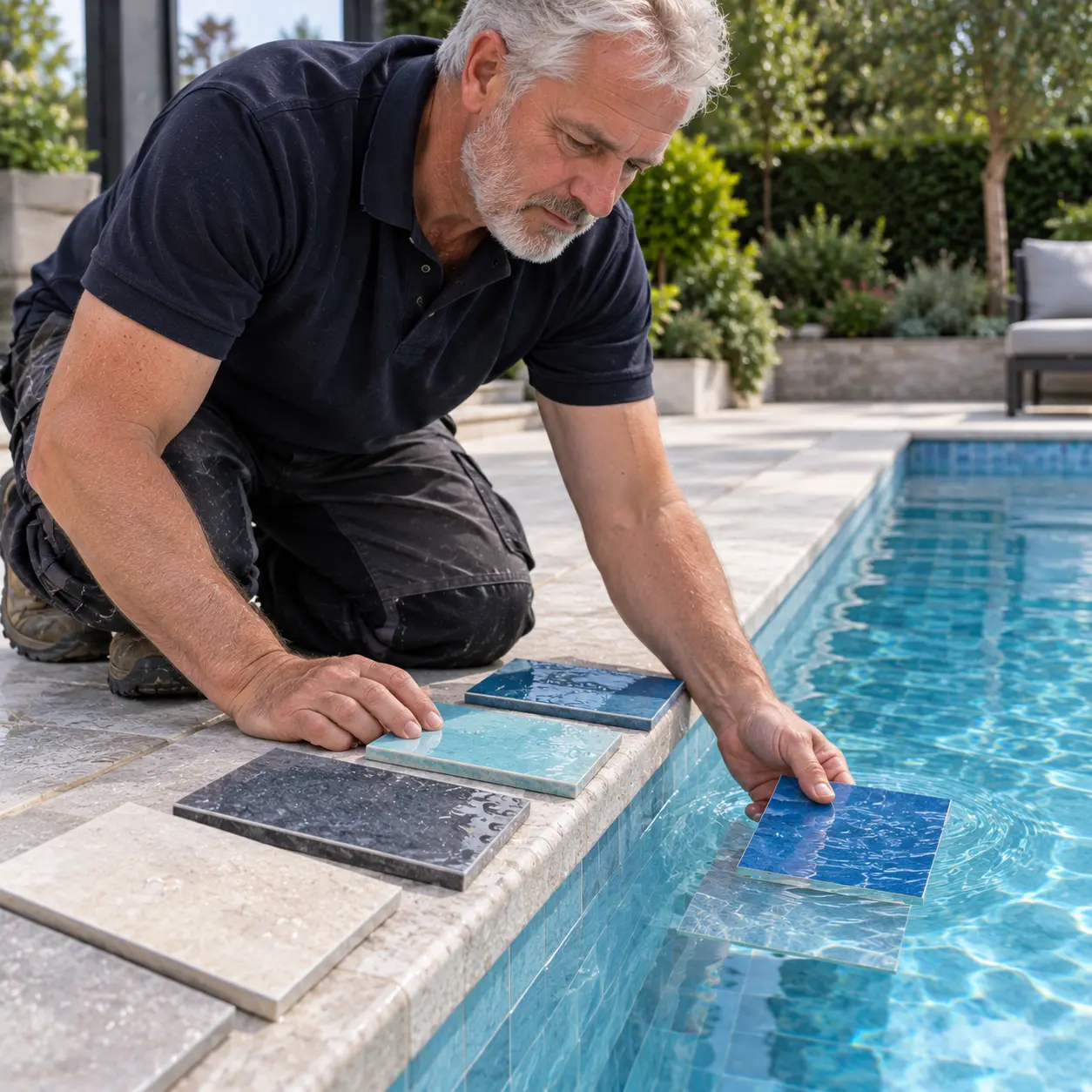
Test samples wet and in position. Hold them below the water line against the existing shell, or in a bowl of water on the poolside, because a dry sample tells you almost nothing.
Then look from where you will actually look. Most people view their pool from the terrace or a kitchen window rather than from inside it, and the angle changes the colour you see.
Match the tile to the surround and the house rather than to a mood board. A cool cobalt fights warm travertine paving, while the same paving flatters a green-blue.
Indoor pools follow different rules. They sit under artificial light all year, so the colour stays consistent, but a gloss finish does more work in a room that never gets direct sun.
For most projects, swimming pool blue tiles remain the sensible default. They hold their value at resale and keep visibility high on any pool used by more than one household.
What Colours Can You Use Instead of Blue Pool Tiles?
Blue is not the only option for a swimming pool. Choosing a different tile colour can completely change the character of the space.
White and pale grey tiles
Create a bright, clean-looking pool with a light and reflective appearance. They can make an indoor or shaded pool feel more open, although dirt and debris may be easier to notice.
Sand and beige tiles
Produce warmer, lagoon-style water and complement sandstone, travertine and other natural paving materials. They are a good choice when you want the pool to blend into a garden rather than stand out as a separate feature.
Mid and dark grey tiles
Give the pool a more contemporary appearance. They create cooler, steel-like tones that suit modern landscaping, rendered walls and simple planting schemes.
Black and charcoal tiles
Create a dramatic reflective surface, particularly outdoors where the pool can mirror the sky and surrounding vegetation. However, darker surfaces can also absorb more solar heat, so the location and amount of direct sunlight should be considered.
Green tiles
Create a more natural, pond-like appearance and can work well with dense planting and informal garden designs. The main drawback is that green colouring can make early signs of algae or discolouration less obvious.
When Pool Discolouration Is a Water Problem, Not a Tile Problem
A pool that turns green or brown has a water problem, not a tile problem. Green usually points to algae or dissolved copper, and brown normally means iron in the supply.
Faded, dull tiles are a different matter. Calcium scale forms a pale film along the waterline, and sun cream and body oils leave a dull band just below it.
Both read as colour loss when the glaze underneath is perfectly sound. Wipe a small test patch, and if the colour returns, you are cleaning a film rather than replacing tiles.
Conclusion
The tile is not what makes a pool blue. It decides how deep, how bright and how warm that blue looks, alongside depth, light and everything reflected around it.
Abel Tiler London works on pool interiors across the city for homeowners, developers and commercial clients. If you are choosing a finish or reviving one that has lost its colour, ask our team for a free quote.