Quick Summary
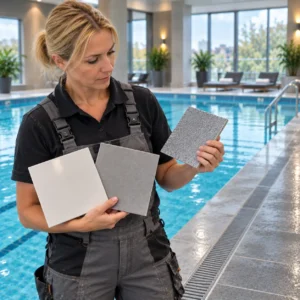
Swimming pool mosaic tiles are small pieces. Mosaics arrive as sheets, most commonly 300mm square, with the pieces held on a mesh or paper face. One sheet can carry well over a hundred pieces, which is why a mosaic pool holds far more joints than any other finish. Not every mosaic is pool-rated. A decorative bathroom mosaic may look identical on the shelf, yet lack the frost resistance and chemical stability a pool needs, so check the technical sheet before ordering.
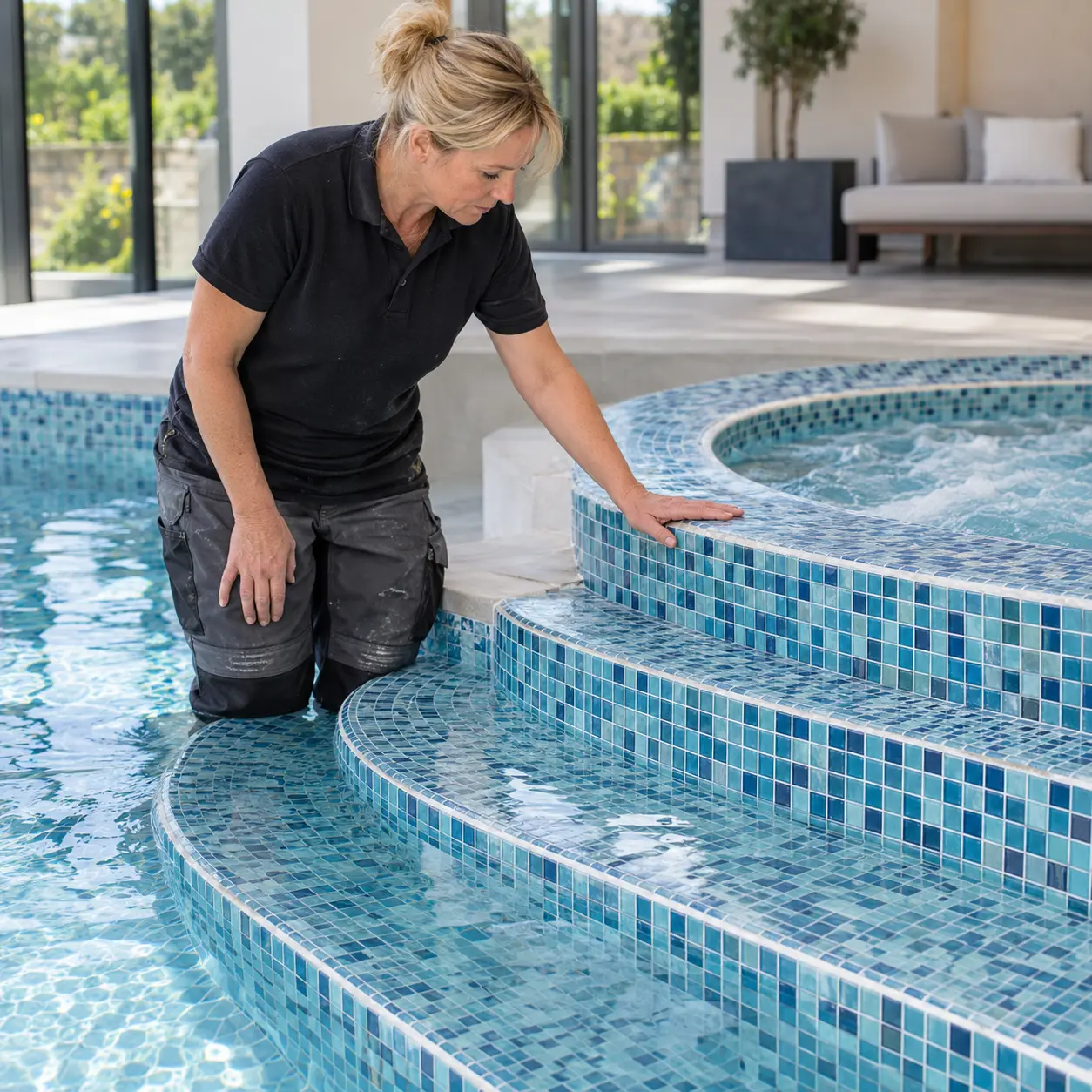
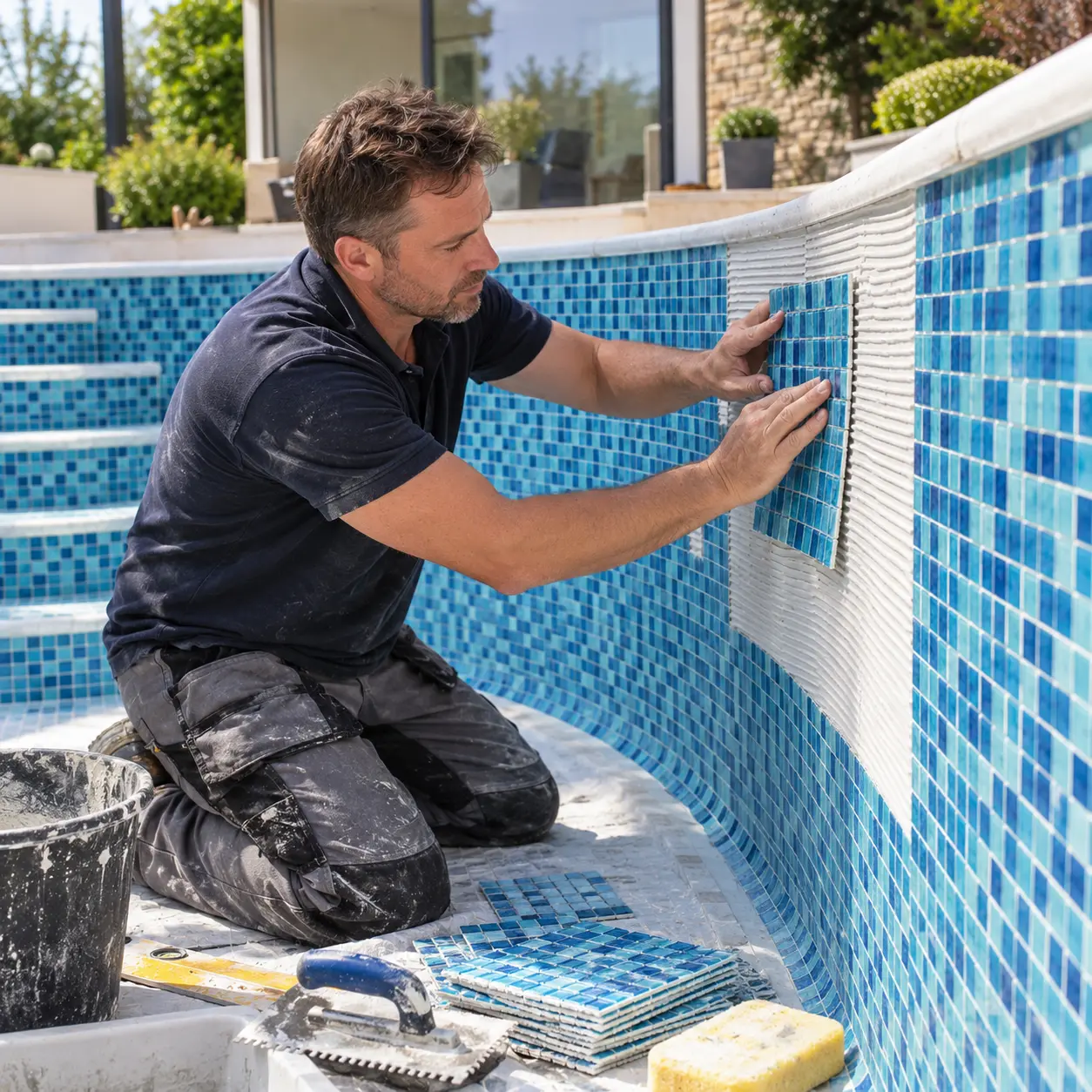
The format matches the shape of a pool. Radiused corners, Roman ends, coved floors and curved benches all take a mesh sheet without a single cut, and the finish stays continuous across them. For swimming pool tiling services in London, it is also important to use the right adhesive, grout and installation method for a long-lasting finish.
Popular Swimming Pool Mosaic Tile Designs
Classic Blue and Turquoise Mosaics
Tile colour and water colour are two different things. A white or pale mosaic produces a pale aqua, mid blue produces the familiar deep blue, sand tones read green-turquoise, and dark grey or green gives a lagoon effect.
Depth intensifies whatever you choose. The same mosaic looks two shades lighter on a sun shelf than it does at 1.8m, which is worth planning rather than discovering after filling.
Most pool ranges are supplied as blends of three to five tones for that reason. A single flat colour tends to look like a painted surface once the water settles.
Geometric and Contemporary Patterns
Moving water dissolves fine detail, so patterns need to work at scale. Broad bands, gradient blends that run from the deep end to the shallow end, and hexagon sheets all hold their shape under ripple. Restraint is also what moves a mosaic into a contemporary scheme rather than a period one, a split that runs through classic and modern pool tile styles .
Marine Life and Underwater Scenes
Turtles, dolphins and fish come as pre-assembled sets that drop into the field mosaic, along with depth markers and step markers. They are set out from a numbered plan rather than laid by eye.
Orientation matters more than the artwork. Position each piece so it faces the main viewing point, usually the house or terrace, or you will look at it upside down for the life of the pool.
Types of Pool Mosaic Tiles
Glass Pool Mosaics
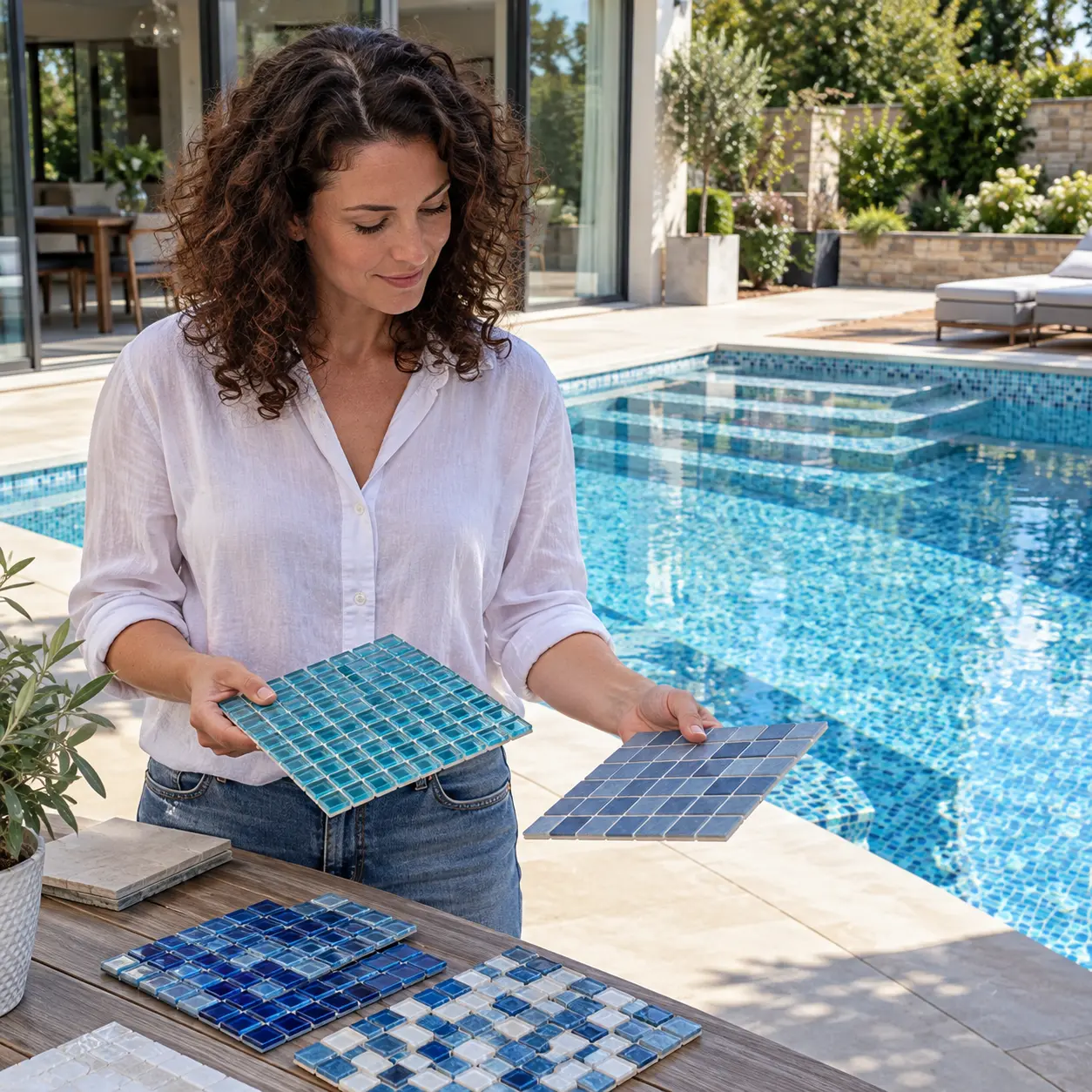
Glass is coloured throughout, so there is no glaze to wear off and no fading under sunlight. It reflects light back through the water, which gives glass mosaic pool tiles their characteristic sparkle.
The trade-off sits in the fixing. Adhesive shows through a translucent piece, so a white or light-coloured adhesive is essential, and many glass ranges call for an epoxy or polymer-modified system.
Porcelain Mosaic Tiles
Porcelain absorbs less than 0.5 per cent water, which is what makes it dependable through a British winter on an outdoor pool. It comes in matt and satin finishes as well as gloss.
It also reads calmer than glass, which suits schemes where the surrounding stone or planting should lead.
Ceramic Mosaic Tiles
Ceramic is glazed rather than coloured through, which opens up the widest palette and the hand-glazed variation many people want. The body is more porous than porcelain.
That makes it a natural fit for indoor pools and spa areas, where frost never enters the equation. Outdoors, only use a range specifically rated for it.
Handmade and Hand-Painted Mosaics
Handmade pieces vary in thickness, edge and tone, and that irregularity is the point. It also means slower fixing, wider joints and careful sorting across sheets so the variation spreads evenly.
Check the specification before falling for a sample. Plenty of beautiful artisan mosaic is made for walls and will not last submerged.
Printed and Custom Pool Mosaics
Printed and pixel-built mosaics turn a supplied image into a tile layout, made to order and delivered as numbered sheets. They allow a logo, a crest or a photographic scene on the pool floor.
Order these from final measured dimensions, not drawings. Lead times run long, and a custom sheet set cannot be trimmed to fit a shell that came out 40mm narrower than planned.
Where Can You Use Pool Mosaic Tiles?
Pool Floors and Walls
The main field takes the bulk of the material and sets the water colour. Setting out starts from the most visible wall so full sheets land where the eye goes first and cut pieces sit at the far end.
Pool Steps and Benches
Treads want a textured mosaic rather than a gloss one, and a contrasting line along each nosing helps swimmers judge the edge. Benches and seats take the same approach on their leading edge.
Sun Shelves and Shallow Areas
A shelf is stood on in almost no water, which is why we choose non-slip swimming pool tiles here as readily as on the surround.
Pool Edges and Decorative Features
A waterline band in a contrasting mosaic frames the pool and takes the worst of the scale and sun cream. Mosaic also lines overflow channels and spillover edges neatly, where the geometry gets awkward.
Key Benefits of Swimming Pool Mosaics
Set against a liner or a painted shell, the case for tiling looks like this.
- Durable and long-lasting. Colour is fired into the piece, so it does not fade or peel the way a painted finish does.
- Water-resistant. The pieces themselves take on almost no water. The adhesive and grout do the real work, which is why the fixing specification deserves as much attention as the tile.
- Chemical-resistant. Pool-rated ranges hold up to chlorine and salt chlorination without the surface breaking down.
- Low maintenance. Routine brushing and balanced water keep the finish. There is no repainting cycle to plan around.
- Suitable for detailed designs. Logos, lane markings and bespoke artwork are possible without any special manufacturing.
- Works well on curved surfaces. A damaged piece also lifts out and is replaced within the blend, without disturbing a large area of the finish.
- Creates a premium finish. Light passes into the pieces and back through the water, giving depth that a flat lining cannot reproduce.
Conclusion
Mosaic earns its place through shape, colour behaviour and repairability, provided the range is pool-rated, and the fixing matches it. Decide the material first, then the design.
Abel Tiler London installs swimming pool mosaics for homeowners, developers and commercial clients across the city, and you can read more about how we approach pool tiling in London. If you are planning a new pool or refreshing a tired one, get a free quote from our team.