Introduction
Swimming pool tiles need to look good, feel comfortable underfoot and provide reliable grip when wet. The most important factor is usually the tile’s surface finish. Matt and lightly textured tiles tend to provide better grip than polished or glossy finishes.
However, appearance and texture alone cannot confirm whether a tile is safe. Always check the manufacturer’s slip-resistance test results and make sure the product is suitable for wet, barefoot areas.
If you need professional advice or installation, Abel Tiler London provides swimming pool tiling in London for residential and commercial projects.
Why Slip Resistance Matters Around Pools
Pool surfaces are exposed to water, chlorine, sun cream, body oils and dirt, all of which can reduce grip. Outdoor pool surrounds may also remain damp after rain or develop algae in shaded areas.
The risk is higher around steps, ramps, pool edges and shallow areas where people enter or leave the water. Choosing suitable tiles, providing effective drainage and cleaning the surface regularly can help reduce this risk.
Understanding Pool Tile Slip Ratings
Do not depend only on product descriptions such as “non-slip” or “anti-slip”. Ask the supplier for the relevant test results.
DIN 51097 barefoot rating
DIN 51097 measures slip resistance in wet, barefoot conditions. Tiles are classified as:
Class A: Areas with occasional moisture
Class B: Pool surrounds, showers and changing rooms
Class C: Steps, ramps and sloping pool entrances
Some suppliers may provide a result under BS EN 16165 Annex A instead. Ask them to confirm whether the tile is suitable for your intended location.
Pendulum Test Value
A wet Pendulum Test Value of 36 or above generally indicates low slip potential on a level surface under the tested conditions. Check that the test was completed in wet conditions using the appropriate slider.
R rating
The R9 to R13 scale measures grip while wearing footwear. It can be useful for mixed-use areas, but it should not replace a barefoot slip test when choosing swimming pool tiles.
Best Non-Slip Tile Materials for Pools
Textured porcelain
Porcelain is a popular choice for pool surrounds because it is durable, easy to maintain and available in several textured finishes.
Porcelain tiles have a water absorption rate of 0.5 per cent or less under ISO 13006. For outdoor pools, choose a frost-resistant product approved for external use. Some ranges also include 20mm pavers for suitable raised or pedestal-supported decks.
Mosaic tiles
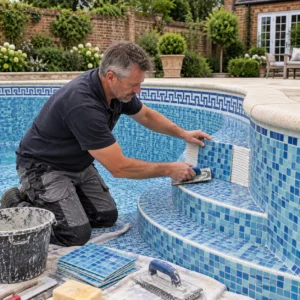
Mosaics work well on curved walls, steps, benches and detailed pool sections. Their smaller format creates more grout joints, which can provide additional grip.
Anti-slip glass mosaic
Glossy mosaic tiles are better suited to pool walls or areas below the waterline, rather than surfaces where people will be walking. Etched glass is only one option, and the way glass, porcelain, ceramic and handmade swimming pool mosaic tiles perform underwater differs from one material to the next.
Natural stone
Travertine, slate and granite can be used around pools when they have a suitable textured finish. Honed, brushed or flamed stone is generally more practical than polished stone, which can become slippery when wet.
Natural stone may also need sealing to protect it from moisture, staining and pool chemicals.
Choosing Tiles for Each Pool Area
Different parts of a swimming pool may require different tiles.
Pool surrounds and decks
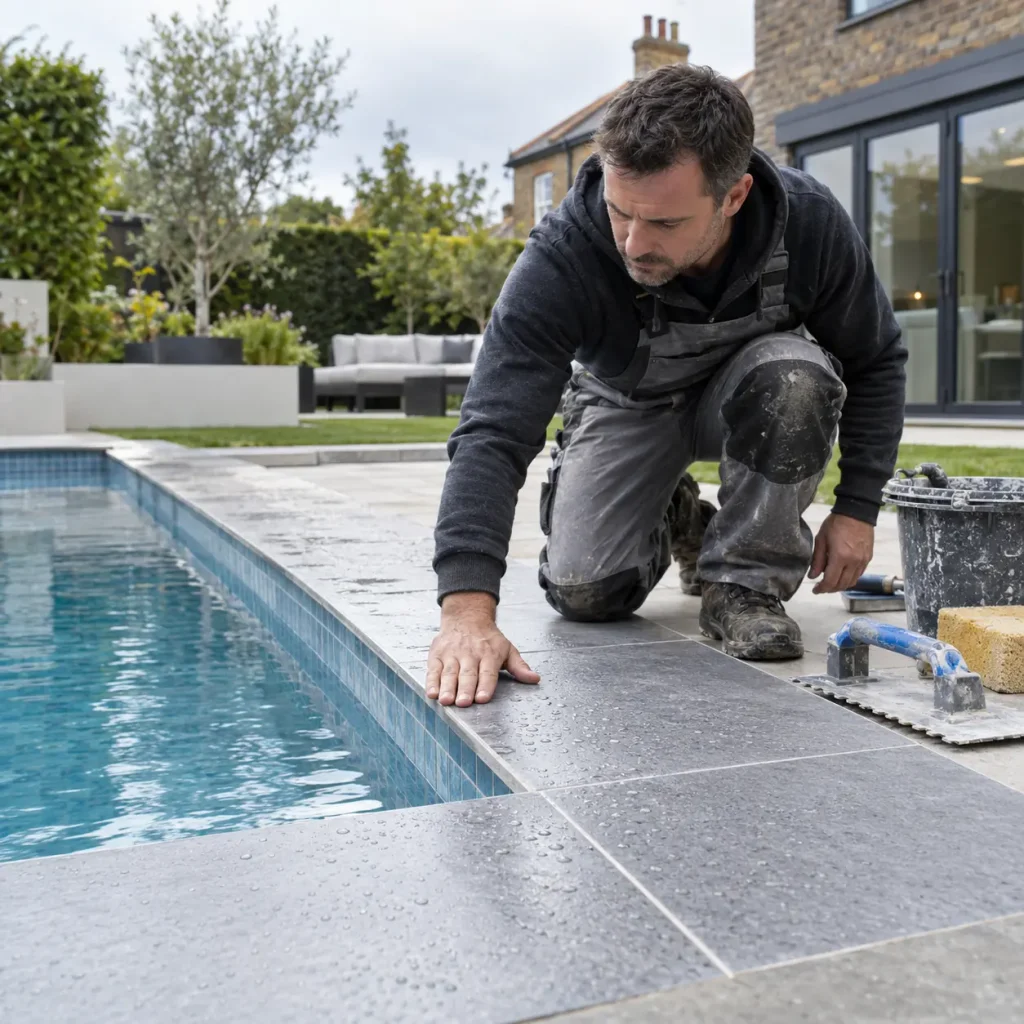
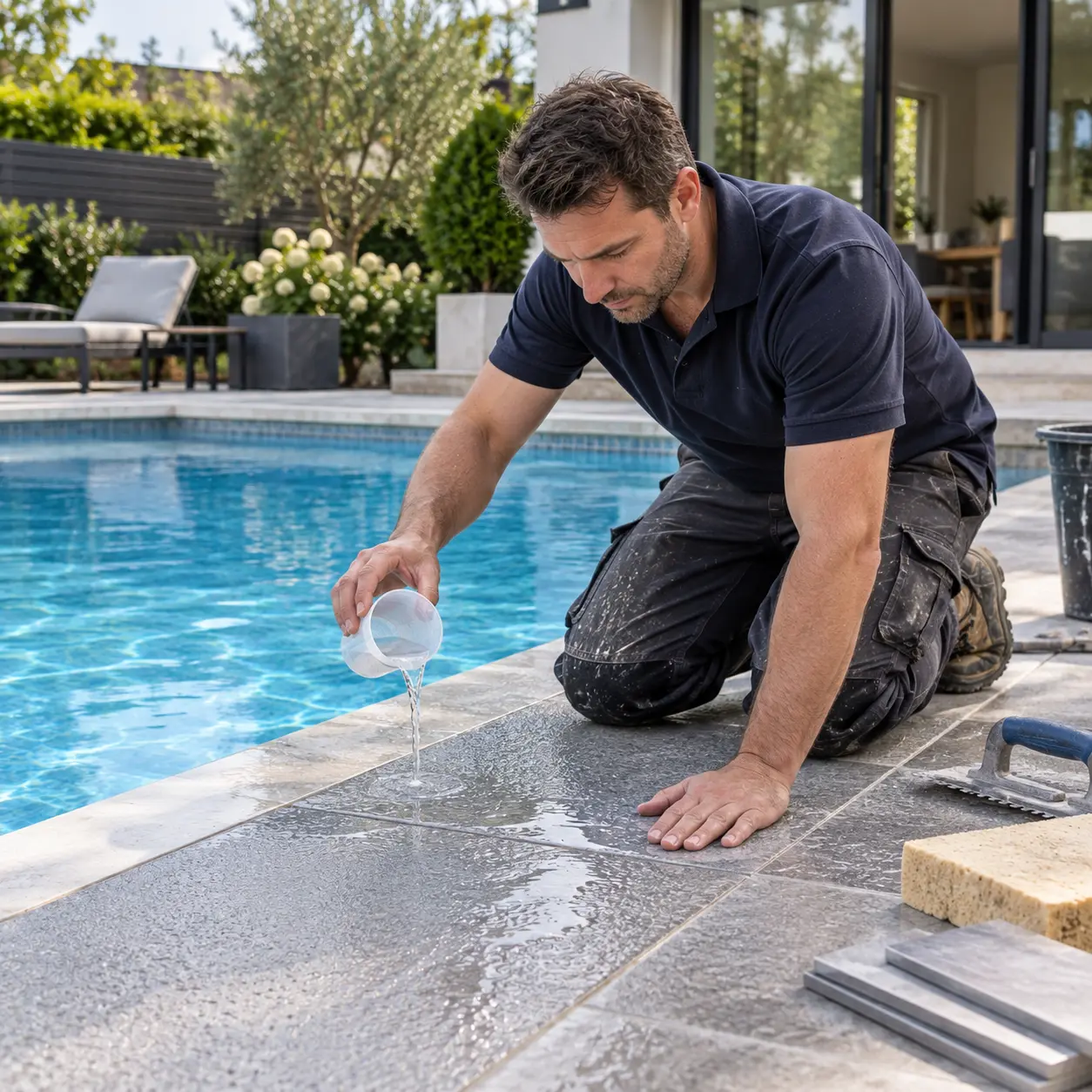
Pool surrounds need a surface that provides grip without feeling excessively rough. Class B is commonly used for level wet areas. Outdoor tiles should also be frost resistant, and the surface must allow water to drain efficiently.
Rounded or bullnosed coping can create a smoother and more comfortable pool edge.
Steps and ramps
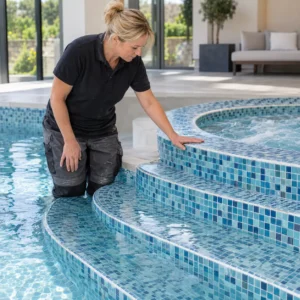
Steps, ramps and sloping entrances need stronger grip. Class C is generally more suitable for these higher-risk areas. Contrasting tiles can also be used along step edges to make changes in level easier to see.
Pool interiors and waterlines
Pool interior tiles must withstand constant water exposure and pool chemicals. Textured finishes are useful on submerged steps, benches and shallow areas where people may stand.
For the waterline, choose tiles that are easy to clean because limescale, oils and sun cream can collect there.
Indoor pool areas
Textured porcelain and small-format tiles are practical for indoor pool halls, showers and changing rooms. Smaller tiles can also make it easier to form slopes towards floor drains.
What to Check Before Buying Pool Tiles
Before ordering, confirm:
The barefoot slip rating
A wet PTV of 36 or above, where available
Frost resistance for outdoor use
Chlorine or saltwater compatibility
UV stability for exposed areas
Suitable coping and step tiles
Recommended pool-grade adhesive and grout
Cleaning and sealing requirements
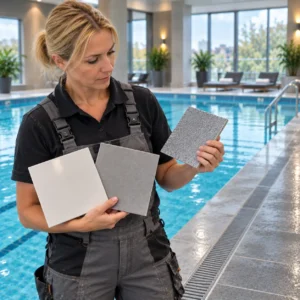
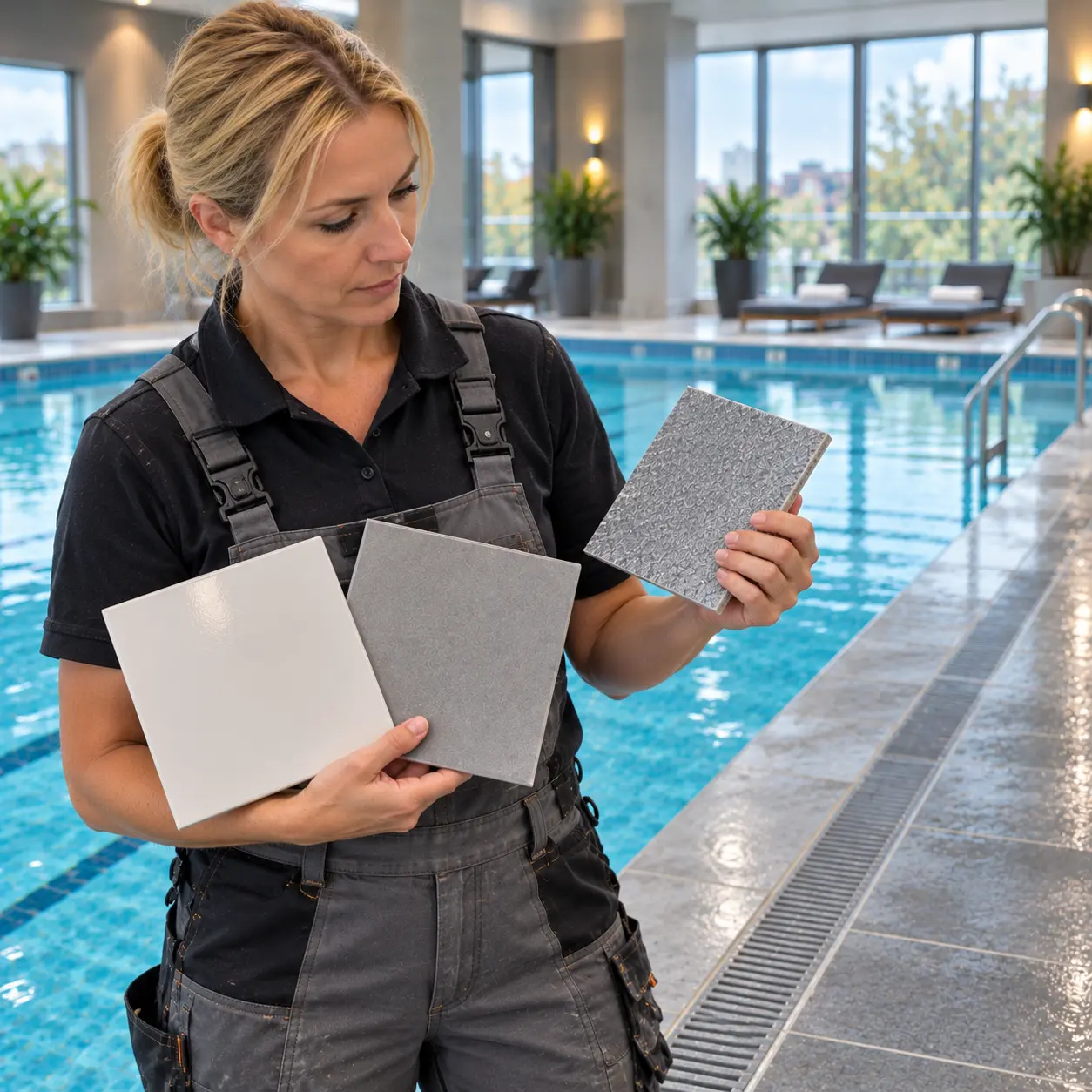
Request a sample to check the colour, finish and comfort underfoot. However, a sample cannot replace proper test results from the manufacturer.
Grip, Comfort and Maintenance
The roughest tile is not necessarily the best option. Heavily textured surfaces may feel uncomfortable and can trap dirt. A lightly textured finish often provides a better balance between grip, comfort and easy cleaning.
Maintenance also affects safety. Algae, limescale, oils and cleaning residue can make even a correctly rated tile slippery over time.
Conclusion
The best non-slip swimming pool tiles combine a suitable barefoot rating with a comfortable, practical finish. Class B is commonly used for level pool surrounds, while Class C is better suited to steps and ramps. Outdoor tiles must also be frost resistant, and every pool area needs effective drainage and regular cleaning.
Abel Tiler London installs pool tiles for homeowners, developers and commercial clients. Explore our swimming pool tiling services across London or contact our team for a free quote.