Quick Summary
Classic vs modern pool tiles differ in three practical ways: tile size, surface finish and colour. Classic pools use small mosaic squares, usually around 20mm to 25mm, in blended blues and greens with a decorative border at the waterline. Modern pools use large-format porcelain in a single matt tone or a stone effect, with narrow joints and straight lines.
Neither style suits every pool. The choice usually follows the architecture of the house and the material of the terrace rather than the pool itself. When planning swimming pool tiling work in London, it is worth considering how the tiles will fit with the rest of the garden and property.
What Defines Classic Pool Tiles?
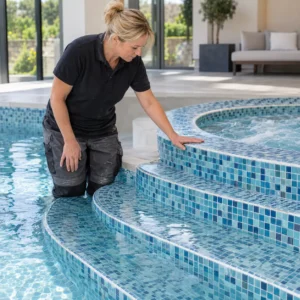
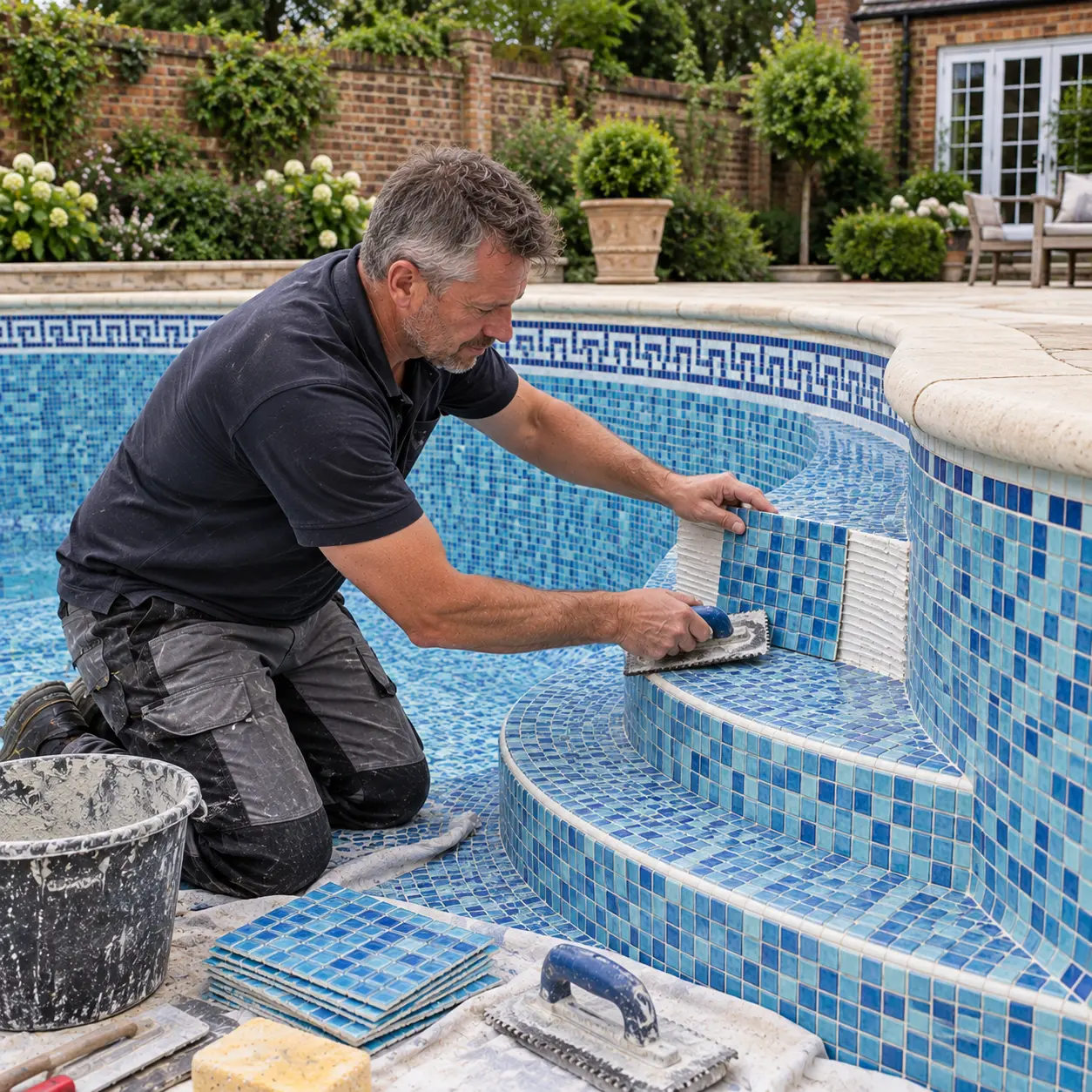
Classic pool tiles are small mosaic squares supplied on mesh-backed sheets, most often in glass or glazed ceramic. The sheets fold around curves, coved corners and rounded step nosings, which is why mosaics have lined swimming pools since Roman bathing pools. Glass and ceramic behave differently once submerged, and so do the porcelain, handmade and printed ranges that sit alongside them in swimming pool mosaic tiles.
Traditional swimming pool tiles rely on blended colour rather than one flat shade. A single sheet often carries four or five tones, so the water changes appearance as depth and light shift across the pool.
Gloss does the rest of the work. A glazed surface reflects movement on the water and makes the pool read deeper than it measures.
What Defines Modern Pool Tiles?
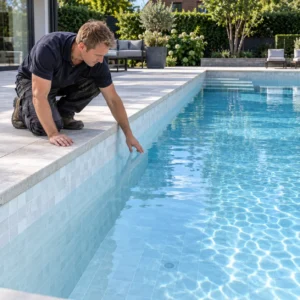
Modern pool tiles work at the opposite scale. Large-format porcelain, commonly 600mm squares or 1200mm by 600mm planks, covers the interior and the terrace with very few joints.
Rectified edges allow joints of about 2mm to 3mm, so the surface reads as one plane instead of a grid. Matt and honed finishes replace gloss, which calms reflection and gives the water a still, deep appearance.
Colour is handled differently too. A modern scheme usually holds one tone across the whole surface and lets water depth create the variation, while stone, concrete and timber effects tie the pool to a contemporary extension rather than setting it apart.
Classic vs Modern Pool Tiles: Key Differences
Traditional vs modern pool tiles diverge in four areas that affect the build as much as the look.
Tile Designs for Classic Pools
Mosaic Patterns and Borders
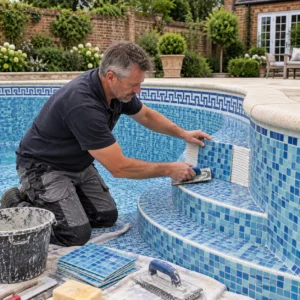
A border band at the waterline is the signature classic detail. Greek key, wave and rope patterns in a contrasting tone frame the water and disguise the line where scale and sun cream gather.
Scale the pattern to the pool. A deep band that suits a full-length pool overwhelms a small plunge pool, and a busy floor medallion loses its shape once the water moves.
Mediterranean-Inspired Designs
Mediterranean schemes lean on azure and turquoise blends, hand-glazed tiles with visible variation, and warm surrounds in travertine or terracotta. Roman-end steps and curved corners suit the style because mosaic wraps them cleanly.
The look depends on the setting as much as the tile. It settles well against rendered walls and planting, and less well against grey composite decking.
Traditional Blue and Decorative Tiles
Blue is not one decision. Cobalt and navy read almost black under an overcast London sky, while mid turquoise and aqua hold their colour through the same conditions.
Try the tile when it is wet and, if possible, outside in conditions similar to your pool. A tile that looks good and feels safe in a dry showroom may feel quite different once it is wet.
Tile Designs for Modern Pools
Simple Geometric Designs
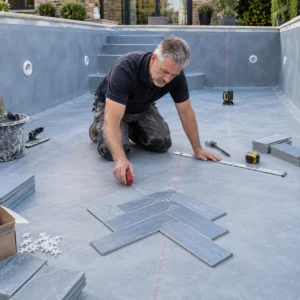
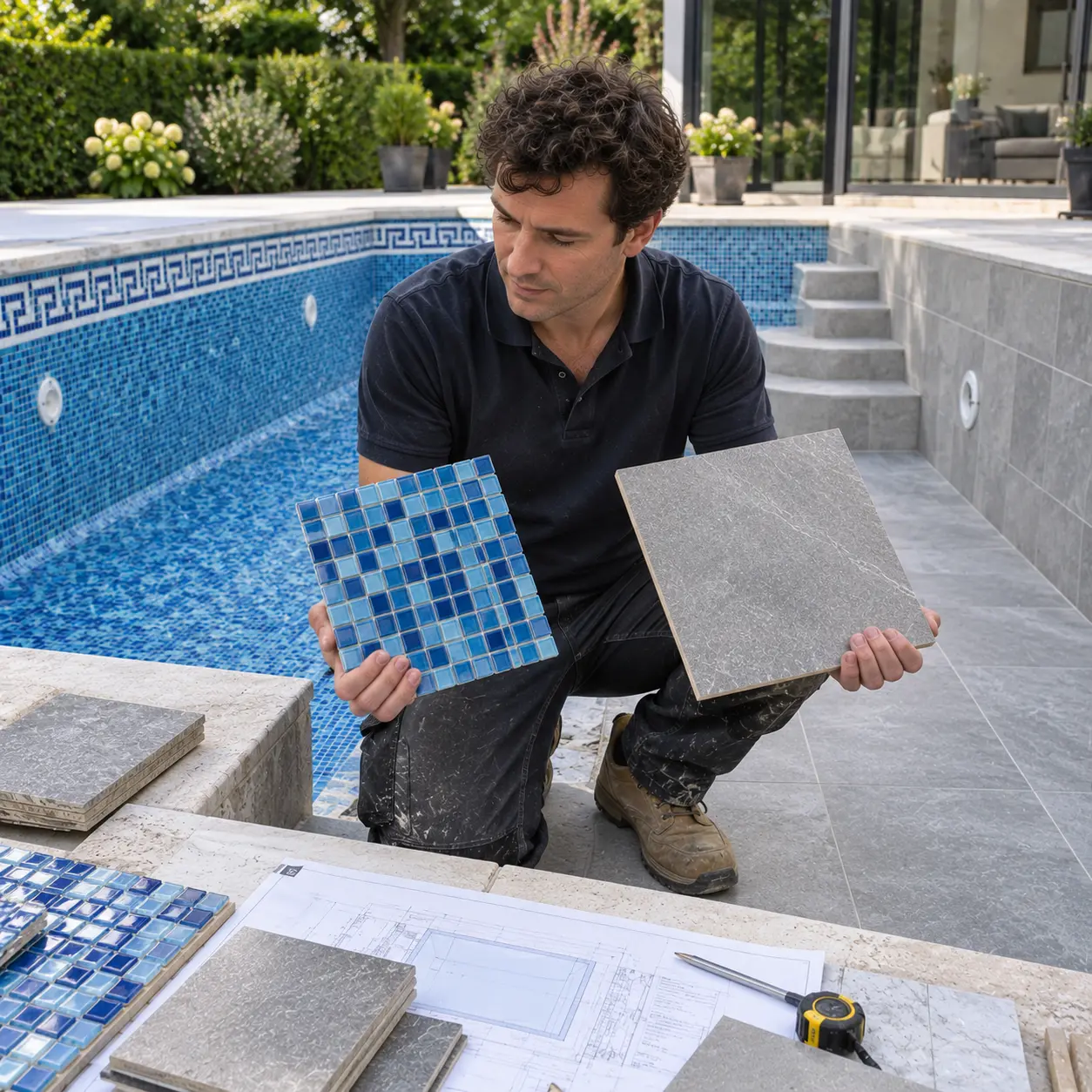
You can get a modern look without using lots of colours or patterns. Hexagon tiles, long narrow tiles and simple stacked layouts are all good options. Stack bond is especially neat with rectified tiles because the straight edges make the grout lines easier to keep in line, though a pattern set on the diagonal asks far more of the setting out, which is why herringbone swimming pool tiles are planned from a centre line rather than a corner.
Large-Format and Stone-Effect Tiles
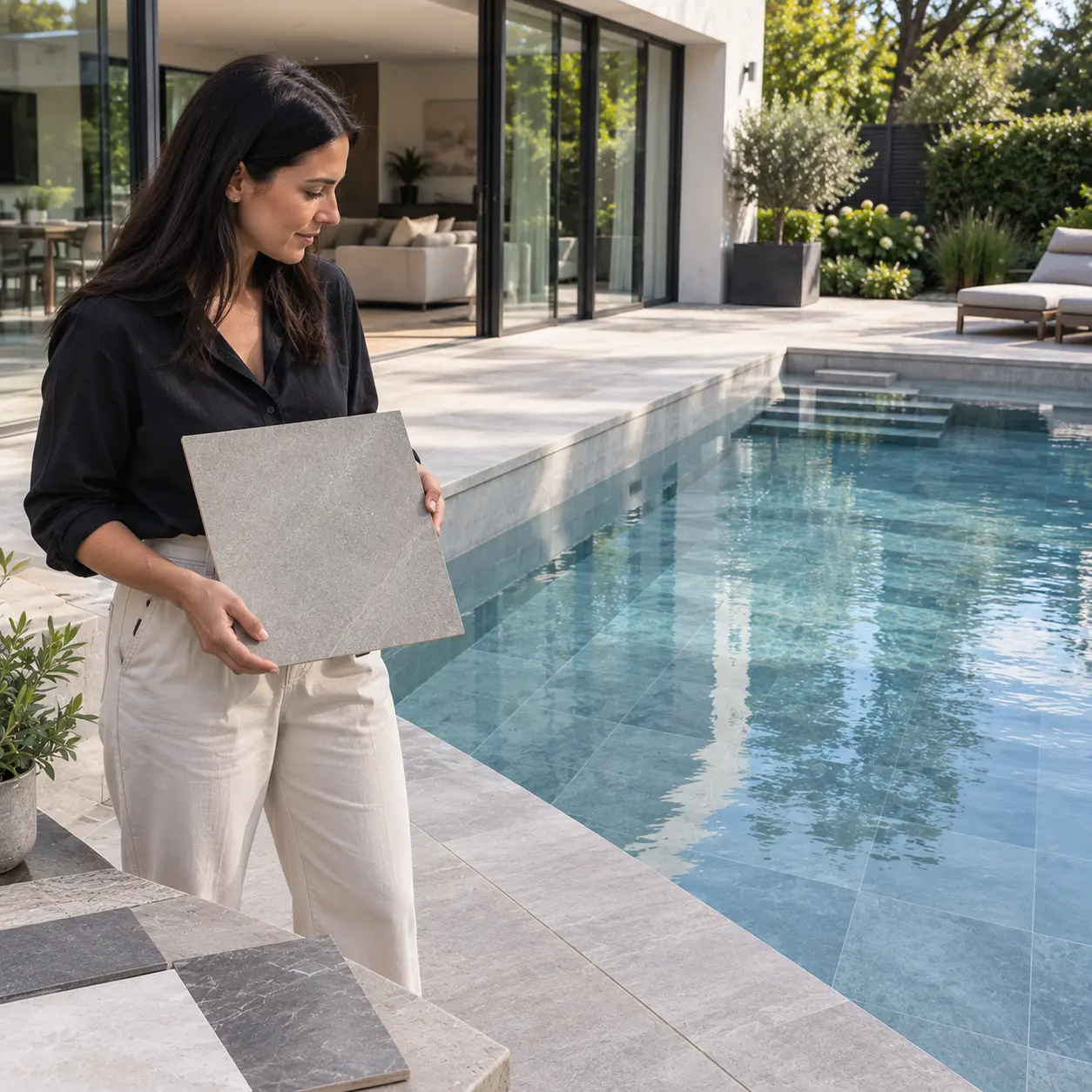
Stone and concrete-effect tiles can help tie the pool and patio together. For example, you could use 20mm porcelain paving on the terrace and a thinner matching tile inside the pool, creating a more consistent look around the coping.
The coping detail needs attention here. A large square-edged tile at the pool edge chips and feels sharp, so specify a rounded or bullnose profile at that transition.
Monochrome and Contemporary Colours
Graphite and very dark tiles can give the pool a reflective look, picking up the colours of the garden and sky. The downside is that leaves, dust and other bits of dirt are easier to notice, especially if there are trees nearby.
Pale sand and warm grey shades create a softer, more natural look and are a little better at hiding dirt between cleans. For a pool in a shaded courtyard, off-white tiles can help make the area feel brighter.
How to Choose the Right Pool Tile Style
Take a look at the style of your home first. Many London properties have a Victorian or Edwardian feel, so a mosaic pool with stone coping can fit in nicely with the existing character of the house.
Then look at the shape. Freeform, kidney and curved-step pools push you towards mosaic, while a rectangular pool with a level deck gives large formats the straight runs they need.
Indoor pools change the calculation again. They sit under artificial light for much of the year, so Gloss keeps the room alive where a dark matt interior can feel heavy.
Finally, be realistic about the fitting. Mosaic takes considerably longer to set out and fix than large-format porcelain, so the decision affects programme, not only appearance.
Can Classic and Modern Pool Tiles Be Combined?
Yes, and mixed schemes are common in London gardens where a period house meets a contemporary rear extension. Let one style lead and allow the other a single appearance.
Three combinations work reliably. A modern porcelain terrace with a mosaic pool interior, a plain interior lifted by one decorative waterline band, or a minimal scheme with a classic pattern on the steps alone.
Keep the undertones consistent. Warm sand porcelain fights a cool cobalt mosaic, while the same porcelain sits comfortably beside a green-blue blend.
Conclusion
Both tile styles can work well around a pool. The best choice depends on the look of your home, the size of the terrace and the shape of the pool. Think about how the tiles will fit into the whole space before making your final choice.
Abel Tiler London fits both classic and modern schemes for homeowners, developers and commercial clients across the city. If you are planning a new pool or reworking a tired interior, speak to our team about a free quote, and we will talk through what suits your space.