Quick Summary
Green kitchen tiles can add colour, texture and character to a kitchen while working with a range of cabinet, worktop and flooring choices. From soft sage and pale green to richer olive and emerald shades, different tile colours can create very different effects.
The right choice depends on more than the colour alone. The tile finish, pattern, lighting and surrounding materials all affect how the finished kitchen looks. This article explores the main green tile shades, colour combinations, patterns and areas where they can be used. If you are planning a tiled kitchen, kitchen tile installation in London can help bring the chosen design together with a suitable finish.
Why Choose Green Kitchen Tiles?
Green works across a wide range of kitchen designs because it can be soft and understated or deeper and more dramatic. Current UK kitchen design coverage continues to feature green in shades ranging from sage and olive to deeper forest tones, with tiles being used to introduce colour through splashbacks and other areas.
Add Colour Without Overwhelming the Kitchen
A green tiled splashback can introduce colour to an otherwise neutral kitchen without covering every wall or changing the cabinetry. This can be useful if you want a noticeable feature while keeping the rest of the room relatively simple.
Create a Natural and Relaxed Look
Green works particularly well alongside natural materials such as timber and stone. Softer shades such as sage can create a quieter appearance, while olive and deeper greens can give the room more depth.
Work With Different Kitchen Styles
The shade, tile shape and layout can make green tiles suitable for both traditional and contemporary kitchens. A simple rectangular tile can create a classic appearance, while a stacked layout or stronger colour can give the same basic tile a more modern feel.
How to Choose the Right Green Tile Shade
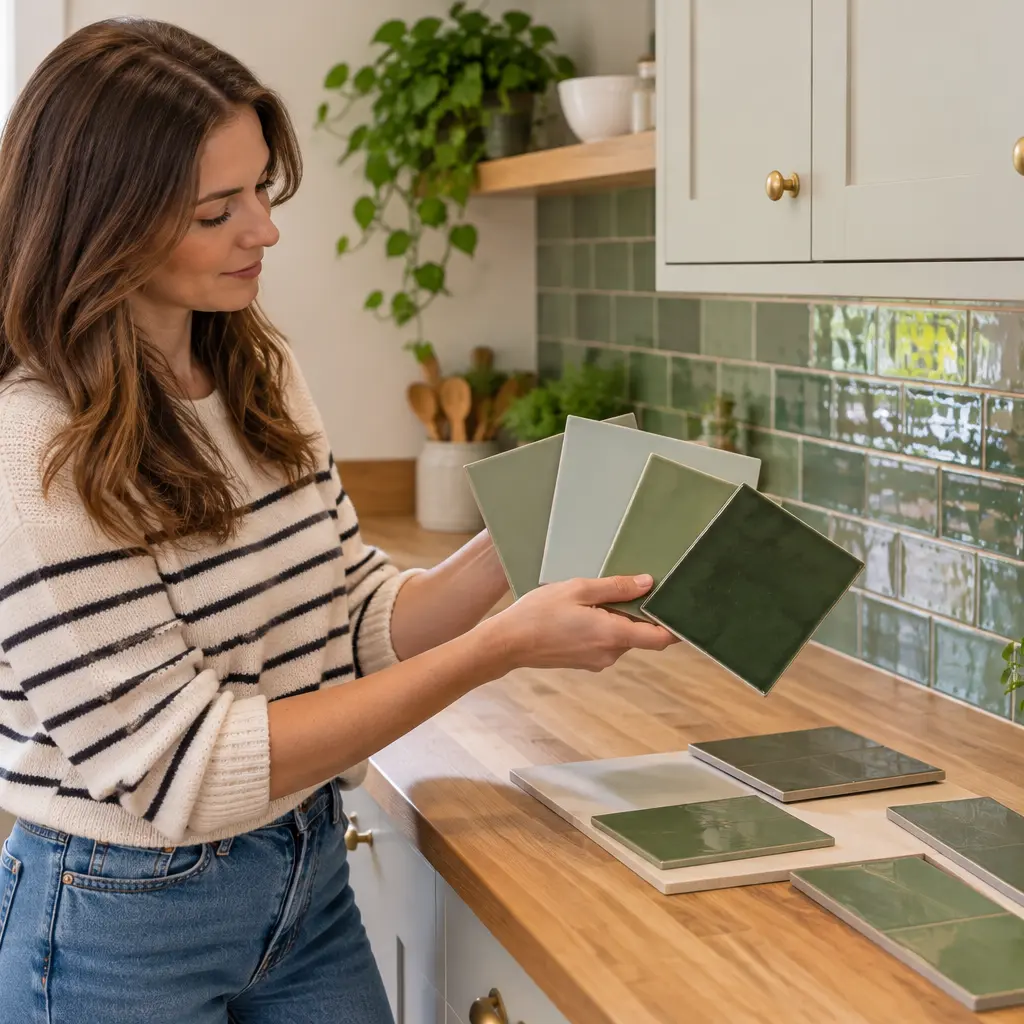
There is a significant difference between a pale sage tile and a deep emerald tile, so the shade should be considered alongside the size, lighting and existing colours in the kitchen.
Sage Green Tiles
Sage is a muted green that works well when you want colour without a strong contrast. It can sit comfortably alongside white, cream, timber and other soft neutral finishes.
Mint and Pale Green Tiles
Mint and pale green tiles can help maintain a lighter appearance. They can be useful for smaller kitchens or spaces where you want the tiles to add colour without becoming the main visual feature.
Olive Green Tiles
Olive has warmer, earthy qualities and can work well with timber, cream and other natural finishes. It can create a more grounded appearance than very pale green shades.
Emerald and Forest Green Tiles
Deeper greens create more contrast and can make a splashback or feature wall more noticeable. They work particularly well when balanced with lighter worktops, cabinetry or surrounding finishes.
Light vs Dark Green Tiles
Consider how much natural light reaches the kitchen before choosing a shade. Darker tiles can create a stronger visual effect, while lighter greens can help maintain a brighter appearance.
Green Kitchen Tile Colour Combinations
The colours surrounding the tiles can change how the green appears. Cabinets, worktops, grout, flooring and hardware should therefore be considered as part of the same scheme.
Green Tiles with White
White provides a clean contrast against green and can help prevent a darker shade from dominating the room. This combination works particularly well for splashbacks.
Green Tiles with Wood
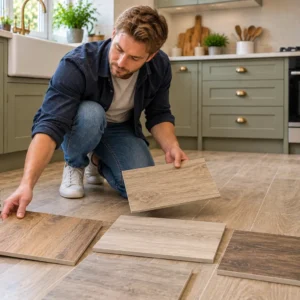
Green and timber create a natural-looking combination. Oak and other warm wood finishes can work particularly well with softer green shades, creating a cohesive kitchen scheme. The wood tone can come from cabinetry, worktops or wood effect floor tiles .
Green Tiles with Brass
Brass hardware can add warmth alongside green tiles, particularly when used with deeper or muted shades. Keep the number of competing finishes under control so the tiles remain part of a balanced colour scheme.
Green Tiles with Pink or Soft Warm Tones
Pink can create a noticeable contrast with green without requiring another strong primary colour. Softer pinks can be used through cabinetry, walls or smaller kitchen accessories.
Green Tiles with Neutral Colours
Cream, beige, light grey and other neutral finishes can give green tiles more space to stand out. This is useful when the tile is intended to be the main colour feature.
Green Kitchen Tile Patterns and Layout Ideas
The same green tile can produce very different results depending on how it is arranged. Layout should be considered alongside the size and shape of the wall rather than chosen separately.
Green Subway Tiles
Rectangular subway or metro-style tiles offer a familiar kitchen look and can be arranged in several ways. Brick bond, vertical stacking and herringbone can each create a different visual effect.
Green Herringbone Tiles
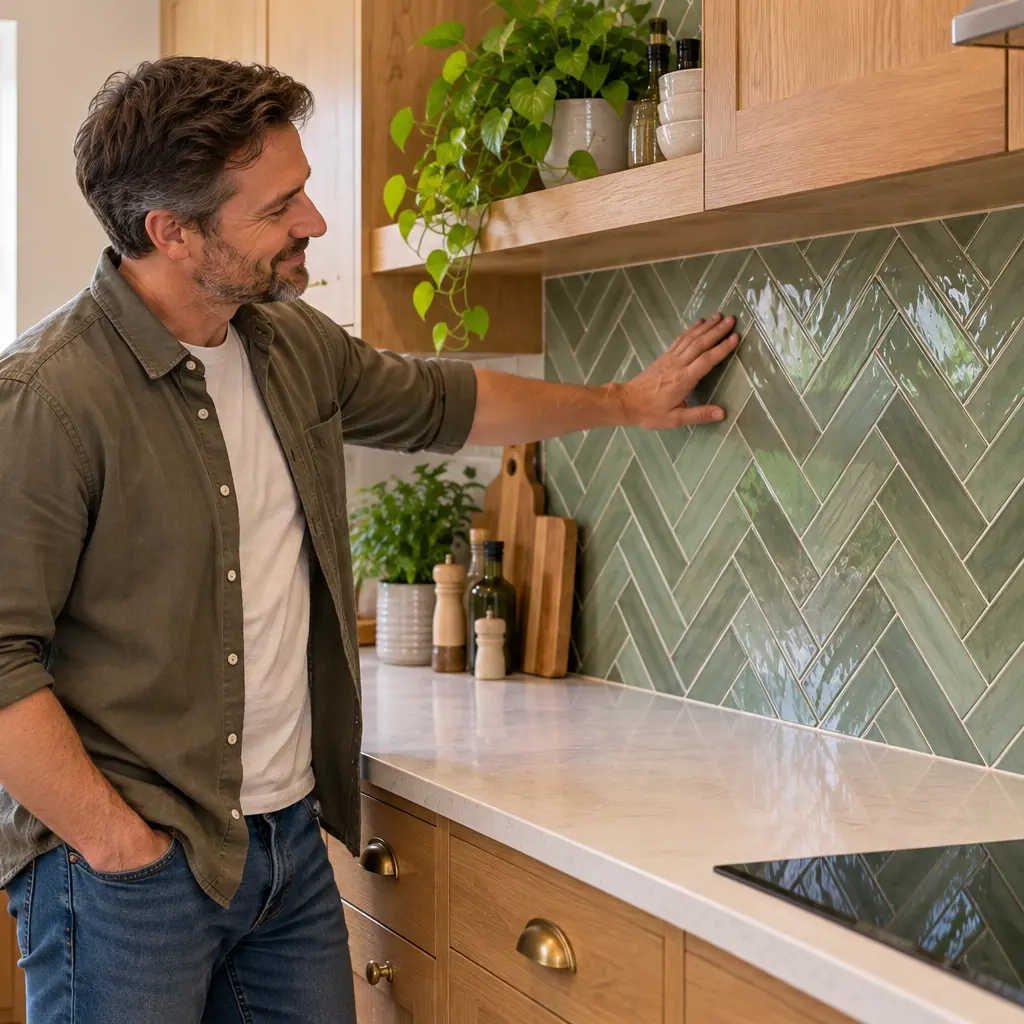
A herringbone arrangement adds movement to a splashback and can make a simple tile more decorative. It requires accurate setting out because the repeated pattern makes alignment easier to notice.
Square Green Tiles
Square tiles can create a straightforward grid pattern and suit kitchens where the aim is to keep the layout simple. The grout colour will also influence how clearly the individual tiles are defined.
Stacked Green Tile Layout
Stacking rectangular tiles vertically or horizontally creates clean lines and a more contemporary appearance. The direction can also affect how the tiled area is perceived.
Layered or Monochromatic Green Tiles
Using different green tones within the same kitchen can add depth without introducing a completely different colour. Varying shades can be used across cabinetry, splashbacks or smaller tiled areas to create a layered scheme.
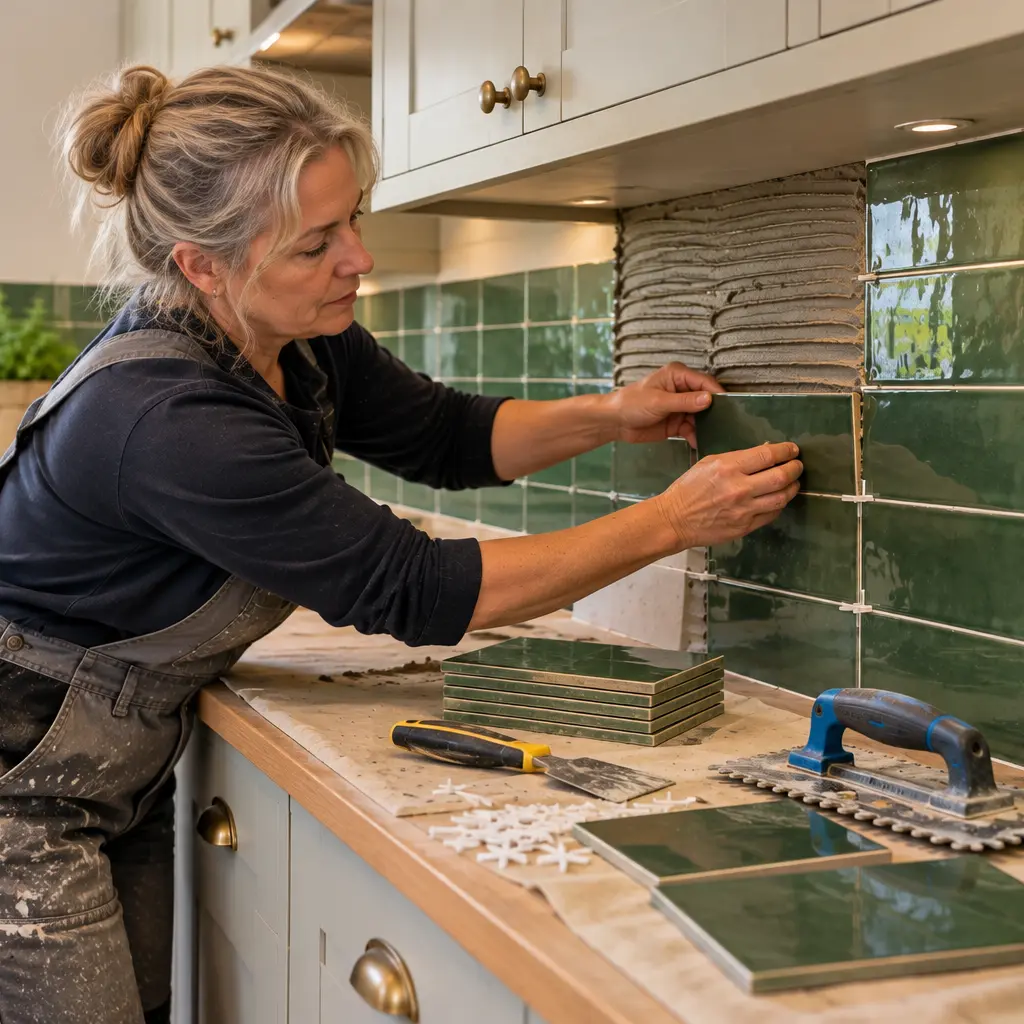
Where to Use Green Tiles in a Kitchen
Green tiles do not have to cover every available wall. The right location depends on how much colour you want and which areas need a practical tiled surface.
Green Kitchen Backsplash
A green kitchen backsplash is one of the simplest ways to introduce colour. Tiles behind a hob or sink can create a defined feature while also providing a practical tiled surface in areas exposed to everyday splashes.
Green Kitchen Wall Tiles
Wall tiles can be used across a larger section of the kitchen when you want the colour to have more visual impact. The tile size, finish and grout colour become particularly important when a larger wall area is being covered.
Green Tiles Behind Kitchen Cabinets or Open Shelving
Tiling the wall between worktops and open shelving can create a defined background without extending the colour throughout the room. It can also help connect the tile colour with other finishes used around the kitchen.
Green Floor Tiles
Green floor tiles create a stronger commitment to colour than a small splashback. If you are considering them, assess the tile’s suitability for floor use, the surface requirements and how the colour will work with the walls and cabinetry.
Conclusion
Green kitchen tiles offer plenty of scope for creating a kitchen that feels individual without relying on a single design approach. The most suitable choice depends on the shade, finish, layout, lighting and surrounding materials. If you are planning a tiled kitchen in London, our team can help with the practical side of surface preparation, tile setting out and installation.