Quick Summary
Terrazzo effect tiles bring the distinctive speckled appearance of terrazzo into a kitchen through a practical tiled surface. Available in different colours, patterns, chip sizes and finishes, they can add texture and character without making the rest of the kitchen feel overly decorative.
They work particularly well on kitchen floors and splashbacks, where the terrazzo pattern can either provide a subtle backdrop or become a feature. From soft neutral designs to bold multicoloured options, terrazzo effect tiles can be matched with different kitchen units, worktops and interior styles. If you are planning a tiled kitchen, our kitchen tiling services in London can help create a practical and cohesive finish.
What is terrazzo?
Terrazzo is a composite material made by combining aggregates such as marble, granite, quartz or glass with a binder, usually cement or resin. These decorative pieces create the distinctive flecked appearance associated with terrazzo.
Traditional terrazzo can be installed as a poured surface, while terrazzo effect tiles are manufactured to recreate a similar appearance in a tile format. This gives homeowners another way to introduce the terrazzo look to kitchen floors, splashbacks and feature areas.
Terrazzo vs terrazzo effect tiles
Traditional terrazzo and terrazzo effect tiles can create a similar visual style, but they are different types of surface. Poured terrazzo is formed using a mixture of aggregate and binder, while terrazzo effect tiles are manufactured with a printed or designed surface that recreates the characteristic speckled pattern.
Terrazzo effect tiles are available in materials such as porcelain and ceramic, depending on the product. They also come in a wide selection of sizes, colours and finishes, making it easier to find an option that suits a particular kitchen.
The benefits of terrazzo effect tiles for kitchens
Low maintenance
Many porcelain terrazzo effect tiles have a non-porous surface that is easy to clean and suitable for everyday kitchen use. Regular sweeping and mopping can help keep tiled surfaces looking clean, while the patterned design can also make everyday marks less noticeable than on some plain surfaces.
Practical tiled surface
Terrazzo effect tiles provide the appearance of a decorative composite surface while retaining the practical qualities associated with tiled flooring and walls. The suitability of a specific tile will depend on its material, finish and manufacturer’s recommendations.
Wide range of designs
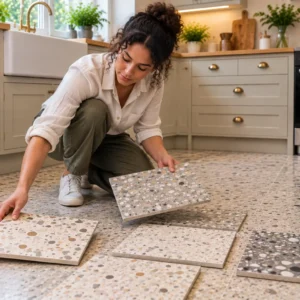
Terrazzo effect tiles are available in many combinations of background colours and decorative chips. You can find subtle designs with small, closely spaced flecks as well as bolder patterns with larger contrasting pieces.
Easy to coordinate
The mixture of colours within a terrazzo pattern can make it easier to connect different finishes in a kitchen. A tile containing grey, cream, beige or darker chips can pick up colours from the cabinets, worktops or other surfaces.
Distinctive appearance
The irregular pattern gives terrazzo effect tiles more visual detail than a plain tile. They can add interest to a kitchen without requiring additional decorative elements on every wall or surface.
Where can you use terrazzo effect tiles in a kitchen?
Terrazzo effect tiles can be used across several kitchen areas, provided the selected product is suitable for the intended application.
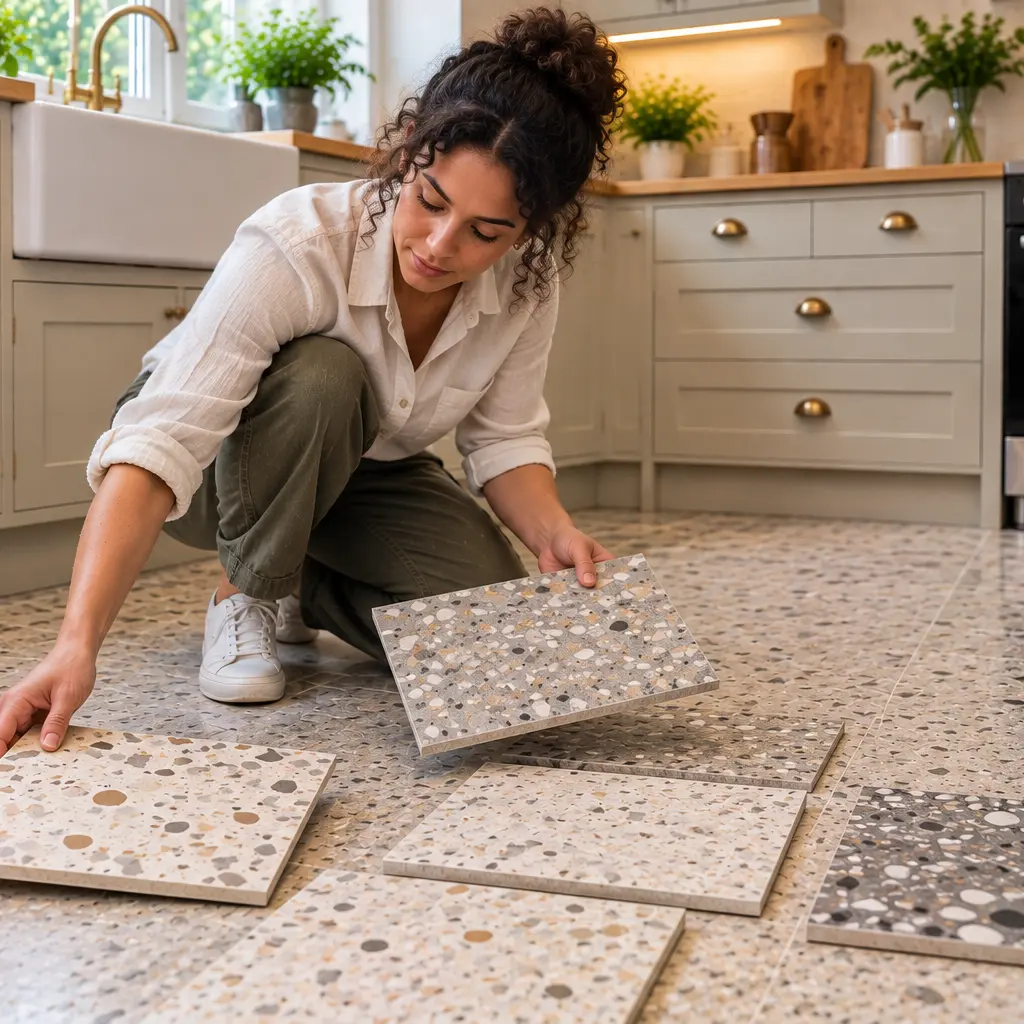
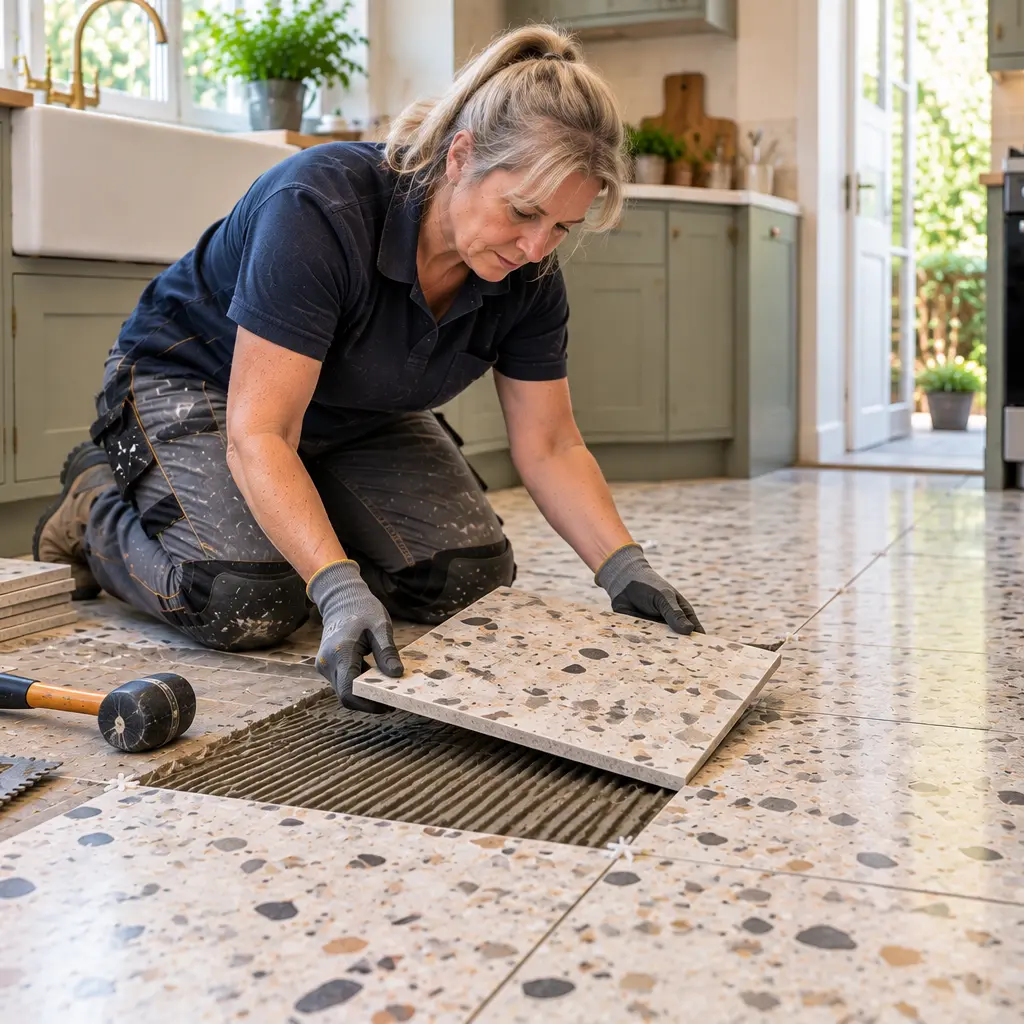
- Kitchen floors: Terrazzo effect floor tiles can create a patterned foundation that works with both contemporary and more traditional kitchen designs.
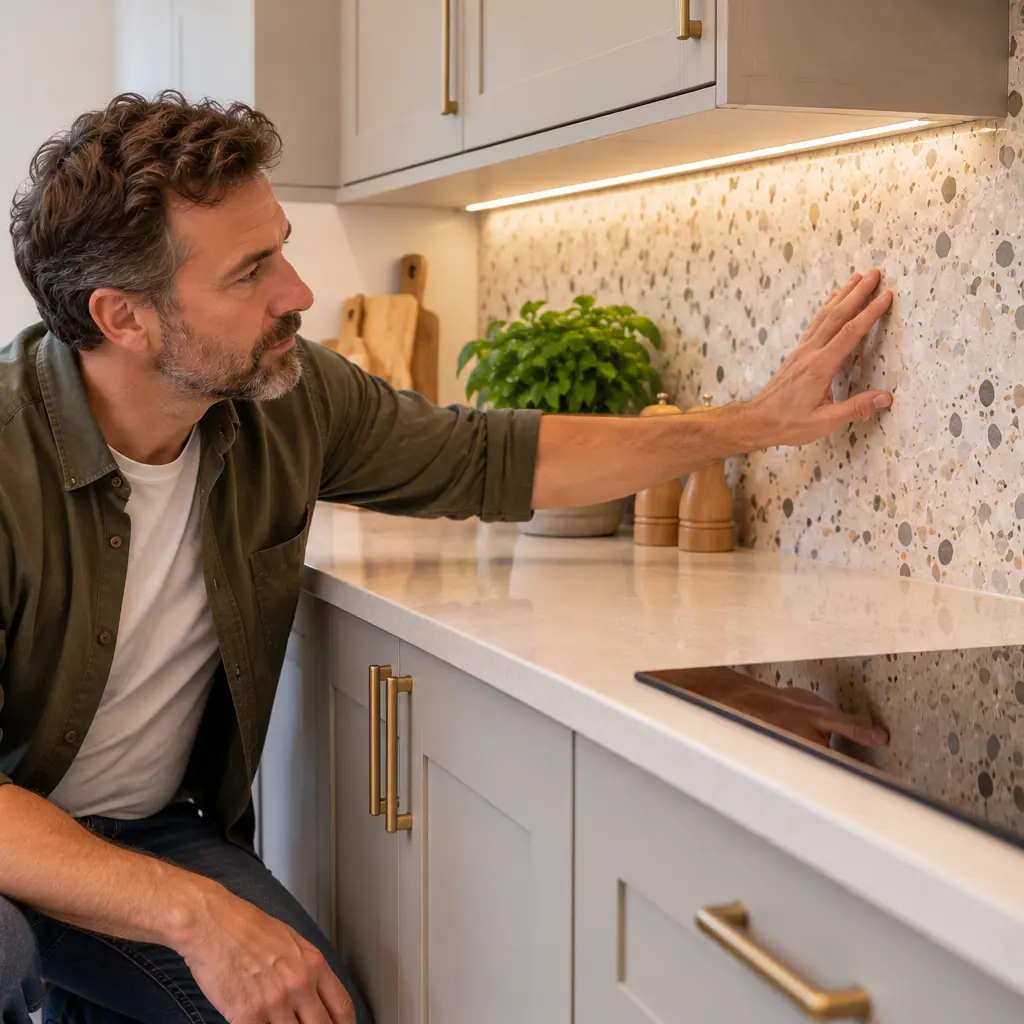
- Splashbacks: Terrazzo effect wall tiles can be used behind worktops or cooking areas to introduce colour and pattern.
- Feature walls: A terrazzo effect tiled wall can create a focal point when combined with simpler cabinetry and worktops.
- Around kitchen islands: Extending a floor design around a kitchen island can help create a more consistent visual scheme.
Terrazzo effect kitchen floor tile ideas
White terrazzo effect tiles with neutral kitchens
White or cream terrazzo effect floor tiles with subtle grey or beige chips can keep a kitchen feeling light while adding texture. They can work particularly well with white, cream or light wood cabinetry.
Grey terrazzo effect tiles for modern kitchens
Grey terrazzo effect floor tiles can provide a neutral base for contemporary kitchens. They can be paired with white, black, charcoal or natural wood units depending on the level of contrast you want.
Bold terrazzo tiles for a statement floor
Larger decorative chips and stronger colour combinations can make the floor a more prominent feature. Keeping the cabinets and worktops relatively simple can help balance a more detailed tile pattern.
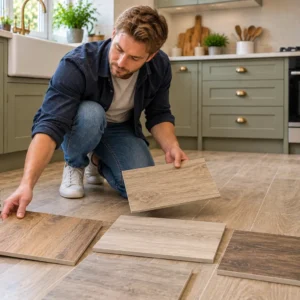
Terrazzo effect tiles with wooden kitchen units
Warm wood cabinetry can soften the appearance of terrazzo effect flooring. Tiles with cream, beige, brown or muted grey backgrounds can create a balanced combination with natural timber finishes.
Terrazzo effect splashback ideas
Neutral terrazzo effect splashbacks
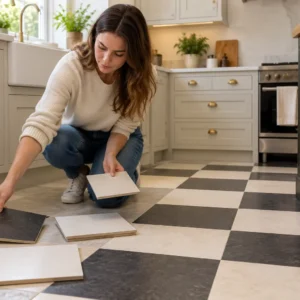
Soft terrazzo patterns in cream, beige, white or pale grey can add detail to a splashback without dominating the kitchen. They can work well with simple cabinets, plain worktops and a softer, low-contrast checkerboard floor.
Bold terrazzo effect splashbacks
For a stronger feature, choose a terrazzo pattern with larger or more colourful chips. This approach can work particularly well when the rest of the kitchen uses a restrained colour palette.
Matching floor and splashback tiles
Using the same terrazzo effect tile on the floor and splashback can create continuity throughout the kitchen. Alternatively, you can use different sizes or complementary designs to create more contrast between the two areas, such as a terrazzo effect splashback above wood effect floor tiles.
Terrazzo effect tiles behind a kitchen island
A terrazzo effect wall or splashback can help define a particular area of the kitchen, particularly when the surrounding surfaces are kept relatively simple. The colours within the tile can also be repeated in accessories or other finishes for a more connected scheme.
How to choose terrazzo effect tiles for a kitchen
When choosing terrazzo effect tiles, consider how the tile will work with both the practical requirements and the existing kitchen design.
- Colour: Look at the background colour as well as the colours of the decorative chips. Choose shades that complement your cabinets, worktops and other finishes.
- Tile size: Large-format tiles can create a cleaner appearance with fewer grout lines, while smaller tiles can give a more detailed look.
- Chip size: Small chips create a subtle pattern, while larger chips make the terrazzo effect more noticeable.
- Finish: Choose a finish that suits the location and the overall appearance you want to create.
- Floor suitability: For kitchen floors, check that the product is specifically suitable for flooring and has an appropriate slip rating.
- Wall suitability: For splashbacks and other wall applications, check the manufacturer’s recommendations before installation.
- Maintenance: Consider how easily the surface can be cleaned, particularly in areas close to cooking and food preparation.
Final thoughts
Terrazzo effect tiles offer a practical way to introduce the distinctive look of terrazzo into a kitchen. Whether used across a floor, behind a worktop or as a feature surface, the combination of decorative chips and different background colours gives plenty of scope for creating a personalised scheme.
The right choice will depend on the kitchen’s existing colours, the amount of pattern you want and whether the tile is intended for a floor or wall. By considering the tile’s size, finish, suitability and overall design, you can create a terrazzo-inspired kitchen that feels cohesive rather than overwhelming.