Quick Summary
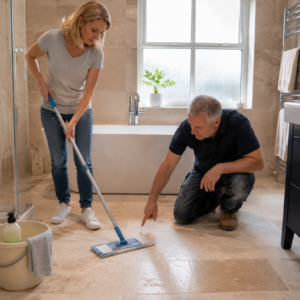
You have just finished mopping your kitchen floor or bathroom tiles, but instead of looking clean and glossy, they still appear dull and cloudy. After trying different cleaning products with little success, you begin to wonder whether the shine can be restored at all. It is a common problem many homeowners face as tiles gradually lose their original finish through everyday use.
This guide covers the real reason tiles look dull, how to bring the shine back on ceramic, porcelain and stone, the products to avoid, and how to keep that finish looking fresh. Discover practical solutions for maintaining your tiles and protecting their appearance with help from our tiling specialists.
Why tiles lose their shine
Most dull tiles are not worn out. They are coated.
The usual culprit is a thin film of cleaner residue, soap scum and hard water minerals that builds up over time and scatters the light. Mop with too much detergent, or the wrong one, and you leave a haze that dulls the surface.
On floors, fine grit also creates tiny scratches that take the edge off the gloss. Understanding this changes everything, because the fix is usually cleaning, not polishing.
How to make tiles shine by cleaning them properly
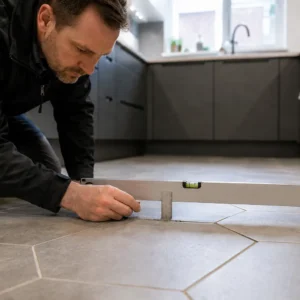
For glazed ceramic and porcelain, shine is mostly about lifting that film and drying the surface rather than abrasive polishing, especially on tiles laid in herringbone, basketweave or chevron patterns, where the extra grout lines can trap dirt and make streaks or cleaning residue more noticeable.
Deep clean to strip the haze
Start with a pH-neutral tile cleaner and warm water, which is neither acidic nor alkaline, to lift everyday dirt. For a stubborn cloudy film, a gentle alkaline tile cleaner cuts through soap and grease. Rinse thoroughly with clean water afterwards, because leftover cleaner is what caused the dullness in the first place.
Buff dry for instant gloss
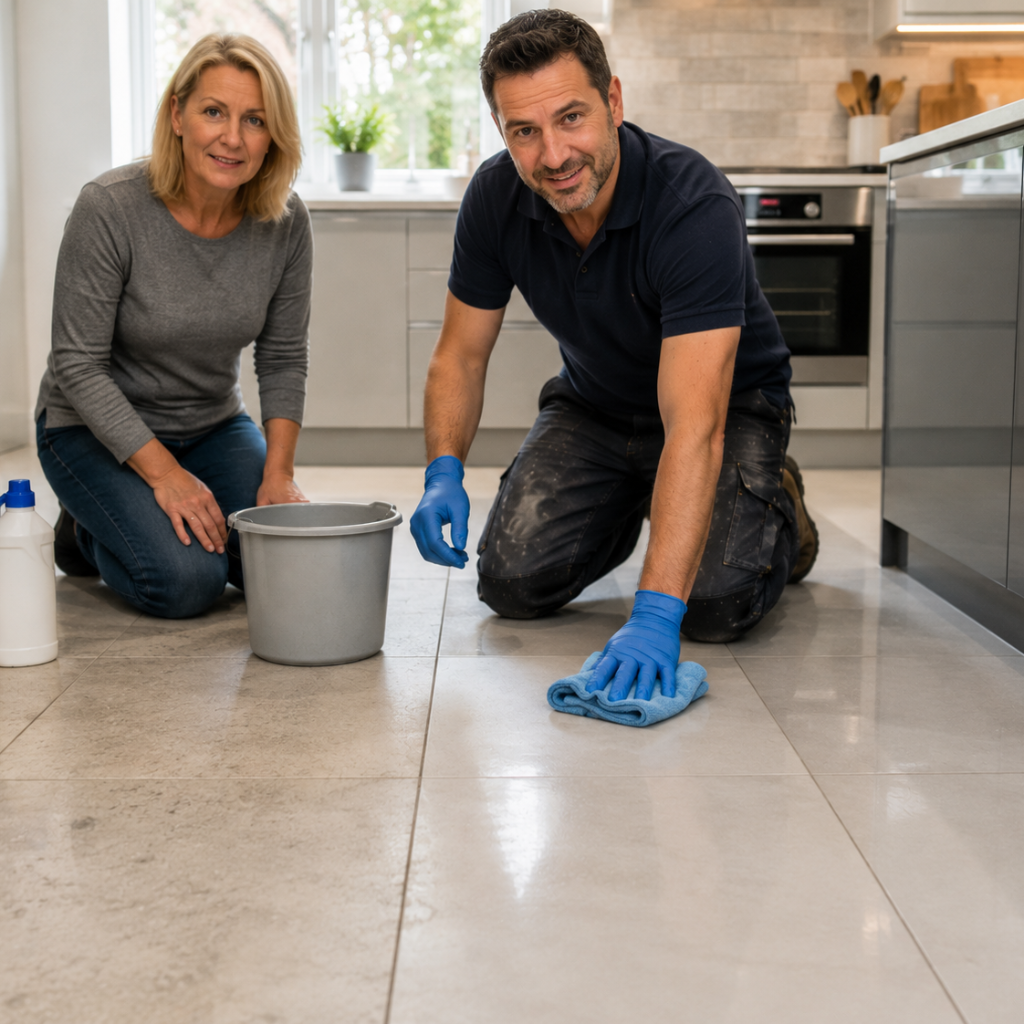
Here is the step most people skip. Dry the tiles with a clean microfibre cloth or towel rather than letting them air dry, which leaves water spots. Polishing a clean, dry tile brings back a surprising amount of shine on its own.
Lift hard water spots
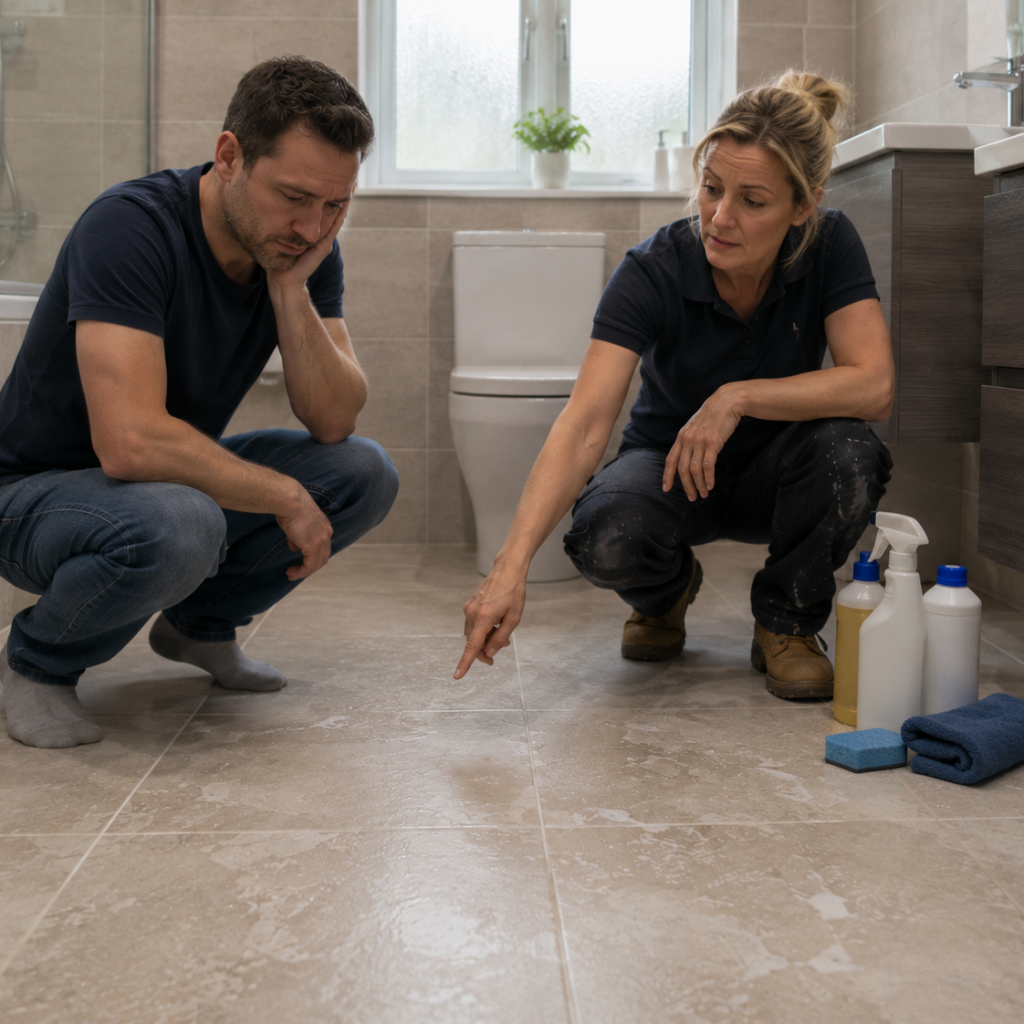
White, cloudy patches are often limescale from hard water, which is common across much of London. A gentle tile cleaner and careful buffing usually shifts them.
How to restore shine on different tile types
Before you begin, identify your tile type and choose a cleaning approach that is suitable for its surface.
Glazed ceramic and porcelain
The shine on glazed ceramic and porcelain comes from a factory-fired glaze. You cannot polish it back with abrasives, and trying often dulls it further. Keep these tiles clean, rinsed and buffed, and use a tile shine product made for glazed surfaces if you want extra gloss.
Natural stone
Natural stone is different. Marble develops its shine through polishing but can be etched by acidic cleaners. Travertine needs regular sealing (How to Clean Travertine Tiles and Keep Them Looking New) and pH-neutral cleaning to protect its porous surface. Granite is harder and more resistant to wear, but it still benefits from stone-safe cleaners and periodic resealing.With the right care, natural stone can be professionally honed, polished and resealed to restore its depth and gloss.
Unglazed and matte tiles
Not every tile is meant to shine. Unglazed porcelain, matte and textured tiles have a deliberately low-sheen finish, and a topical polish can look patchy on them. With these, clean, even and streak-free is the goal rather than gloss.
How to make bathroom floor tiles shine
Bathroom floors face soap scum, shampoo splashes and constant damp, so they film up faster than most rooms. Regular cleaning, a thorough rinse and a buff dry keep them bright. Sealing the grout lines helps too, as grubby, porous grout makes even clean tiles look tired.
Good ventilation also matters, because it cuts the lingering damp that feeds limescale and mould on the floor.
Products and habits to avoid
A few popular shortcuts do more harm than good:
- Wax-based or acrylic floor polishes, which yellow, trap dirt and go patchy over time.
- Too much detergent, which leaves the very film that dulls the tiles.
- Acidic cleaners like vinegar on natural stone, which etch and dull it.
- Abrasive pads and scouring powder, which scratch both glaze and stone.
- Letting tiles air dry, which leaves water spots and streaks.
A homeowner in London recently asked us to look at a worn-out kitchen floor they were about to replace. The porcelain underneath was fine. It was simply coated in months of mop residue, so a proper strip, rinse and buff brought the shine straight back and saved the floor.
When to call in a professional
DIY cleaning and buffing brings most tiles back to life, but some jobs need more. Heavily etched stone, deep scratches or a floor that has genuinely lost its glaze usually call for professional restoration, such as machine polishing and resealing for stone. If the shine does not return after a proper clean, it is worth having the floor assessed, and you can see the kind of finishes we achieve in our completed tiling projects.
The takeaway
Learning how to make tiles shine is less about miracle polishes and more about understanding your tiles. Clean off the film, rinse well, buff dry, and match your care to whether the tile is glazed or natural stone. Do that and most tiled floors across London look bright and fresh again, without the cost of replacing them.
Tiles still looking flat after a good clean, or stone that needs professional restoring? Our team cleans, restores and installs tiling across London and can bring a tired floor back to life. Request a free tiling quote and we will take a look.