Introduction
Victorian encaustic tiles are once again making a strong impression in London homes, particularly in hallways and entrance spaces where character matters. Many homeowners ask what are encaustic tiles and why they look so different from ordinary flooring. The answer lies in their inlaid decorative ceramic construction and distinctive pattern work. From period terraces to carefully renovated townhouses, encaustic Victorian floor tiles offer authenticity, depth, and long lasting performance that suits the British climate and architectural style. Alongside traditional Victorian slate flooring and mosaic heritage tiles, these materials continue to define the elegance of original entrance spaces across the capital.
What Are Encaustic Tiles and How Are They Made
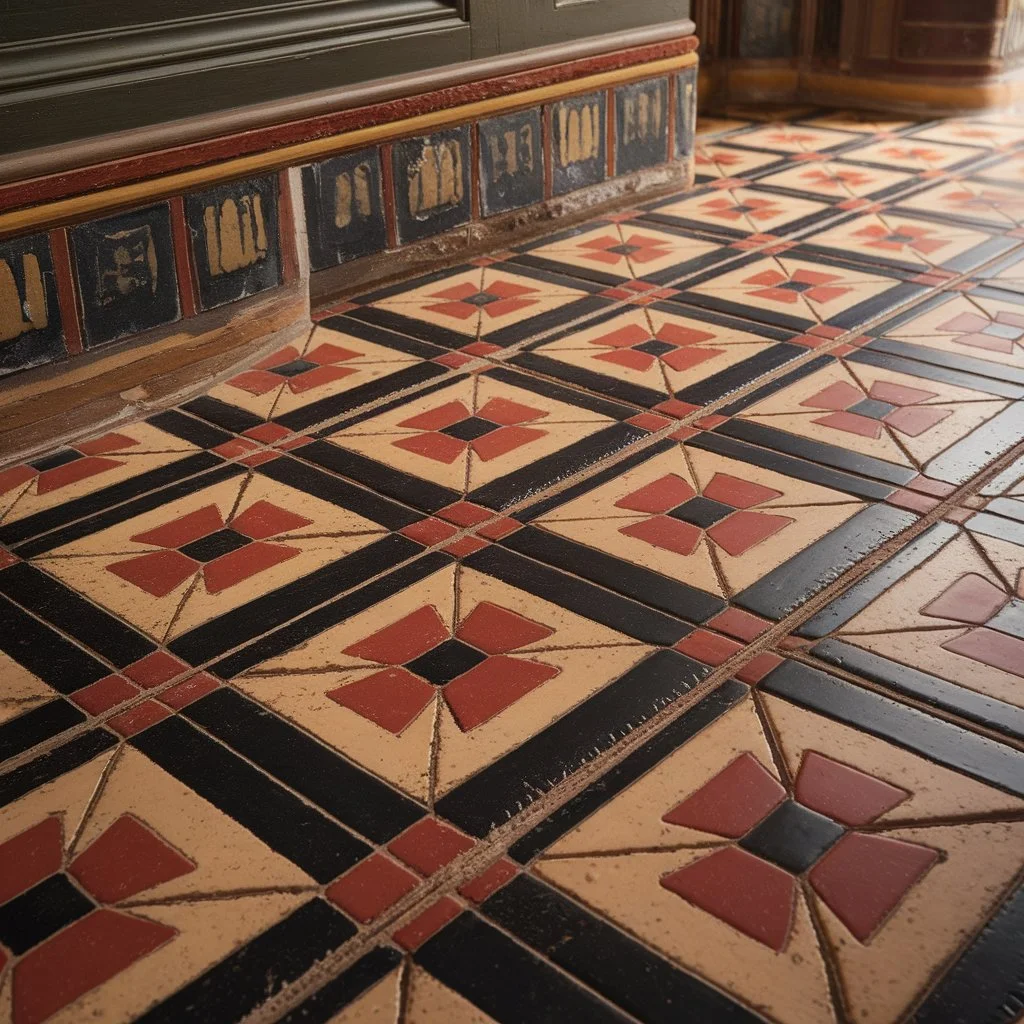
Understanding what encaustic tiles are begins with their manufacturing. The encaustic tile manufacturing process uses an encaustic clay inlay technique where coloured clays are pressed into moulds to form patterns. Unlike printed surfaces, the design runs through the tile body. This produces decorative clay inlaid floor tiles with genuine pattern depth and enduring colour.
Because the design is not just surface applied, encaustic tile depth and colour inlay ensure that wear does not remove the pattern. This makes Victorian encaustic floor tiles particularly suitable for high traffic entrance areas.
The Origins of Encaustic Victorian Tiles
The popularity of encaustic Victorian tiles began in the nineteenth century. Their ecclesiastical encaustic tile origins can be seen in churches and civic buildings, where patterned floors were used to create symmetry and visual impact. These ideas later influenced domestic interiors.
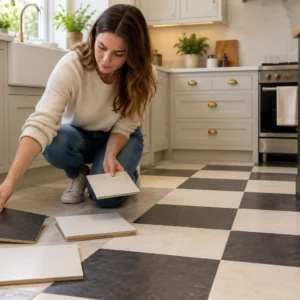
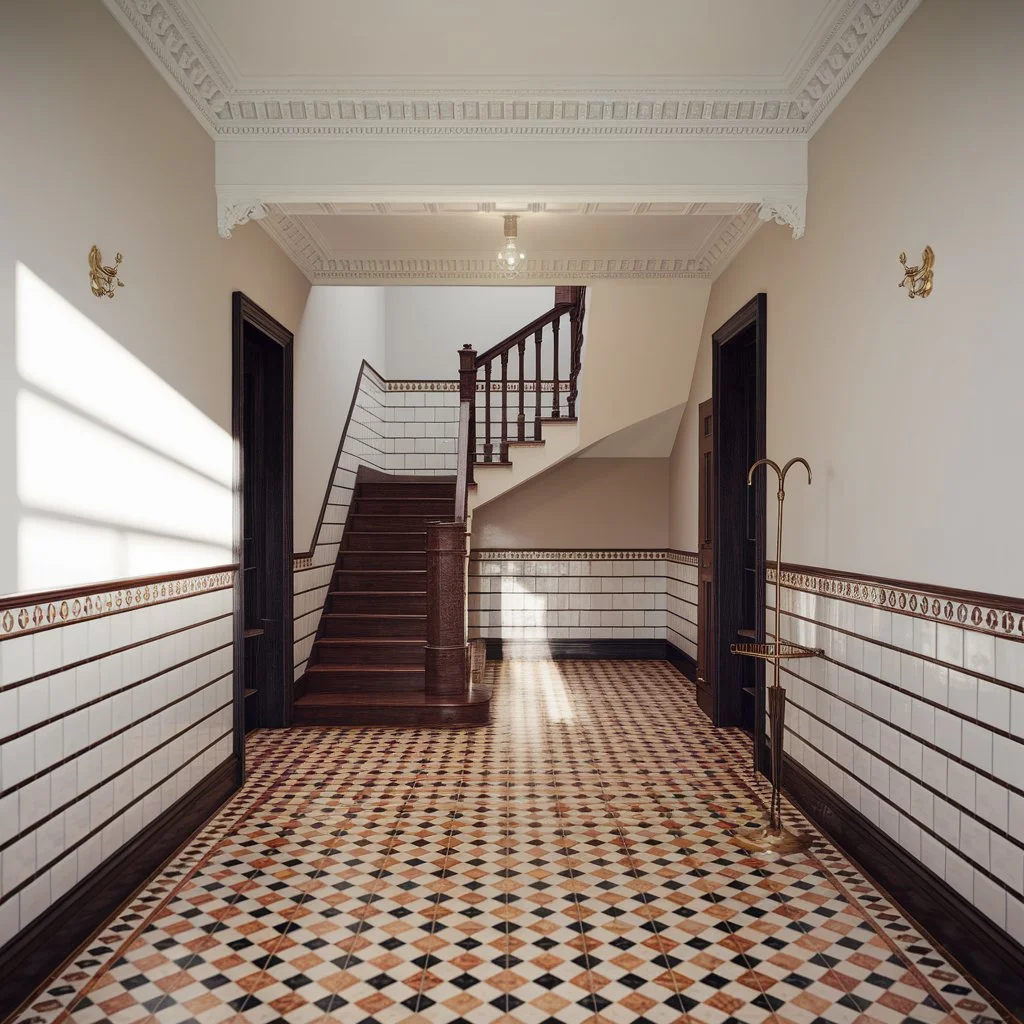
Many period hallway mosaic flooring layouts across London still feature tessellated Victorian floor patterns. Edwardian and Victorian geometric floors remain admired today for their structured, elegant composition. The antique encaustic tile revival trend reflects renewed appreciation for this historic craftsmanship.
Why Victorian Encaustic Tiles Are Popular Again
Victorian encaustic tiles are popular again because they offer both heritage charm and practical resilience. With increased interest in period property entrance restoration UK projects, homeowners are choosing heritage reproduction encaustic tiles UK styles that reflect original design while meeting modern performance standards.
Their appeal lies in several strengths:
- Strong visual identity through patterned Victorian encaustic tiles
- Compatibility with encaustic tiles for period homes
- Ability to enhance modern interiors with Victorian encaustic tiles
Many London homeowners find that Victorian style encaustic tiles create a welcoming entrance while standing up to daily footfall and damp weather.
Encaustic Cement Tiles vs Ceramic Tiles
When comparing encaustic cement tiles vs ceramic tiles, it is helpful to understand structural differences. Traditional encaustic Victorian floor tiles are clay based and kiln fired. Cement alternatives are pressed and air cured.
| Feature | Clay Encaustic Tiles | Cement Tiles |
| Pattern depth | Full body inlay | Surface layer |
| Firing process | Kiln fired | Air cured |
| Traditional authenticity | High | Moderate |
| Suitability for restoration | Excellent | Limited |
This comparison shows why restoring Victorian entrance floors usually requires authentic Victorian tile restoration using original style materials.
Are Encaustic Tiles Durable in British Homes
A frequent concern is encaustic tiles durable enough for everyday use. When properly installed on a prepared subfloor, encaustic tile durability and longevity are impressive. Their dense clay structure makes them well suited to hallways and entrances exposed to rain and seasonal moisture.
In London properties, where entrances often experience heavy traffic, traditional encaustic floor tiles remain reliable for decades. This is why many homeowners still choose Victorian hallway floor tiles to preserve both durability and period authenticity. Correct sealing and installation protect against moisture movement and preserve pattern clarity.
Maintaining Encaustic Victorian Tiles
Maintaining encaustic Victorian tiles is straightforward with appropriate care. Encaustic tile maintenance focuses on protecting the surface while avoiding harsh cleaning agents. Regular sweeping prevents grit abrasion, and pH neutral cleaning products help preserve the finish.
In period homes, restoring Victorian entrance floors may involve careful cleaning and resealing. Authentic Victorian tile restoration protects original materials while strengthening structural stability. With sensible upkeep, these floors retain their character and integrity for many years.
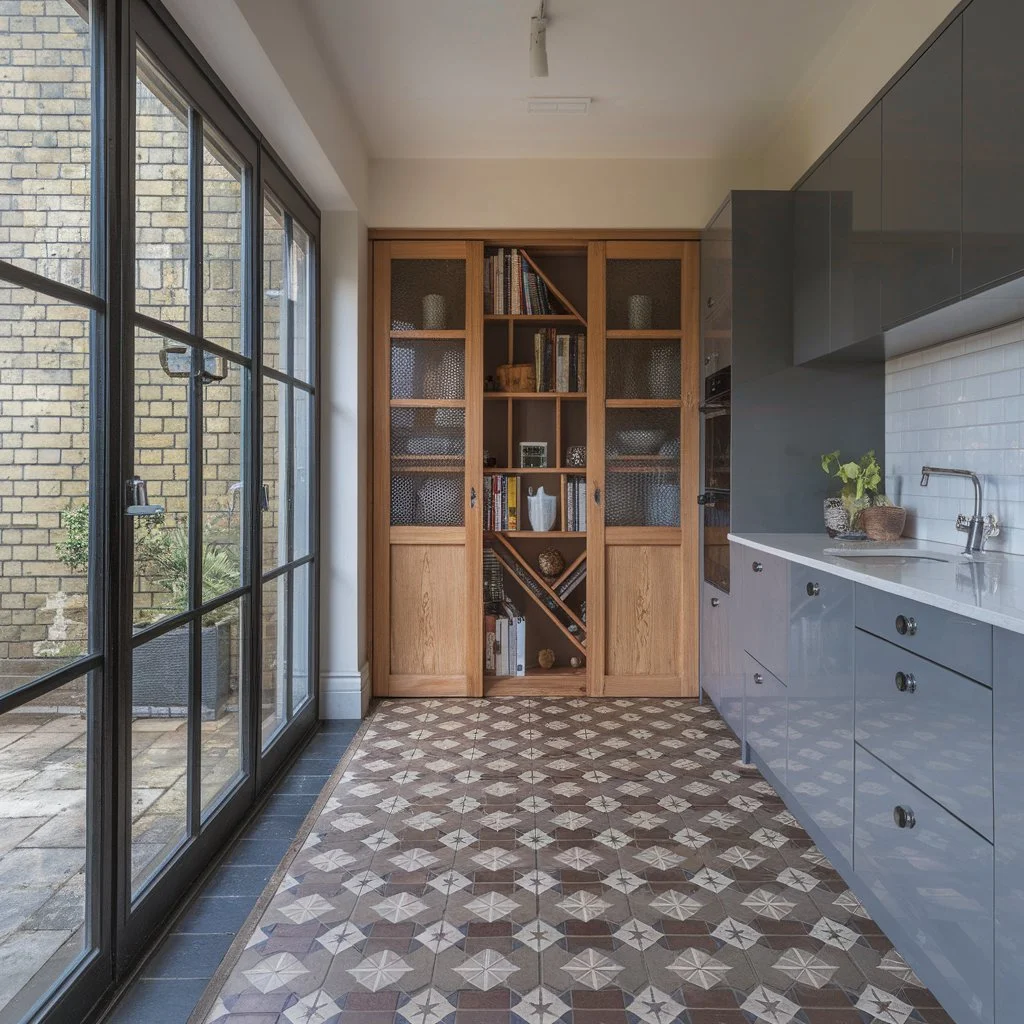
Victorian Encaustic Tile Designs in Contemporary Settings
Victorian encaustic tile designs are not limited to traditional homes. Increasingly, modern interiors with Victorian encaustic tiles use geometric flooring as a visual statement within minimalist spaces. They are also frequently incorporated into a Victorian house extension , where original character flooring can seamlessly connect period architecture with newly built living areas. The contrast between classic patterns and contemporary décor creates balance.
Patterned Victorian encaustic tiles also work well in kitchens and bathrooms when combined with neutral finishes. Their adaptability explains why encaustic Victorian floor tiles are popular again beyond purely heritage renovations.
Key Considerations When Choosing Victorian Encaustic Tiles
When selecting Victorian encaustic tiles for a London property, it is worth considering:
- Subfloor stability and moisture management
- Design continuity with existing Edwardian and Victorian geometric floors
- Long term maintenance planning
Professional assessment ensures that encaustic tiles for period homes perform well and align correctly with architectural features.
Enhance Your London Property with Expert Victorian Encaustic Tile Installation
Victorian encaustic tiles combine historic craftsmanship with proven durability, making them ideal for British entrances and feature floors. Their inlaid patterns, structural strength, and timeless aesthetic continue to suit both period restorations and contemporary refurbishments.
Abel Tiler specialises in installing and restoring Victorian encaustic tiles across London, delivering precise workmanship and high quality finishes. From authentic Victorian tile restoration to new encaustic Victorian floor tiles installations, every project is handled with care and attention to detail. Contact Abel Tiler today to bring lasting character and craftsmanship to your home.