Introduction
Bathroom tiles are expected to withstand daily exposure to moisture, changing temperatures, and regular use. While tile selection, waterproofing, and installation quality all contribute to a durable finish, another element often goes unnoticed: the tile expansion gap. These small spaces allow tiled surfaces to accommodate natural movement without placing excessive stress on the installation.
Without appropriate tile expansion joints, problems such as bathroom tile cracking, grout failure, tile lifting, and debonding can develop over time. Although largely hidden once a project is complete, expansion gaps in tiles play an important role in protecting the integrity of a bathroom installation.
What Is a Tile Expansion Gap?
Understanding Movement Within Tiled Surfaces
Although tiles appear solid once fixed in place, the materials beneath and around them continue to respond to environmental conditions. Variations in temperature, humidity, and normal building behaviour can all create small shifts within a tiled area.
Expansion gaps provide space for these minor adjustments to occur without transferring excessive pressure into the tiled finish.
Why Tiles Cannot Be Installed Tightly Together
When tiles are fixed without sufficient room for expansion, stresses generated within the surface have limited opportunities to dissipate. Over time, these forces may be transferred into grout joints, tile edges, and adhesive layers.
Allowing appropriate spacing enables the tiled surface to respond more naturally to environmental changes while reducing the likelihood of damage developing later.
Why Bathrooms Experience More Tile Movement
Steam, Moisture, and Temperature Changes
Bathrooms are exposed to conditions that change throughout the day. Warm walk-in showers, condensation, and fluctuating temperatures all influence the surfaces within the room.
Over time, these environmental changes can place pressure on tiled areas if sufficient allowances for movement have not been incorporated into the design.
Structural Movement in Residential Properties
Temperature and humidity are not the only factors influencing tiled surfaces. Buildings naturally shift and settle throughout their lifespan, particularly older properties.
Across London, many Victorian and Edwardian homes have adapted to decades of subtle structural change. Well planned expansion joints allow tiled finishes to accommodate these gradual adjustments more effectively.
Common Problems Caused by Missing Expansion Gaps
Tile Popping and Tile Lifting
Restricted movement can sometimes cause sections of a tiled surface to rise unexpectedly. As pressure builds, individual tiles may begin separating from the substrate beneath them.
In some cases, affected areas develop hollow-sounding sections before more obvious signs of lifting become visible.
Grout Cracking and Joint Failure
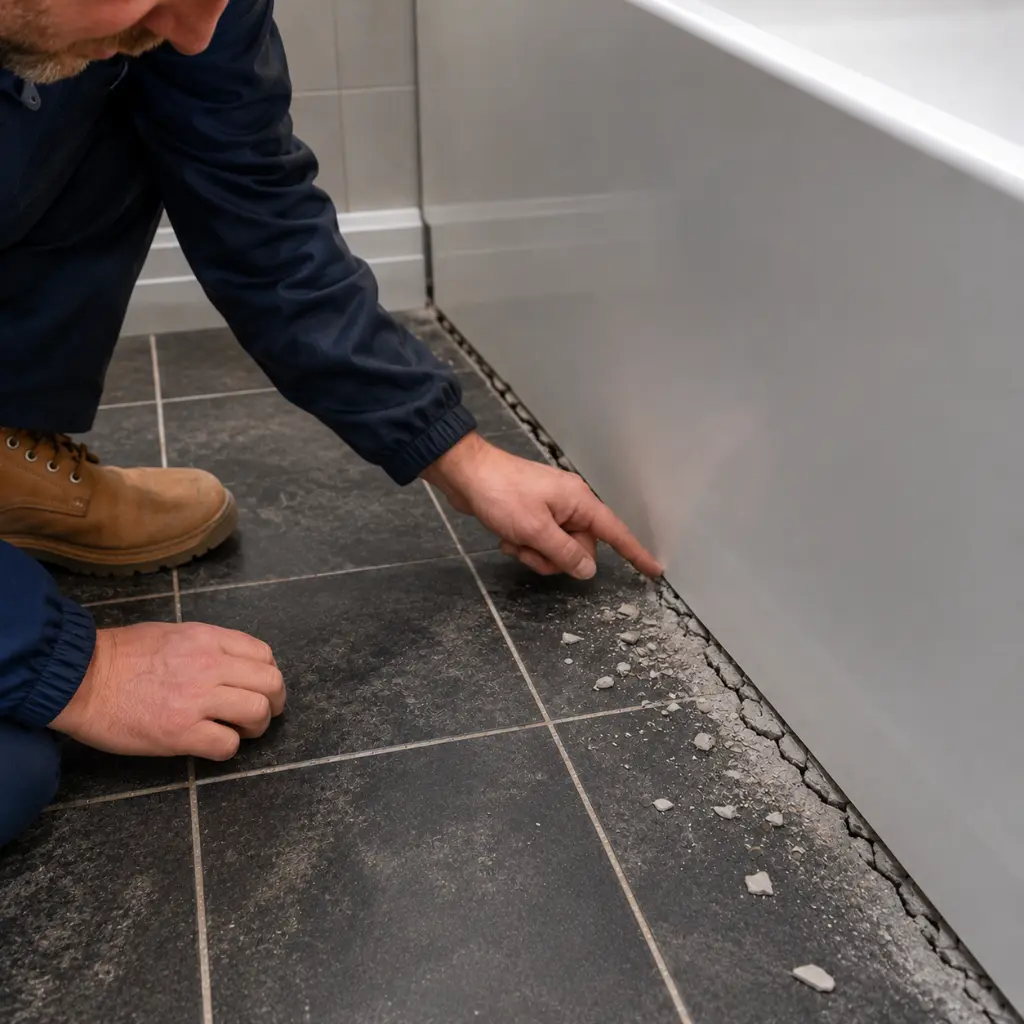
Grout joints often reveal the earliest signs of underlying movement. Fine cracks may appear between tiles, especially around room edges, corners, and transitions between surfaces.
If left unchecked, deterioration can spread across a wider area, affecting both the appearance of the tiling and the condition of the joints themselves.
Cracked Tiles and Surface Damage
When movement continues unchecked, the pressure may eventually affect the tiles themselves. Cracked tiles often develop around corners, edges, or areas where stress becomes concentrated.
Although damaged tiles can sometimes be replaced individually, preventing the problem through correct movement accommodation is usually preferable.
Where Expansion Gaps Are Typically Installed
Perimeter Locations
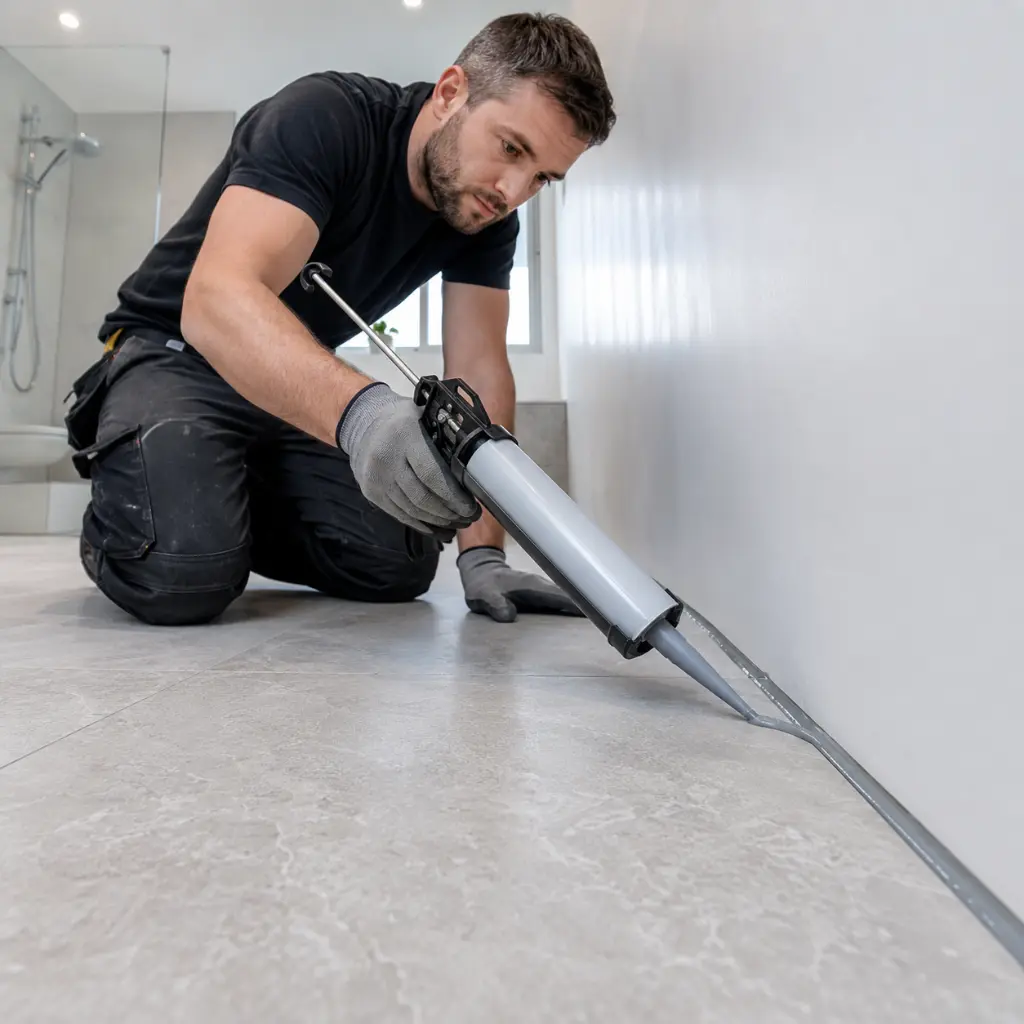
Expansion gaps are commonly installed around the perimeter of a tiled floor where it meets surrounding walls, bath panels, shower enclosures, or fixed structures.
These areas allow the tiled surface to respond independently without pressing directly against adjoining materials.
Changes in Surface Direction
Certain locations within a bathroom are more susceptible to stress concentration than others. Areas where surfaces intersect or change direction often require additional consideration.
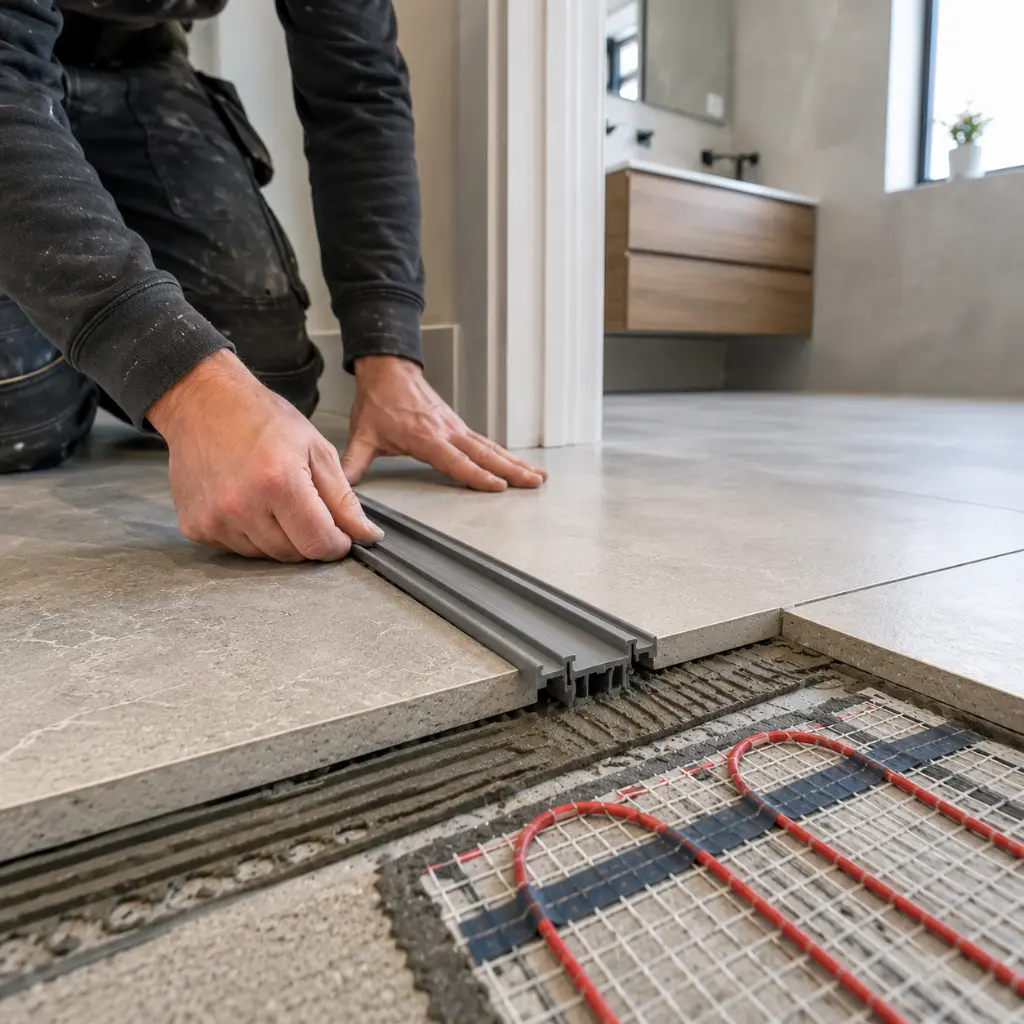
Transitions between floors and walls, door openings, and structural junctions are common examples where movement joints may be incorporated into the design.
Expansion Gaps and Underfloor Heating Systems
Managing Heat-Related Movement
Heated flooring systems introduce regular warming and cooling cycles beneath bathroom tiles. These temperature changes affect both the tiles and the materials supporting them.
Appropriately positioned movement joints help accommodate these changes and reduce unnecessary pressure within the floor structure.
Why Flexible Systems Matter
Modern installations often combine movement joints with flexible tile adhesive and suitable grouting materials. These components work together to support tile stability while allowing minor movement to occur naturally.
This combination becomes especially important in bathrooms where underfloor heating operates alongside regular moisture exposure.
Expansion Gaps and Waterproofing
Protecting Wet Areas
Bathrooms rely on waterproofing systems to protect underlying structures from moisture penetration. Expansion joints must work alongside these systems without compromising their effectiveness.
Properly detailed movement joints help maintain protection in showers, wet rooms, and other damp environments.
Maintaining Surface Integrity
Cracked grout joints and damaged tiles can create pathways for moisture to reach areas beneath the tiled surface. Once this occurs, maintaining effective moisture protection becomes more challenging.
Movement accommodation helps reduce the likelihood of these defects developing, supporting the overall condition of the installation.
Why Tile Material Affects Movement Requirements
Porcelain, Ceramic, and Natural Stone Tiles
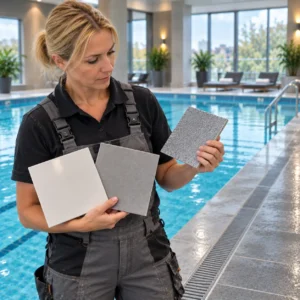
Tile materials do not all behave in exactly the same way when exposed to changes in their environment. Porcelain, ceramic, and natural stone each possess different physical characteristics that influence their response over time.
Recognising these differences allows movement joints to be planned more appropriately for the selected material.
Tile Size and Movement Considerations
The size of a tile can influence how movement is managed across a surface. Larger formats cover more area and may require additional consideration during planning.
For this reason, movement joint placement becomes increasingly important as tile dimensions increase.
Signs an Existing Installation May Lack Expansion Gaps
Early Warning Signs
A lack of suitable expansion gaps may become apparent through several common symptoms. Cracked grout, isolated loose tiles, hollow sounding areas, and localised surface movement are among the earliest indicators.
Identifying these warning signs promptly can help prevent more extensive deterioration within the tiled surface.
Progressive Damage
When movement-related issues are left unresolved, the effects can spread beyond isolated areas. What begins as minor grout cracking or a loose tile may eventually affect a wider section of the floor or wall.
Investigating concerns early often helps limit the extent of future remedial work.
Why Professional Installation Standards Matter
Planning for Movement Before Installation
Allowances for movement should be considered before any tiling work begins. Factors such as substrate condition, floor levelling requirements, waterproofing measures, and tile selection all influence the final approach.
Addressing these considerations during the planning stage supports a more dependable outcome once installation is complete.
Supporting Movement Within the Installation
Bathroom surfaces are exposed to continual changes in temperature, humidity, and building movement. Expansion gaps help accommodate these forces by allowing controlled movement within the tiled surface. Their role is not to improve appearance but to reduce stress accumulation that can eventually lead to cracking, lifting, or joint failure.
Repairing Damage Caused by Missing Expansion Gaps
Assessing the Cause
Visible damage does not always reveal its underlying cause immediately. A detailed tile inspection can help identify whether movement-related stress has contributed to the problem.
Before repairs are undertaken, it is important to determine what has caused the damage.
Repair or Replacement
Minor grout issues can often be resolved through localised repairs, whereas more significant problems involving loose or lifted tiles may require sections of the installation to be replaced.
Determining the right solution requires consideration of how extensive the damage is and how well the adjacent tiles remain bonded and supported.
Conclusion
Although rarely visible once the project is complete, expansion gaps perform an essential function within bathroom tiling systems. By providing space for natural movement, they help reduce the risk of cracked grout, tile displacement, and other forms of deterioration.
Whether renovating a period property or updating a modern bathroom, movement joints should be incorporated from the outset. Where signs of tile movement or grout damage are already present, Abel Tiler can provide guidance on suitable repair and restoration options throughout London.