Quick Summary
Say you have just had a beautiful travertine floor or bathroom laid, and you want to keep that soft, honeyed finish looking fresh without accidentally damaging the stone. Travertine is more delicate than it looks, so the way you clean it matters.
This guide walks through why travertine needs gentle care, how to clean floors, walls and grout, which products to avoid, and how sealing keeps everyday cleaning easy.
If you need professional assistance, our experienced tilers can help protect and restore your surfaces. It also covers how regular sealing keeps travertine looking its best for longer.
Why travertine needs a gentle approach
Travertine is a form of natural limestone, made largely of calcium carbonate. That matters because calcium carbonate reacts with acid.
Acidic liquids such as vinegar, lemon juice, wine or many bathroom sprays eat into the surface and leave dull, rough marks known as etching. The stone is also porous, so spills can leave marks if they are not cleaned quickly.
Understanding these two traits makes choosing the right cleaner easy.
How to clean travertine tiles day to day
Regular, gentle cleaning is the best way to preserve travertine’s natural appearance. A simple routine removes everyday dirt before it can scratch or stain the stone.
Keep on top of dust and grit.
The most damaging thing to travertine is not dirt, but grit. Fine sand and dust act like sandpaper underfoot and scratch the finish.
Sweep with a soft-bristle broom or vacuum with a soft brush attachment every few days, more often in busy areas. A microfibre dust mop is ideal for a quick daily pass.
Damp mop with a stone-safe cleaner
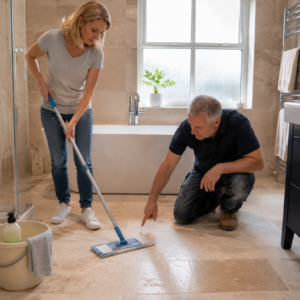
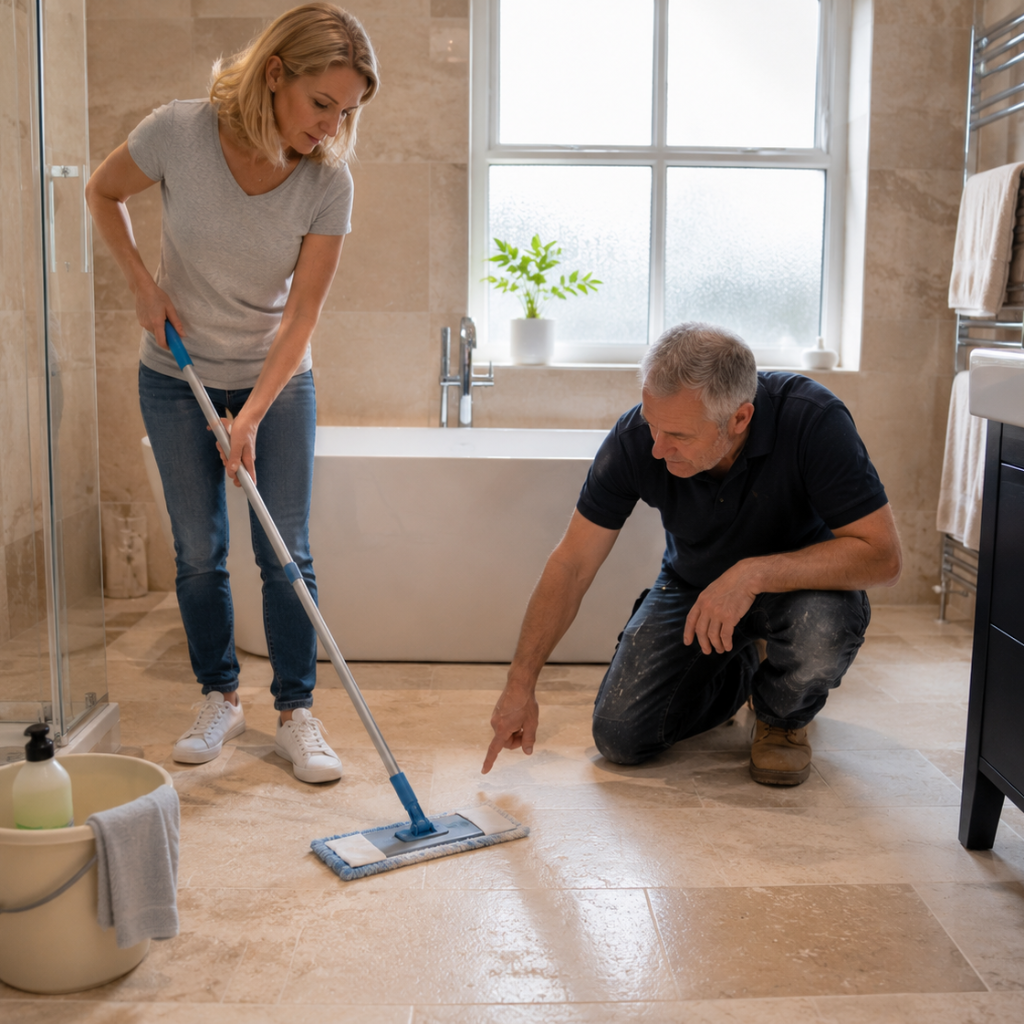
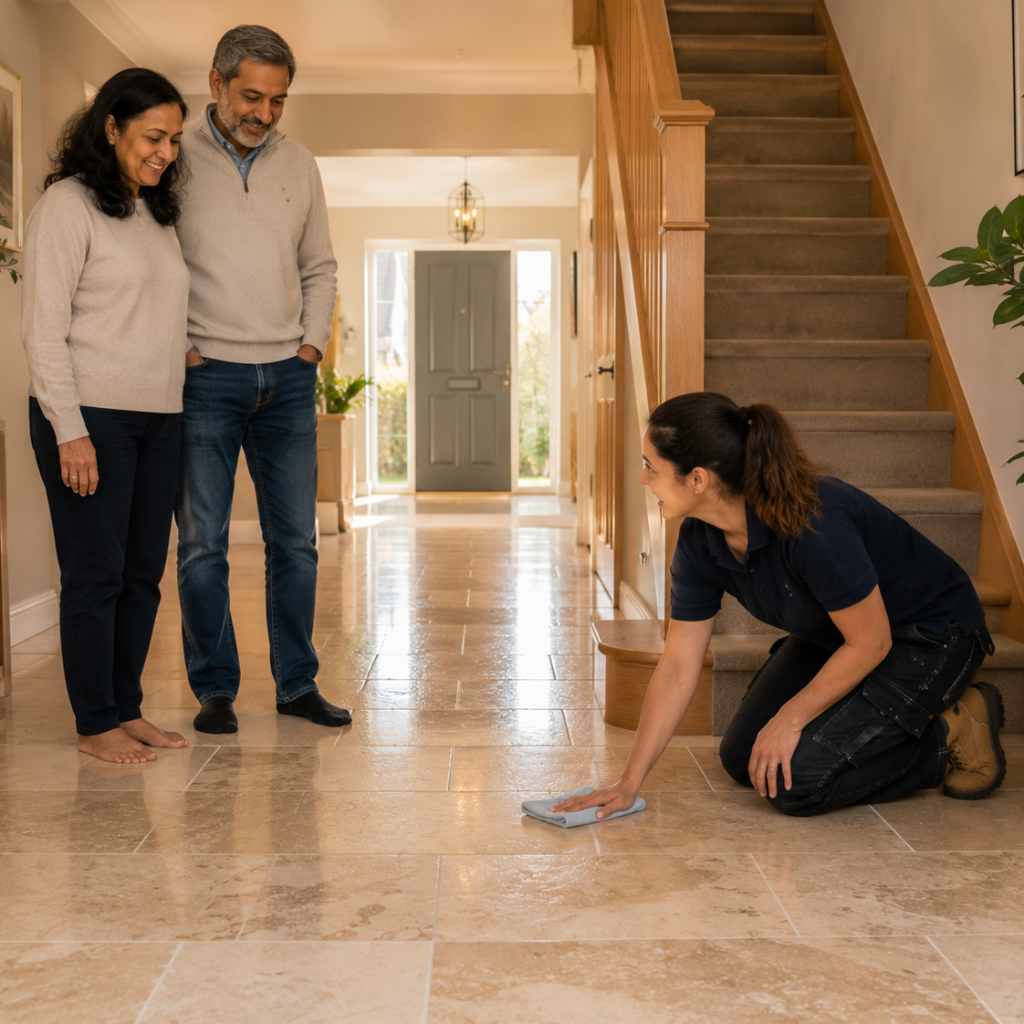
For a deeper clean, mix warm water with a pH-neutral stone cleaner, which is formulated to be neither acidic nor alkaline so it lifts dirt without attacking the stone. A small amount of mild soap works too, as long as you rinse well.
Use a well-wrung microfibre mop so the surface is damp, not wet. Rinse with clean water, then dry with a soft towel to avoid water spots and streaks.
How to clean travertine floor tiles
Floors face foot traffic that walls and worktops never do, so they need a little extra protection on top of the routine above.
Place doormats at entrances and soft rugs in busy areas to reduce wear and protect the finish. Fit felt pads under furniture legs so chairs and tables cannot scuff the stone when they move.
High-traffic areas also wear their sealer down faster, so floors in a hallway or kitchen may need resealing sooner than a quiet bathroom.
How to clean travertine wall tiles and showers
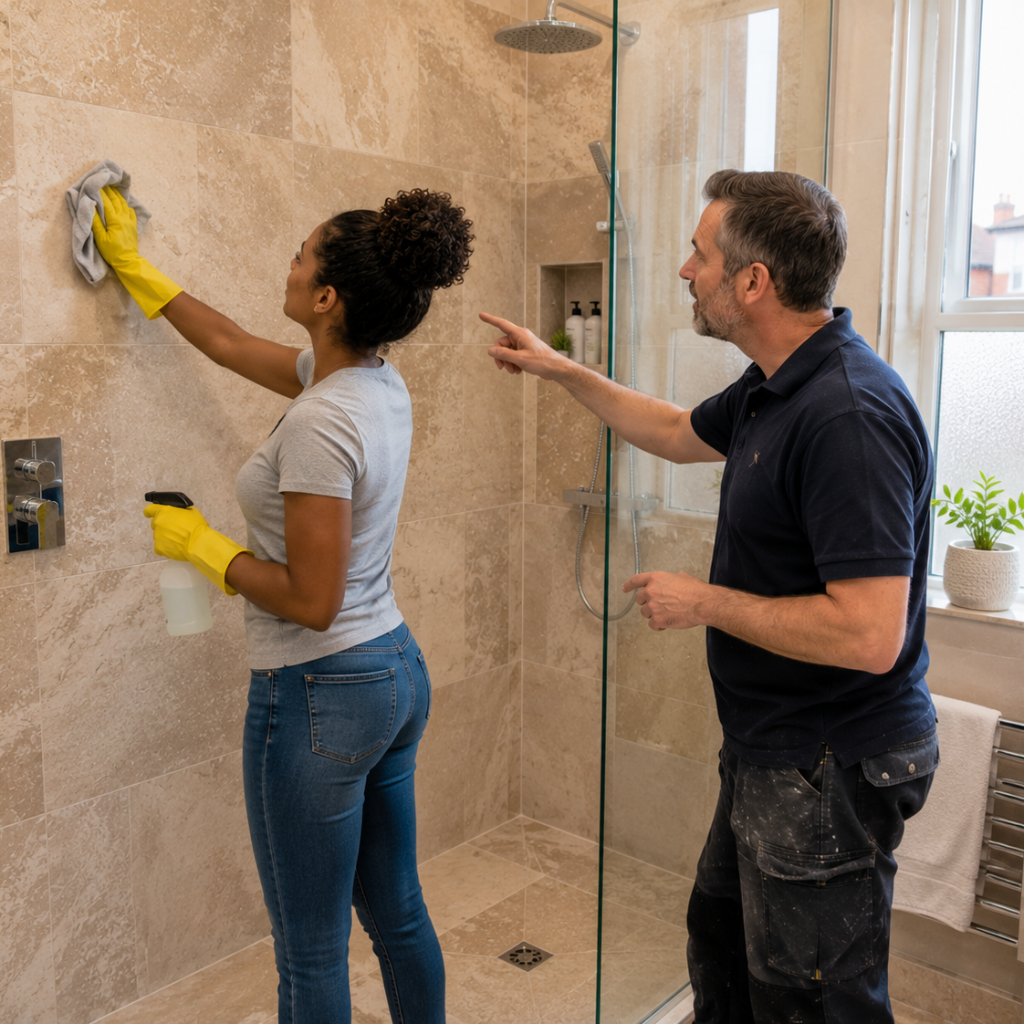
Travertine on a bathroom wall or in a shower faces a different enemy: soap scum, limescale and mildew rather than grit. Wipe walls with a soft, damp microfibre cloth and a pH-neutral cleaner.
In a shower, squeegee the tiles after use and keep the room well ventilated to cut down on damp and mould on the floor.
Avoid standard bathroom limescale removers, as many contain ingredients that can damage natural stone.
How to clean grout between travertine tiles
Grout is the narrow filler between the tiles, and it traps dirt more readily than the stone itself. Clean grout lines with a soft grout brush or an old toothbrush and the same stone-safe cleaner used on the tiles.
For darker marks, a paste of baking soda and water is a gentle option. Work it in, leave it briefly, then rinse and dry.
Steer clear of the acidic grout cleaners and bleaches sold in supermarkets, as they can splash onto the travertine and etch it. Sealing the grout along with the stone makes future cleaning far easier.
What should never be used on travertine?
A few products do more harm than good, so keep these away from the stone:
- Vinegar, lemon and other acids etch the surface and leave dull marks.
- Bleach and ammonia, which are harsh and can discolour the stone.
- Abrasive pads, scouring powder and steel wool, which scratch and flatten the finish.
- Steam cleaners, as the heat and forced moisture can damage even sealed stone.
- Standing water and soaking, which encourage staining and mineral marks.
Cleaning and sealing travertine go together
The easiest way to keep travertine clean is to keep it sealed. A penetrating sealer soaks into the stone and helps it resist water and stains, so spills sit on top long enough to wipe away.
Sealers come in a natural finish, which keeps the stone’s original look, and an enhancing finish, which deepens the colour. Reapply periodically, as the sealer wears with use and cleaning.
A quick check: drop a little water on the tile. If it beads, the seal is working. If it soaks in and darkens the stone, it is time to reseal.
Bringing dull or etched travertine back to life
Even well-kept travertine can dull or pick up etch marks over the years. Light stains can sometimes be lifted with a stone-specific poultice, but deeper etching or surface damage usually requires professional honing, polishing and resealing. These processes can make tiles shine again by restoring the stone’s natural finish rather than coating it with temporary gloss.
Conclusion
Travertine stays beautiful when it is treated with care. With gentle cleaning and regular maintenance, the stone can keep its natural warmth and character for many years. Thinking of adding travertine or bringing tired natural stone back to life? Abel Tiler London fits and restores natural stone surfaces and can advise on the right care for your space.