
Introduction
Victorian tiled flooring continues to be a defining feature in many London homes, particularly within entrance hallways, kitchens, and period renovations. Decorative mosaic designs, traditional patterned tiles, and Victorian slate tiling add visual depth that modern flooring often struggles to recreate. Many homeowners choose these traditional tile styles to preserve the authentic appearance of older properties. However, one issue frequently affecting these surfaces is discoloured grout, which can quickly make otherwise attractive flooring appear neglected or aged.
In many older properties, stained grout develops gradually through damp conditions, trapped dirt, poor ventilation, and ageing installation materials. Homeowners often search for answers about what causes new tile grout to stain after noticing recently restored floors becoming patchy or uneven in colour. Whether the flooring is original or newly refurbished, grout deterioration can affect the overall finish of tiled surfaces if ignored for too long.
Understanding the causes behind grout staining helps property owners protect older tiled surfaces more effectively while avoiding unnecessary restoration costs later.
Why Older Tile Grout Is More Vulnerable to Staining
Traditional tiled floors installed decades ago were commonly finished using cement based grout, which naturally becomes more porous as it ages. Over time, this allows damp, dirt, and everyday contaminants to settle more deeply into the grout surface, making staining increasingly difficult to remove.
Older buildings across London also experience natural structural movement caused by uneven subfloors, ageing foundations, and long term settlement. Even slight movement between tiles can create tiny gaps around grout joints where moisture and dirt gradually collect.
In busy entrances and hallways, years of daily foot traffic further wear down grout surfaces and weaken surrounding joints. As these small gaps expand over time, staining, discolouration, and grout deterioration become far more noticeable across the tiled floor.
Moisture and Damp Conditions Inside Older Properties
Persistent damp conditions remain one of the main reasons grout gradually becomes stained within older tiled surfaces. Moisture can slowly settle into porous grout lines around entrances, bathrooms, kitchens, and other areas where humidity regularly builds throughout the day.
In many older homes, limited ventilation and colder internal temperatures allow moisture to remain trapped for longer periods, particularly during winter. Over time, this can lead to darkened grout, mould growth, powdery residue, and gradual surface deterioration between the tiles.
These problems are especially common in hallway entrances exposed to wet weather, utility rooms with restricted airflow, older bathrooms without effective extraction, and basement areas affected by ongoing damp conditions. If moisture related staining remains untreated, grout joints may eventually begin weakening, cracking, or loosening around the tiled surface.
Dirt Build Up and Surface Wear
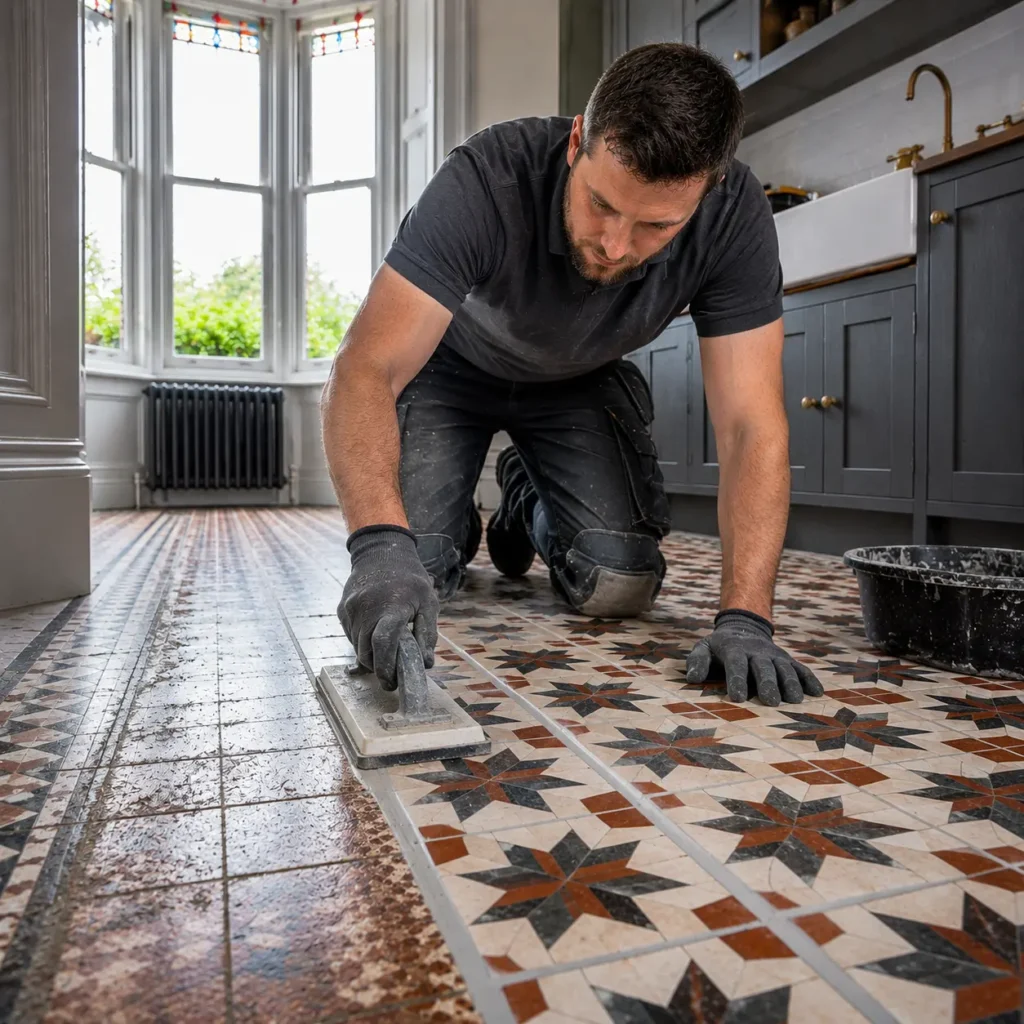
Daily foot traffic plays a major role in grout staining, particularly within busy hallways and entrance areas where mud, grit, moisture, and outdoor debris are carried indoors repeatedly throughout the day. As this dirt settles into narrow grout joints, staining gradually becomes more noticeable and increasingly difficult to remove fully with ordinary cleaning.
Decorative mosaic floor tiles and patterned Victorian flooring often contain multiple grout lines, which makes discolouration stand out more clearly over time. In some properties, grout staining may appear more noticeable on single colour Victorian tiles, whereas multi colour floor patterns can help reduce the visibility of uneven discolouration.
During autumn and winter, repeated exposure to wet footwear can worsen staining further, especially around external entrances where damp and surface dirt accumulate most heavily.
Incorrect Cleaning Methods Can Damage Grout
Many homeowners unintentionally worsen grout staining by using unsuitable cleaning products. Strong bleach solutions, acidic cleaners, and abrasive scrubbing tools may provide short term cosmetic improvement but can gradually damage the grout surface itself.
Older grout is especially vulnerable because years of wear often leave the material more porous and less resistant to moisture. Harsh cleaning products can strip away protective surface layers, increase porosity, and make grout more likely to absorb damp, dirt, and future staining.
Aggressive cleaning may also cause visible colour fading, particularly on lighter grout tones commonly used within traditional tiled entrances and Victorian flooring. Once the surface becomes weakened, staining often returns more quickly and unevenly across the floor.
Using a pH neutral grout cleaner is usually far safer for long term maintenance because it removes surface dirt without accelerating grout deterioration or affecting surrounding tiles.
Installation Problems That Lead to Early Grout Staining
Not all grout discolouration develops through age alone. In many cases, installation mistakes contribute significantly to premature staining and deterioration.
Fresh grout can become patchy or uneven when excessive water is used during mixing or cleaning. This often leads to weakened grout structure and inconsistent colouring once the surface dries fully. Poor curing conditions may also leave the grout vulnerable to damp penetration shortly after installation.
Another common issue involves inadequate preparation before grouting begins. Dust, debris, or residual moisture beneath the tiled surface can interfere with adhesion and increase the risk of early grout degradation.
In older buildings, floor movement and uneven surfaces can place additional pressure on newly installed grout. Over time, this movement may create hairline cracks where dirt and damp gradually collect.
Professional installation methods remain particularly important when restoring historic flooring because older tiled surfaces often require more careful preparation than modern floors.
Long Term Grout Protection and Floor Maintenance
Maintaining older tiled flooring successfully depends more on consistent preventative care than occasional intensive cleaning. Once grout becomes heavily stained or moisture begins penetrating beneath the surface, restoration work often becomes far more difficult and time consuming.
Protective sealing plays an important role in reducing damp absorption and limiting the amount of dirt settling into porous grout joints. This is especially important in high traffic areas where tiled floors experience regular foot traffic, moisture exposure, and everyday surface wear. For many traditional tiled floors, resealing every few years helps maintain surface protection and reduces the likelihood of deep staining developing over time.
Ventilation also contributes to long term grout condition because rooms with restricted airflow tend to retain excess moisture for longer periods. Damp conditions around entrances, kitchens, bathrooms, and basements can gradually encourage mould growth, grout deterioration, and surface discoloration if moisture remains trapped consistently.
Routine maintenance should include gentle surface cleaning, prompt removal of standing water, and regular inspection of grout joints for early signs of damage or staining. Homeowners should also avoid dragging heavy furniture across older tiled flooring because this may weaken grout joints and create small fractures around ageing surfaces.
With suitable care and regular upkeep, traditional tiled floors can continue maintaining both their durability and decorative appearance for many years while preserving the detailed craftsmanship that makes Victorian flooring so distinctive.
Choosing Suitable Materials for Tile Repairs
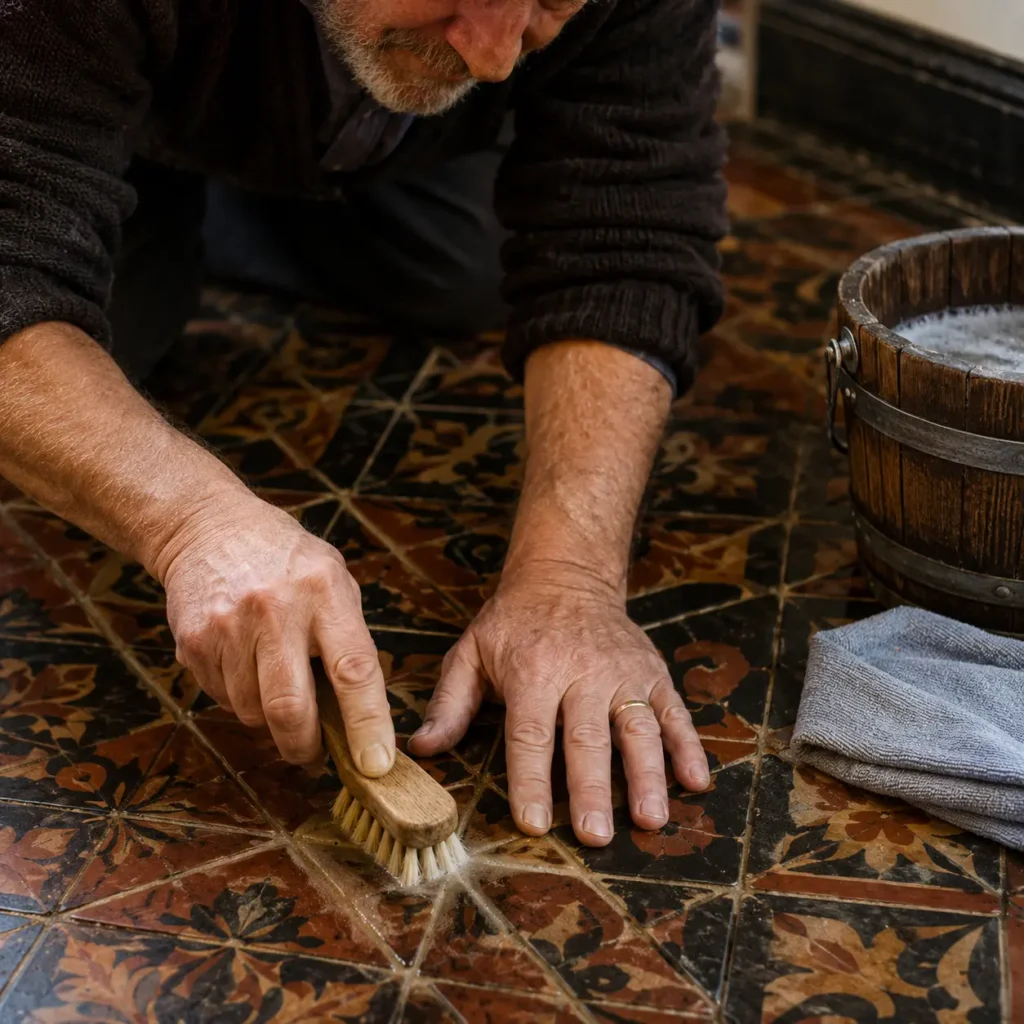
When repairing or restoring older tiled flooring, selecting the right grout is an important decision because unsuitable replacement materials can quickly lead to recurring staining and uneven colour variation. Traditional cement based grout is more porous, which means older repaired sections may absorb damp and dirt more easily over time.
During restoration work, epoxy tile grout is often chosen in hallways, kitchens, and bathrooms where stronger resistance to moisture, surface staining, and daily wear is needed. Its lower absorption rate can help reduce future grout discolouration while improving long term maintenance performance within repaired areas.
For decorative Victorian flooring and mosaic layouts, replacement grout should also be colour matched carefully to the surrounding joints so restored sections blend consistently across the existing floor surface.
When Professional Restoration May Be Necessary
Surface staining can sometimes be resolved through careful cleaning and maintenance. However, certain grout problems may indicate deeper structural or damp related issues beneath the tiled surface.
Professional restoration advice is usually recommended if homeowners notice:
- Crumbling or loose grout lines
- Repeated mould growth after cleaning
- Persistent damp smells near tiled flooring
- Water movement beneath tiles
- Uneven or shifting surfaces
- Deep staining that continues returning
These symptoms may suggest underlying damp damage or failing installation materials that require specialist attention.
Restoring older tiled floors often demands a careful approach because aggressive repairs can damage surrounding decorative tiles or disturb historic layouts.
Conclusion
Discoloured grout is often one of the earliest signs that older tiled flooring requires closer attention. Damp exposure, trapped dirt, unsuitable cleaning methods, and installation problems can all contribute to gradual staining and grout deterioration within traditional homes. If left untreated, these issues may eventually lead to weakened joints, surface damage, and more extensive restoration work.
Careful maintenance, appropriate cleaning methods, and effective damp control all help protect period flooring from long term deterioration. Where grout has already begun breaking down or staining heavily, professional restoration may be the safest option. Abel Tiler provides experienced tiling and restoration services across London, helping homeowners preserve decorative tiled surfaces with durable workmanship and careful attention to detail.