Introduction
Edwardian tiles remain a popular choice in many London homes, particularly where preserving original character is important. When compared with Victorian styles, the differences extend beyond appearance, including variations in materials, layout, and installation methods.
Understanding these distinctions helps in selecting a finish that suits both the property and how the space is used. Whether restoring an older home or introducing traditional tile patterns into a modern setting, working with expert slate tiling approaches for Victorian properties in London can make a noticeable difference.
Key Differences Between Edwardian and Victorian Tiles
Victorian Tiles: Strong Patterns and Practical Use
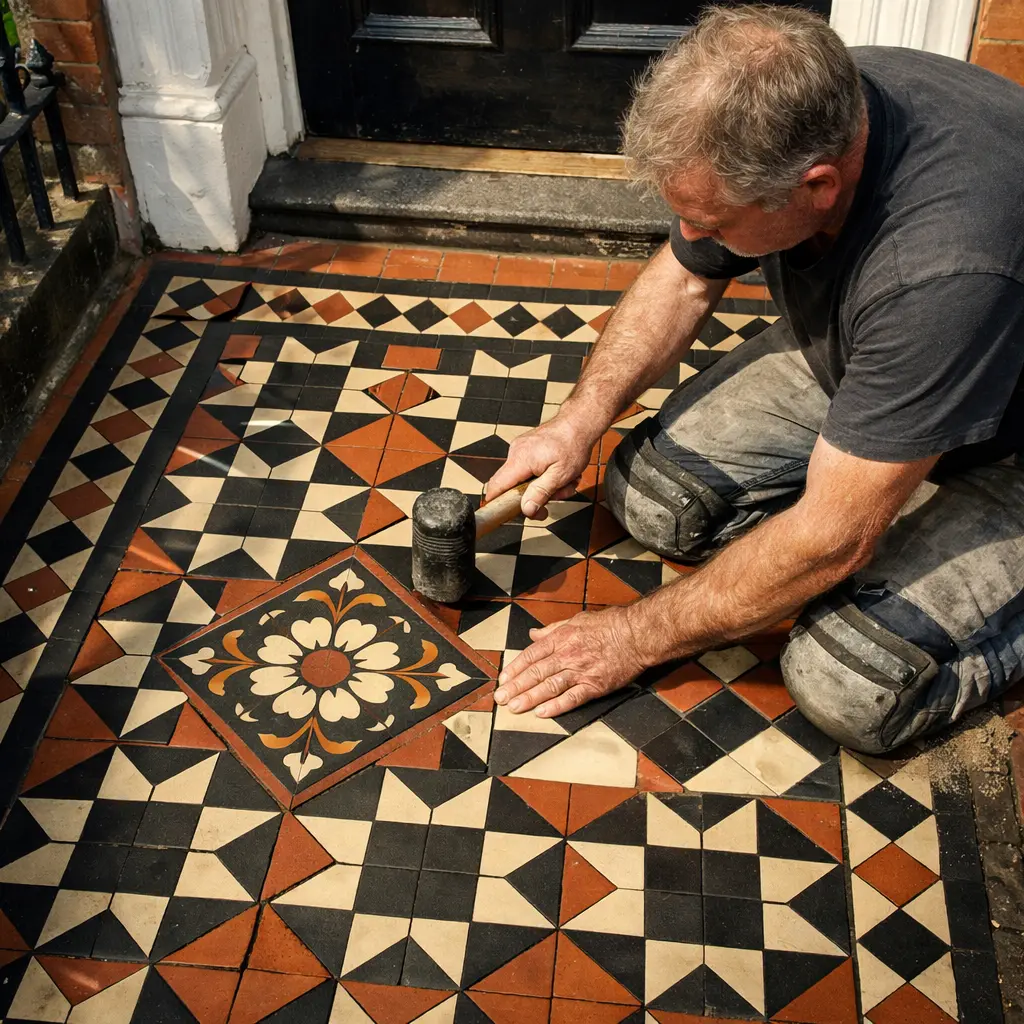
Victorian tiles are recognised for strong contrasts and intricate repeating motifs. Designs often use geometric Victorian tiles arranged into detailed layouts that create a striking visual effect, particularly in hallways and front paths.
These tiles were typically made from encaustic tiles, quarry tiles, and unglazed clay tiles. The patterns are built into the tile rather than applied on the surface, which allows them to withstand heavy use over time. This makes them well-suited to busy areas in traditional London homes.
Victorian tiling was commonly used across:
- Entrance areas and ground floor spaces
- Kitchen floors using quarry tile flooring
- Bathroom floors and lower wall sections
- Porch areas with decorative tile layouts
Edwardian Tiles: Understated and Balanced Design
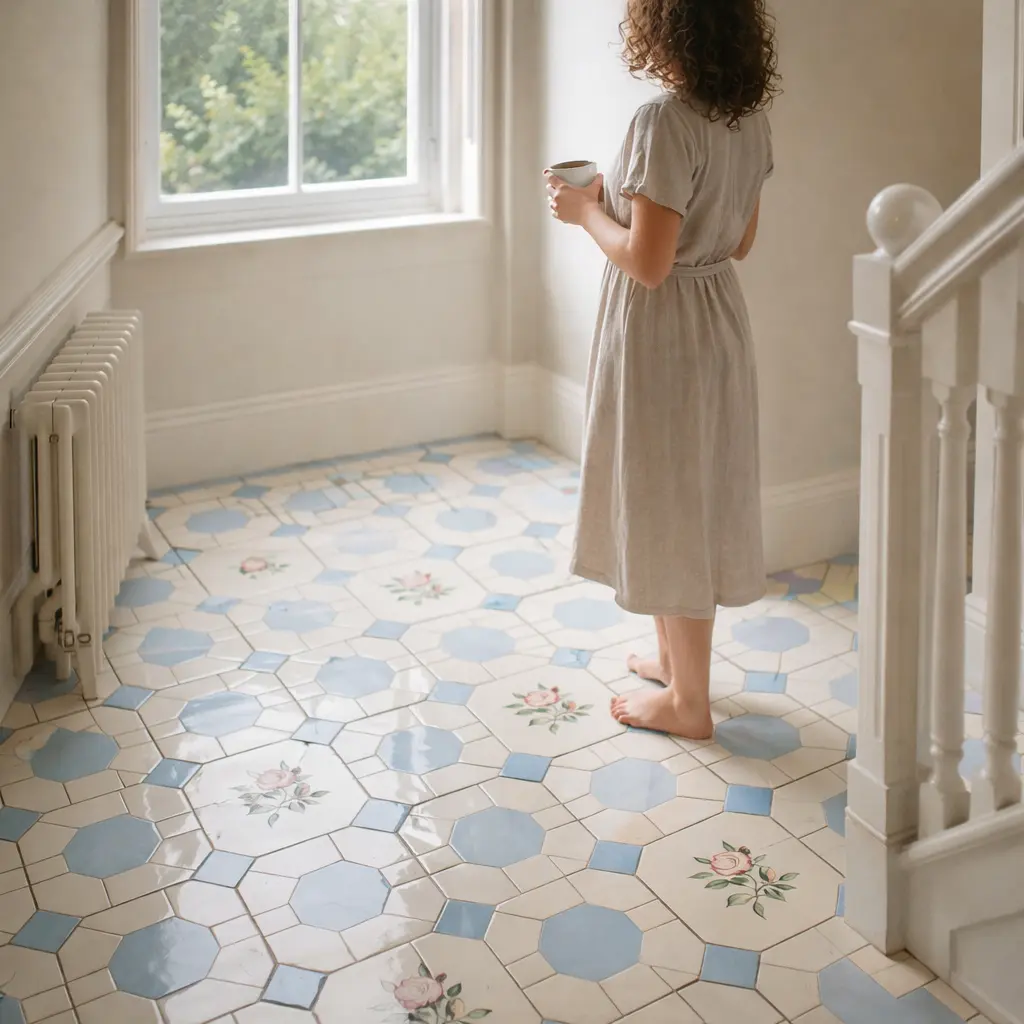
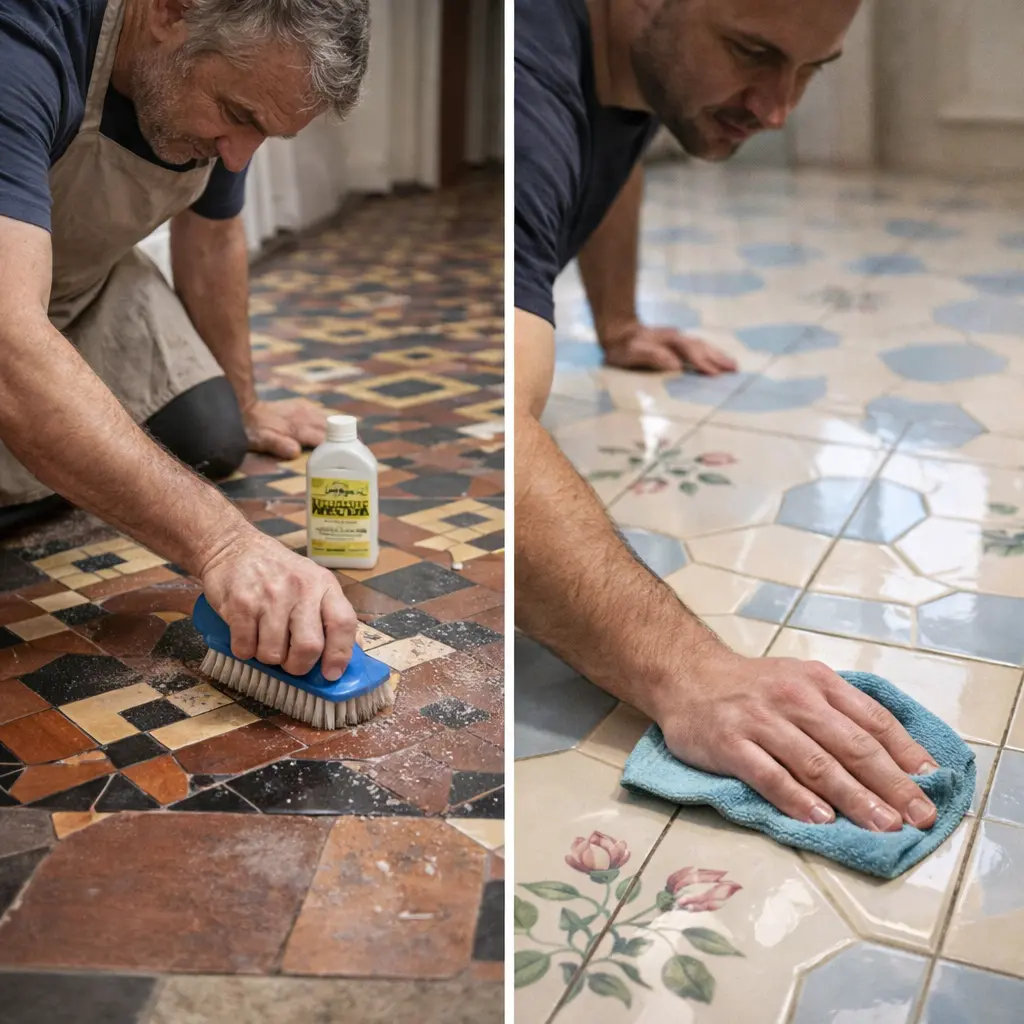
Edwardian tiles introduced a more understated finish, with patterns that feel more open and less dense. Instead of heavy geometric repetition, layouts often include subtle geometric tiles, floral tile motifs, and lighter colour combinations.
These tiles are usually made from glazed ceramic tiles and earthenware tiles, allowing for softer tones such as cream, pale blue, and muted green. This creates a calmer look that works well in period homes and contemporary spaces alike.
Edwardian tiling is often used in:
- Front halls and porch areas where a lighter finish is preferred
- Kitchen walls where a wipeable finish is practical
- Bathrooms with simple decorative details
- Living spaces where a softer visual effect is required
Encaustic vs Geometric Tiles Explained
Understanding the difference between encaustic tiles and geometric tiles is essential when working with Victorian and Edwardian floor tiles.
- Encaustic tiles contain patterns formed from different coloured clays within the tile
- Geometric tiles are individual shapes arranged to create a full pattern across the surface
Victorian designs often combine both to create detailed layouts, while Edwardian styles tend to use geometric tiles with fewer decorative elements and more spacing between patterns.
Cleaning and Maintaining Period Tiles
Maintaining Victorian floor tiles and Edwardian tiles requires a careful approach. In UK homes, moisture and everyday use can affect the surface over time.
Good maintenance includes:
- Regular tile grout cleaning
- Removing stains from ceramic tiles using suitable products
- Avoiding abrasive methods on unglazed clay tiles
- Using gentle tile surface cleaning techniques
With the right care, these tiles can retain their appearance for many years without losing their character.
Repair and Restoration of Original Tile Floors
Restoring original tile floors requires precision, especially when working with geometric tile layouts. Common issues include loose tiles, worn grout, and uneven repairs carried out previously.
Typical restoration work may involve:
- Replacing damaged tiles with matching materials
- Tile regrouting to stabilise joints
- Matching tile thickness to maintain a level surface
- Preserving original patterns during repair
A typical tiling project timeline will vary depending on the condition of the existing floor and the complexity of the pattern. Restoration work can take longer than new installations, especially where preparation and detailed layout are required.
If original tiles are uncovered, it is often best to have them assessed before starting any work, as incorrect repairs can disrupt the original layout in ways that are difficult to reverse.
Choosing the Right Style for Your Property
Choosing between Victorian and Edwardian tiles depends on how the space functions and what role the flooring needs to play within the room.
Victorian tiles are suited to spaces where the pattern needs to define the area, drawing attention and creating structure within the layout. This approach works well in properties with strong architectural features or where the flooring is intended to be a focal point.
Edwardian tiles are better suited to spaces that benefit from lighter tones and more open pattern work. They allow the room to feel less visually dense while still maintaining a period look, making them a practical option for both traditional and updated interiors.
When the most suitable approach is unclear, consulting a specialist such as Abel Tiler helps ensure the design and installation are aligned with the space from the outset.
Conclusion
Both Victorian and Edwardian tiles can perform reliably when installed on a properly prepared surface. The difference lies in how the space is intended to feel and function. Choosing the right style at the start helps avoid unnecessary adjustments later and ensures the finished result sits naturally within the property. For projects in London, getting expert input early can make a noticeable difference to both the appearance and the long-term outcome.