
Introduction
Planning a mosaic tile layout for a Victorian hallway requires careful attention to both design and preparation. These spaces often set the tone for the entire home, particularly where original features and proportions need to be respected.
Victorian mosaic tiles are valued for their detailed geometric designs and structured arrangement. A well considered layout improves durability in entrance areas that see regular footfall while creating a strong first impression.
A traditional finish can be achieved with Victorian slate tiling services in London, complementing classic mosaic hallway designs while supporting long term durability.
Understanding Victorian Mosaic Tile Layouts
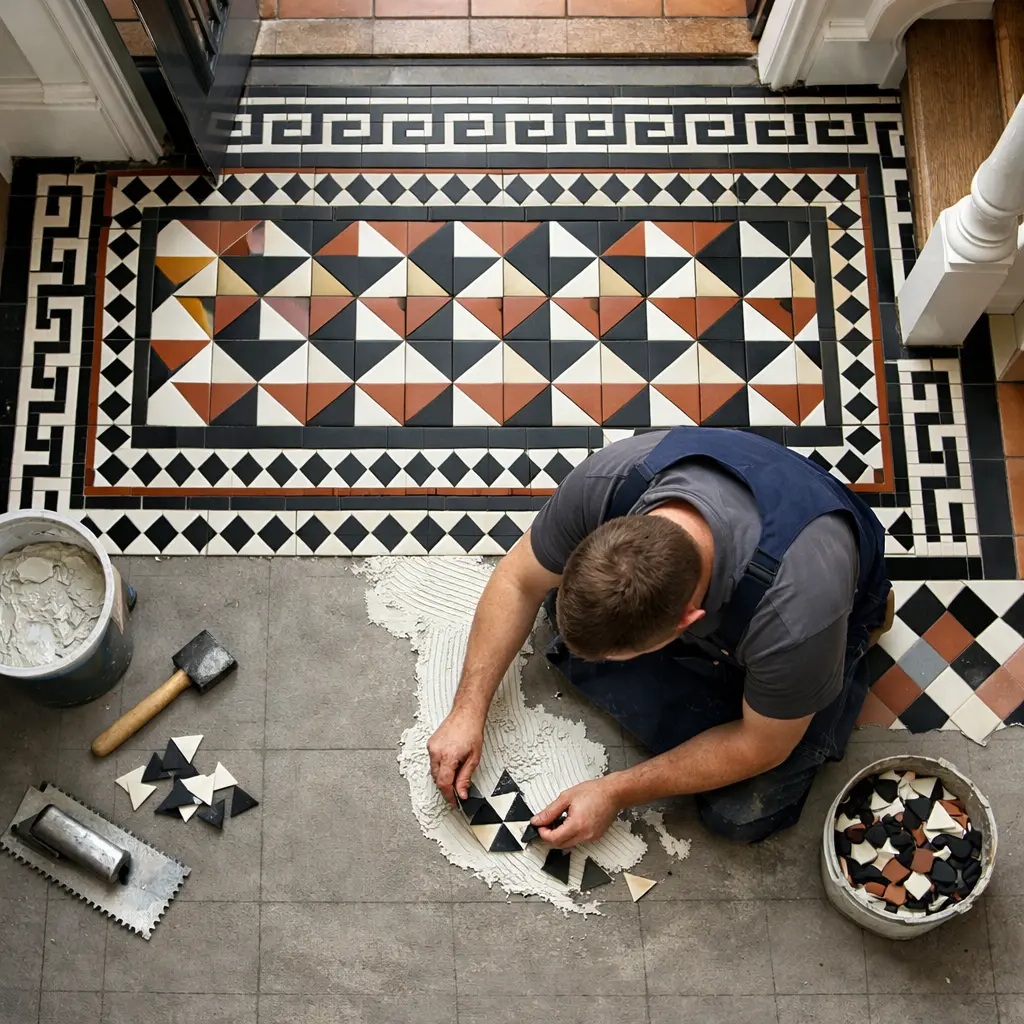
Victorian mosaic designs are built around geometric arrangements, using small-format tiles to form borders, central sections, and repeating details. A typical hallway mosaic tile layout in the UK design features a defined centre framed by a contrasting edge.
This approach works well in narrow entrance spaces, guiding movement through the hallway. Careful positioning keeps the design balanced across the floor without appearing uneven.
What Makes Mosaic Tiles Unique
Mosaic tiles are defined by their small size and the way individual pieces come together to form a complete design. Unlike larger tiles, mosaics are often mounted on mesh sheets, allowing multiple pieces to be installed at once while still maintaining intricate patterns.
This format makes them highly adaptable to different surfaces, including curved or irregular areas where standard tiles may not fit as easily. Their flexibility allows for more detailed layouts while still maintaining structural consistency across the surface.
Materials Commonly Used in Mosaic Tiles
Mosaic tiles are available in a range of materials, each offering different characteristics. Traditional Victorian designs often use natural stone or ceramic, which provide a classic appearance and reliable durability.
Other options include porcelain, glass, and composite materials, each suited to different applications. The choice of material can influence how the tiles respond to wear, moisture, and cleaning, making it important to match the material to the intended use of the space.
Where Mosaic Tiles Work Best
Mosaic tiles are commonly used in areas where both function and design are important. Hallways and entrances benefit from their durability, while bathrooms and kitchens take advantage of their ability to adapt to smaller or more detailed spaces.
They are also suitable for feature areas where a more decorative finish is required. Their scale allows for detailed patterns without overwhelming the overall design of the space.
How Mosaic Tiles Age Over Time
A key benefit of mosaic tiles is their ability to retain a consistent appearance even with regular use. Due to the distribution of small pieces across the surface, wear tends to be less noticeable compared to larger tiles.
Over time, the pattern continues to hold its definition, especially when the installation is carried out correctly. With proper care, mosaic floors and walls can retain both their structure and visual appeal for many years.
Preparing the Surface and Planning the Layout
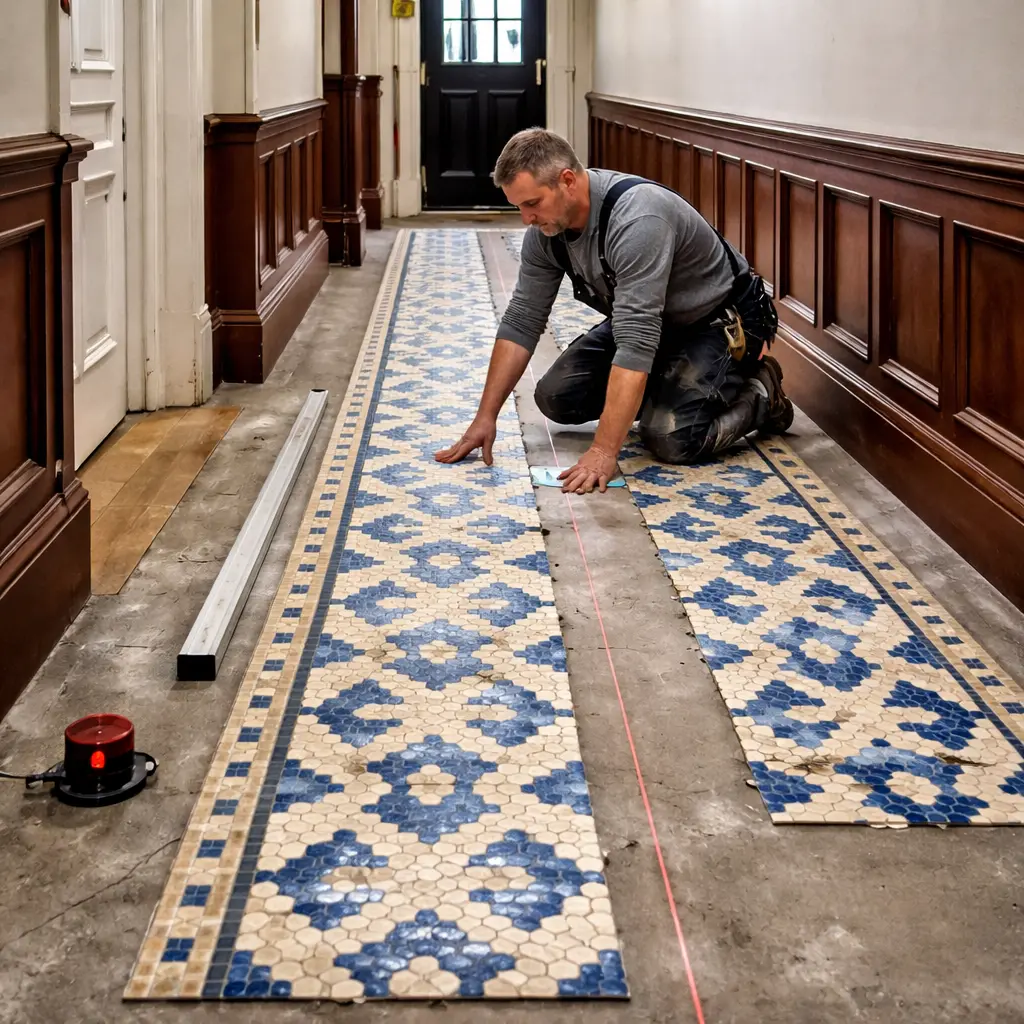
Before installation begins, the condition of the surface must be addressed to provide a reliable base. Dust, debris, or uneven areas can affect how tiles sit and how well they bond.
In many UK hallways, floors require levelling before work can proceed. Taking the time to prepare properly allows the layout to sit evenly and keeps the lines true across the full length of the space.
Key preparation steps include:
- Cleaning the surface thoroughly
- Levelling uneven areas
- Marking clear reference lines
- Testing the arrangement through dry placement
Planning allows adjustments before fixing begins, reducing the risk of misalignment.
Working Around Doorways and Thresholds
Victorian hallways often include multiple door openings, which can interrupt the flow of the pattern. Planning how the layout meets these thresholds helps maintain visual consistency across the space.
Adjusting cuts around door frames and aligning borders with transitions ensures the design remains continuous and avoids awkward breaks in the pattern.
Choosing the Right Pattern for Your Entrance
Selecting the right design plays a major role in how the space feels. Victorian styles often include checkerboard layouts, geometric shapes, or decorative motifs that introduce structure and detail.
In longer hallways, linear arrangements guide the eye naturally, while entrances can include more elaborate centre sections. Matching the scale of the design to the space keeps the result proportionate.
Lighting and How It Affects Mosaic Layouts
Lighting plays an important role in how a mosaic floor is perceived. Natural light from entrance doors can highlight the pattern and bring out variations in colour.
In areas with limited light, choosing a layout with lighter tones can help prevent the hallway from feeling enclosed. Careful placement of lighting also enhances the detail within the design.
Adhesive Application and Tile Fixing Techniques
Correct application of adhesive is essential for achieving a stable installation. The material must be spread evenly across the surface to ensure full contact, as gaps beneath tiles can create weak points that affect performance over time.
Tiles should be placed carefully and pressed firmly into position so they sit correctly against the base. Consistent spacing throughout the installation supports a secure and even result.
Taking standard tile thickness into account during installation helps ensure the mosaic layout remains level and aligns correctly with surrounding surfaces.
Finishing, Grouting, and Final Detailing
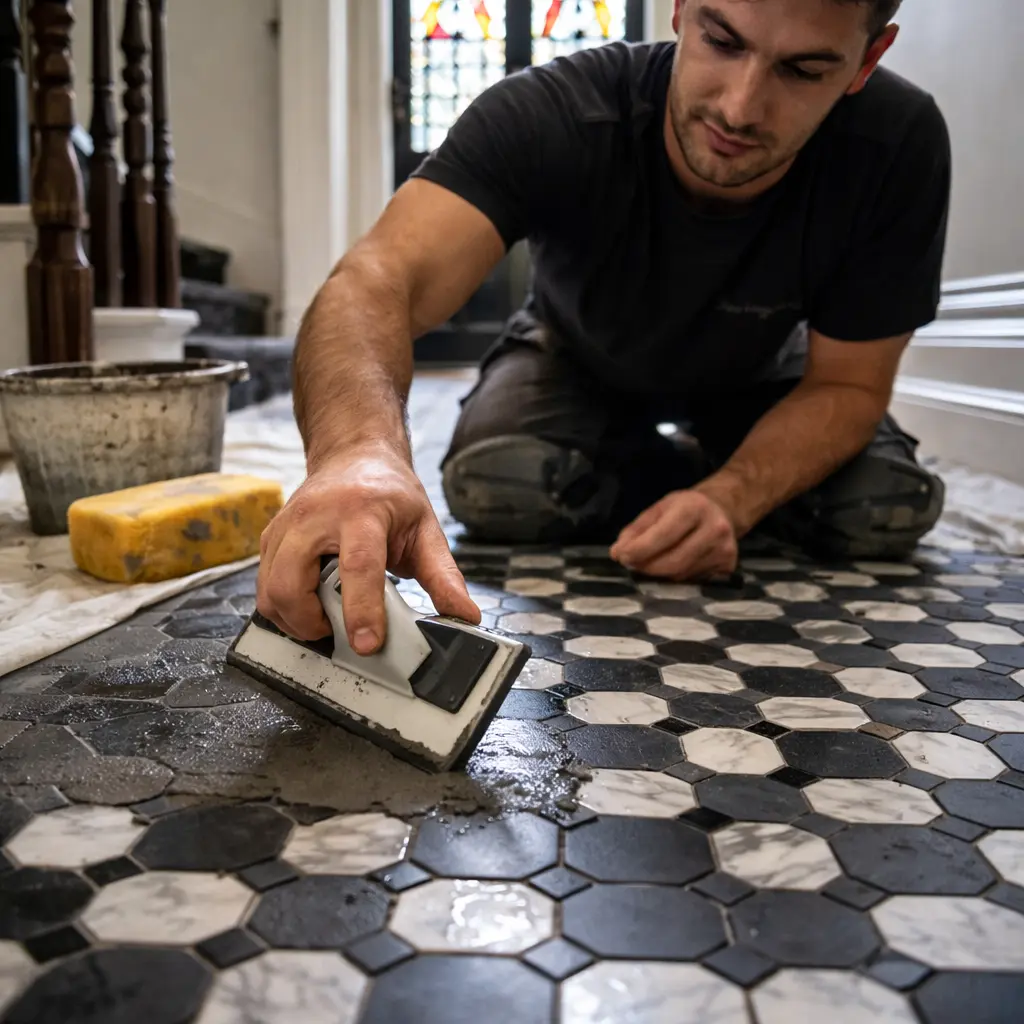
Grouting secures the tiles and defines the overall design. Applying grout evenly fills the joints so the layout reads clearly once complete.
The choice of grout colour influences how the design is perceived. Lighter tones highlight detail, while darker shades create contrast. When finished correctly, the floor reads as intended and maintains a clean appearance.
Design Features That Enhance Victorian Hallways
A mosaic layout works best when combined with traditional elements that complement the style of the property. These features strengthen the overall feel of the entrance without overwhelming the space.
Common additions include:
- Statement lighting to highlight the floor
- Painted woodwork that complements tile tones
- Original doors or restored architectural details
- Mirrors to improve light within narrower spaces
Together, these elements create a cohesive entrance.
Why Professional Installation Matters
Victorian mosaic work requires intricate placement and steady handling, particularly when working within confined hallway settings. Small inaccuracies can affect the overall coherence of the layout.
Abel Tiler approaches each project with a focus on workmanship and attention to detail. This ensures the finished installation meets the standard the property deserves and performs reliably over time.
Conclusion
A carefully planned mosaic tile layout can transform a hallway or entrance into a distinctive feature that reflects the style of a Victorian property. Preparation, layout planning, and correct installation all contribute to a dependable and visually balanced result.
Working with experienced professionals allows the design to be carried out accurately and suited to the space. Abel Tiler works closely with each project’s requirements, ensuring mosaic layouts are installed with precision and finished to a high standard across London homes.