Introduction
Choosing between bespoke tiles and pre-made options is a common decision when planning a period floor in London homes. Understanding how bespoke tiles compare with standard designs helps balance appearance, cost, and practicality.
Victorian houses and Edwardian homes often benefit from tailored layouts, particularly when using slate floor tiling for Victorian properties in London. Knowing these differences allows you to select an option that suits both your space and long-term expectations.
What Are Bespoke Tiles And Pre-Made Mosaic Tile Designs
Bespoke tiles are created to match a specific design, allowing adjustments in size, colour, and layout. These are often used where the aim is to replicate original flooring or introduce a pattern tailored to the space.
Pre-made mosaic tile designs, by contrast, are produced in fixed patterns and sizes. They are typically supplied as sheets or panels, making installation more predictable. While they offer convenience, they are less adaptable when working with unusual room shapes or complex arrangements.
Benefits of Bespoke Tiles
Bespoke tiles offer a high level of design flexibility, making them well suited for period properties where detail and proportion are important. They can be produced to match specific room dimensions, allowing layouts to align accurately even in spaces where walls or edges are not perfectly straight.
They also support fully customised patterns, enabling both traditional Victorian designs and more contemporary variations to be created within the same space. This level of control makes bespoke tiles particularly valuable when restoring original flooring or achieving a tailored finish.
Advantages of Pre-Made Tiles
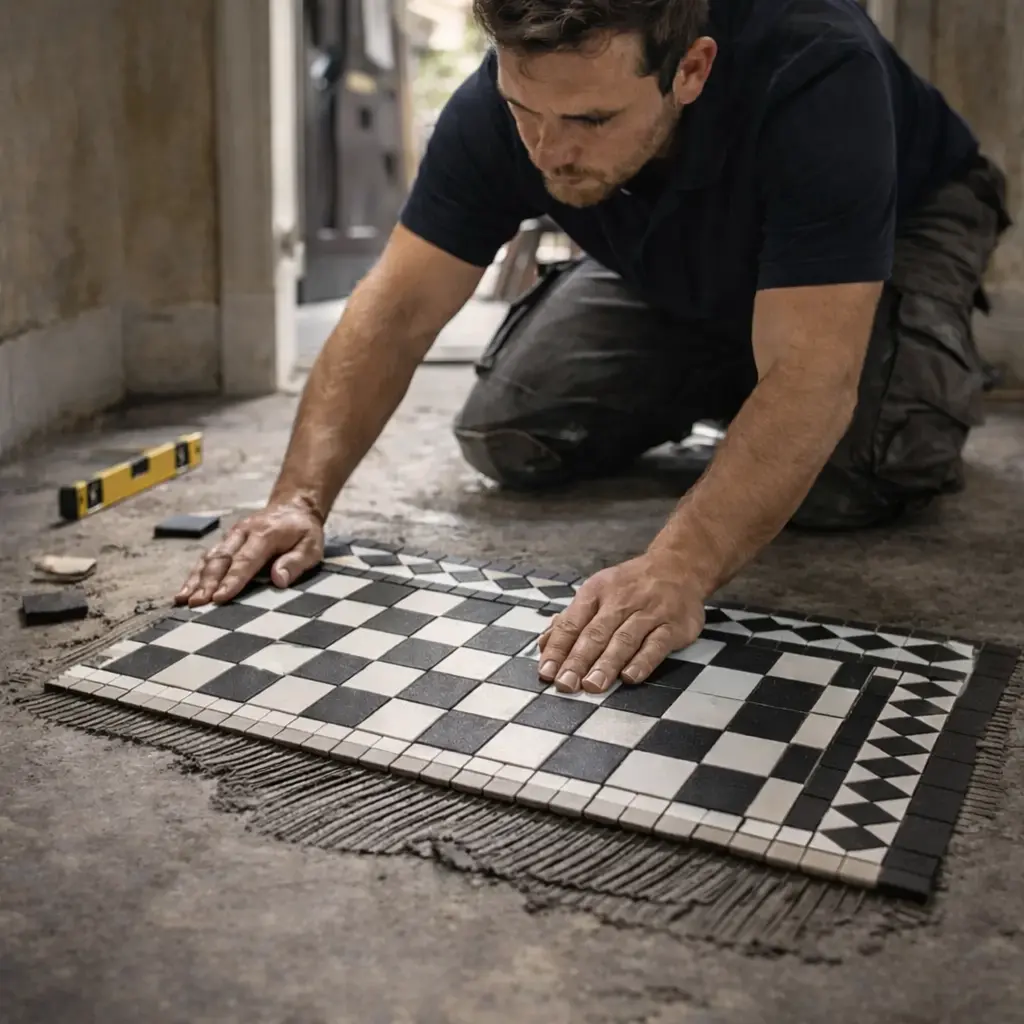
Pre-made mosaic tile designs provide a practical and efficient solution for many flooring projects. Their consistent structure allows for quicker installation, making them ideal where timelines are a key consideration.
They are widely available in established patterns, offering a reliable way to achieve a uniform and balanced appearance. This makes them a strong option for straightforward layouts, particularly in spaces where standard designs align well with the overall setting.
This makes pre-made options a practical choice where the overall tiling project timeline needs to be kept more predictable.
Are Bespoke Tiles Worth It For London Homes
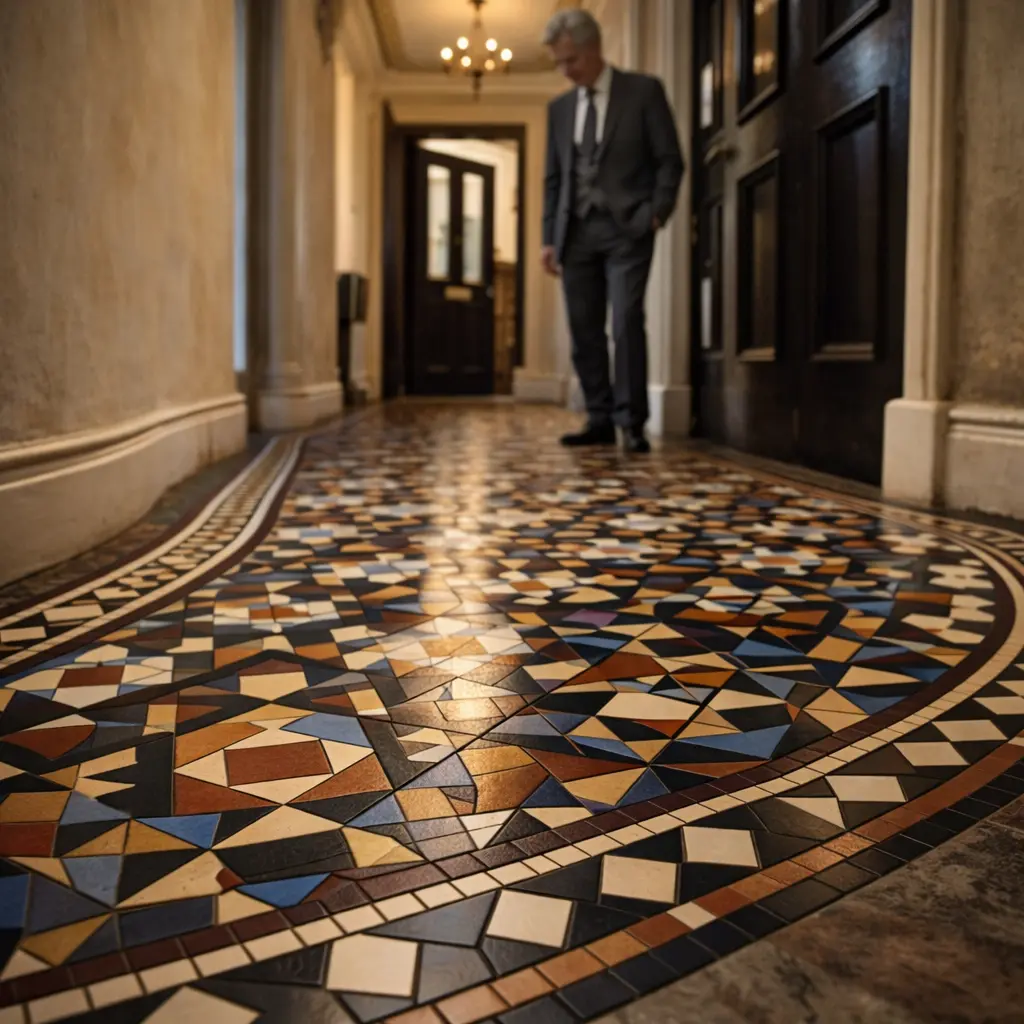
Bespoke tiles are worth considering when the aim is to recreate original flooring, address irregular room shapes, or achieve a layout that cannot be matched with standard designs. In many London period properties, floors may not follow perfect lines, and tailored tiles allow patterns to be set out accurately so the design sits correctly within the space.
They are particularly valuable in hallways and entrances where geometric layouts need to be centred and aligned with architectural features such as doorways and walls. This level of precision helps maintain the visual balance that is often expected in Victorian and Edwardian interiors.
Bespoke options also provide greater flexibility when working with specific colour combinations or heritage patterns. This makes them suitable for restoration projects where maintaining consistency with existing materials is important.
For simpler spaces with uniform dimensions, pre-made tiles can offer a more straightforward approach. The choice ultimately comes down to the level of detail required and how closely the finished floor needs to reflect the character of the property.
Where Should You Use Bespoke or Pre-Made Tiles
Hallways
Hallways are one of the most common areas for patterned floors. Bespoke options allow designs to be centred accurately within narrow spaces, while pre-made sheets may need adjustment at edges.
Bathrooms and Kitchens
In bathrooms and kitchens, both options can work effectively. Pre-made designs suit smaller areas, while bespoke layouts can create a stronger visual feature across the floor.
Entrances and Outdoor Areas
Outdoor entrances and pathways often require durable materials such as terracotta or porcelain tiles. Bespoke designs can enhance kerb appeal, while pre-made options provide a more straightforward installation.
Installation Considerations For Each Option
Both approaches require proper preparation, including subfloor preparation for tiling and the correct adhesive depth.
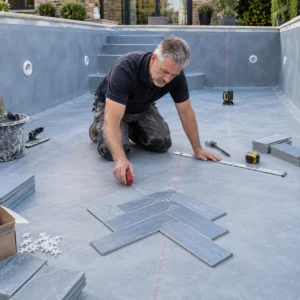
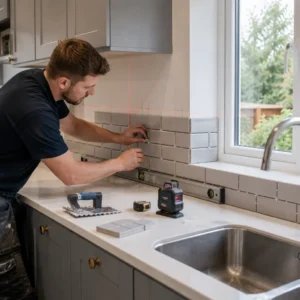
Bespoke tile installation requires a more detailed and controlled approach compared to standard options. Since each tile or pattern is tailored to the space, the layout must be carefully set out before fixing begins. This often involves marking precise reference points to ensure the design remains centred and aligned throughout the installation.
Pre-made designs reduce the number of cuts required but still depend on a stable base and accurate placement. In properties with uneven subfloors, adjustments may still be needed during installation.

Why Professional Installation Makes A Difference
Working with patterned tiles requires experience, particularly when dealing with intricate arrangements. From managing tile positioning to handling moisture in older buildings, each stage needs a considered approach to avoid visible inconsistencies.
For projects where precision matters, working with a specialist such as Abel Tiler can help ensure the design is set out correctly from the start and installed without avoidable issues.
Conclusion
Bespoke and pre-made tiles serve different purposes, and the right choice depends on how much control you need over the final design. Where accuracy, symmetry, and adaptation to the space are important, bespoke tiles provide a level of control that standard options cannot match.
If you are planning a Victorian floor and are unsure which approach suits your property, it is worth assessing the layout carefully before making a decision. Getting the design right at the beginning often prevents adjustments later and leads to a more balanced and lasting result.