Introduction
When planning a bathroom renovation, many homeowners focus on tile colour, material, and finish. However, the direction in which floor tiles are installed can have a surprisingly strong influence on the way a room looks and feels. Tile direction bathroom decisions affect visual flow, perceived room size, and the overall balance of the space.
The right bathroom flooring tile layout can help a room appear wider, longer, or more open without altering its physical dimensions. The way tiles are positioned can influence how spacious and balanced a bathroom feels once the installation is complete.
Why Tile Direction Matters in Bathroom Design
More Than a Flooring Choice
Floor tiles contribute far more than a durable finish. The way they are arranged can influence how different parts of the bathroom relate to one another and how the space is interpreted as a whole.
A thoughtful tile arrangement can help support the proportions of a room, while a poorly chosen one may exaggerate awkward dimensions or make a compact area feel more confined.
How the Eye Follows Tile Lines
Patterns, grout joints, and tile edges naturally draw attention in specific directions. As people move through a room, these lines help shape their perception of the available space.
Because of this, tile orientation becomes an important design consideration rather than simply an installation detail.
Creating a Wider Bathroom with Tile Direction
Running Tiles Across the Shorter Dimension
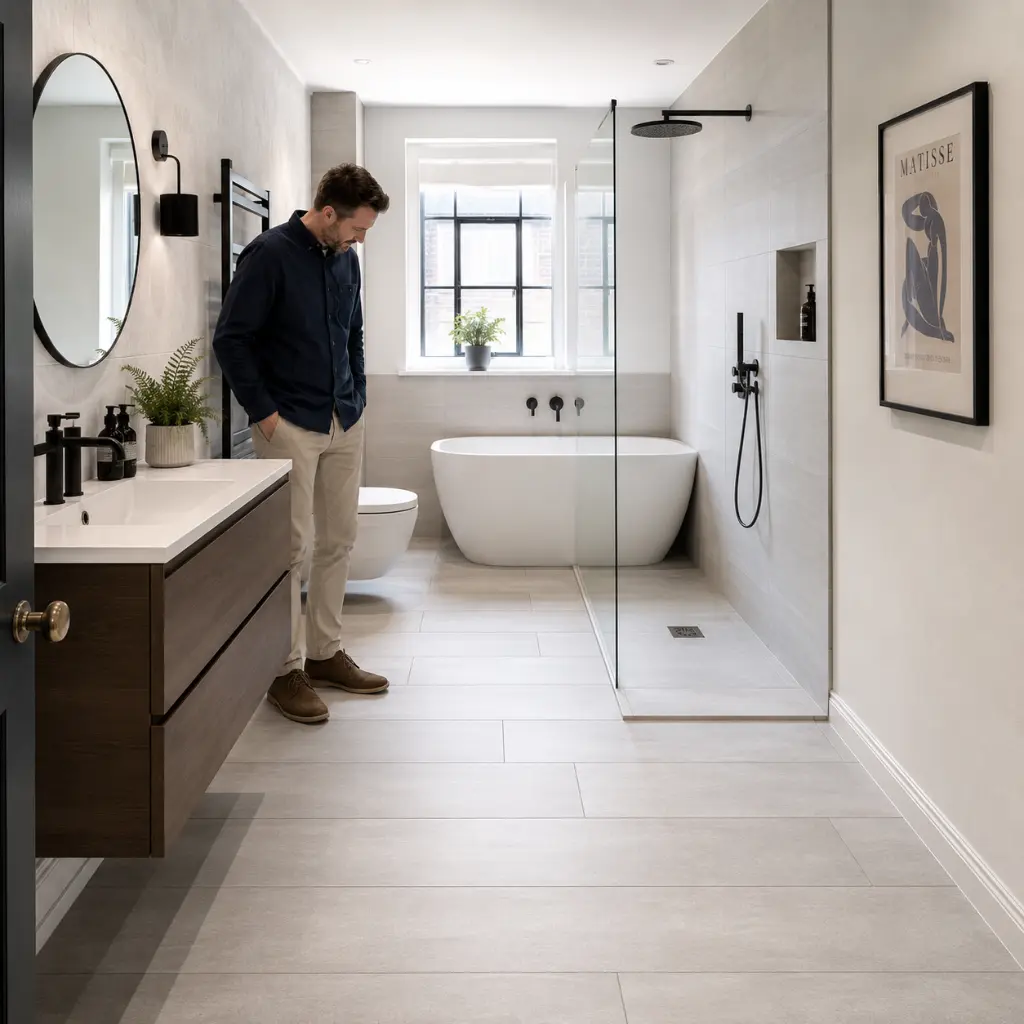
In narrow bathrooms, installing tiles across the shorter width of the room can create a wider appearance. Horizontal floor tiles encourage the eye to travel from side to side rather than along the room’s length.
This approach is often used to soften the appearance of confined spaces and improve overall room proportions. This effect often becomes more noticeable when paired with larger tiles and fewer visible grout joints.
Suitable Bathroom Layouts
This approach is often effective in bathrooms where width is limited in comparison to length. Compact en-suites and many London flats can benefit from layouts that draw attention across the room rather than along it.
When used appropriately, the flooring design can help create a greater sense of balance within restricted spaces.
Using Tile Direction to Add Visual Height
Guiding the Eye Through the Space
The positioning of rectangular tiles can influence how spacious a bathroom feels. Certain layouts encourage attention to travel further through the room, helping create a stronger sense of depth.
This can be particularly useful where available floor space is limited and the aim is to make the room feel less enclosed.
Bathrooms That Benefit Most
Bathrooms with limited floor area often benefit from layouts that encourage the eye to travel further through the room. This can help soften the impact of compact proportions and create a more open feel.
Such layouts are frequently considered in smaller bathrooms where making the most of the available space is a priority.
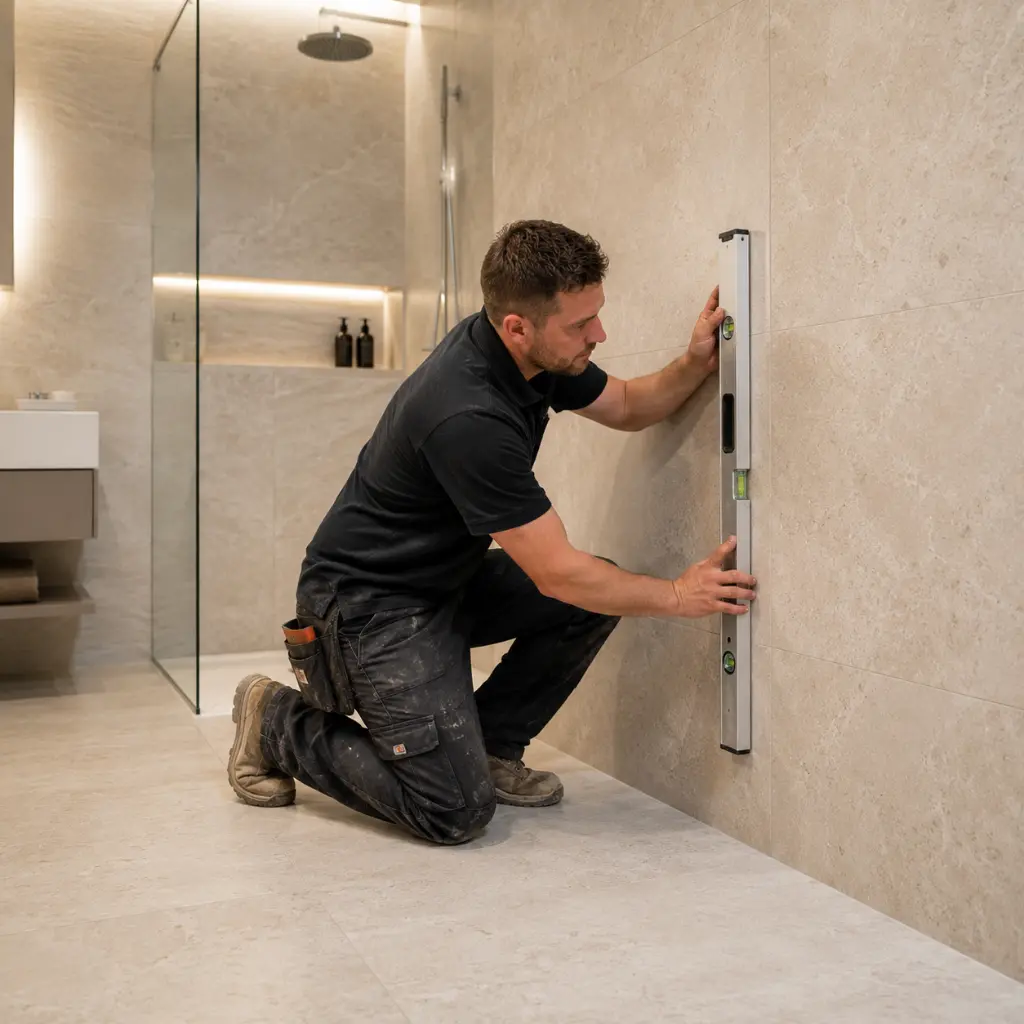
How Tile Shape Influences Directional Impact
Rectangular Tiles and Visual Movement
Rectangular tiles create stronger directional cues than many other tile shapes. Their orientation can emphasise either the length or width of a room depending on how they are installed.
Selecting the most suitable arrangement helps ensure the flooring works with the room’s proportions rather than competing against them.
Large Format and Square Tiles
Large-format tiles can reduce visual interruption across the floor by minimising the number of grout joints. This often creates a cleaner and more continuous appearance.
Square tiles offer a more neutral directional effect, allowing other design features within the bathroom to take greater prominence.
Popular Bathroom Floor Tile Layout Patterns
Straight Lay Layouts
The straight lay pattern remains one of the most widely used bathroom floor tile layouts. Tiles are installed in aligned rows, creating a clean and orderly appearance.
This layout is often favoured in modern bathrooms where clean lines and an uncluttered appearance are preferred.
Herringbone and Chevron Designs
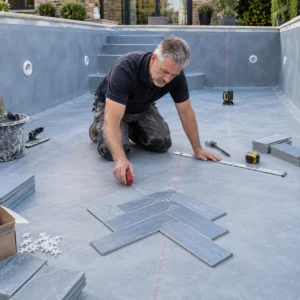
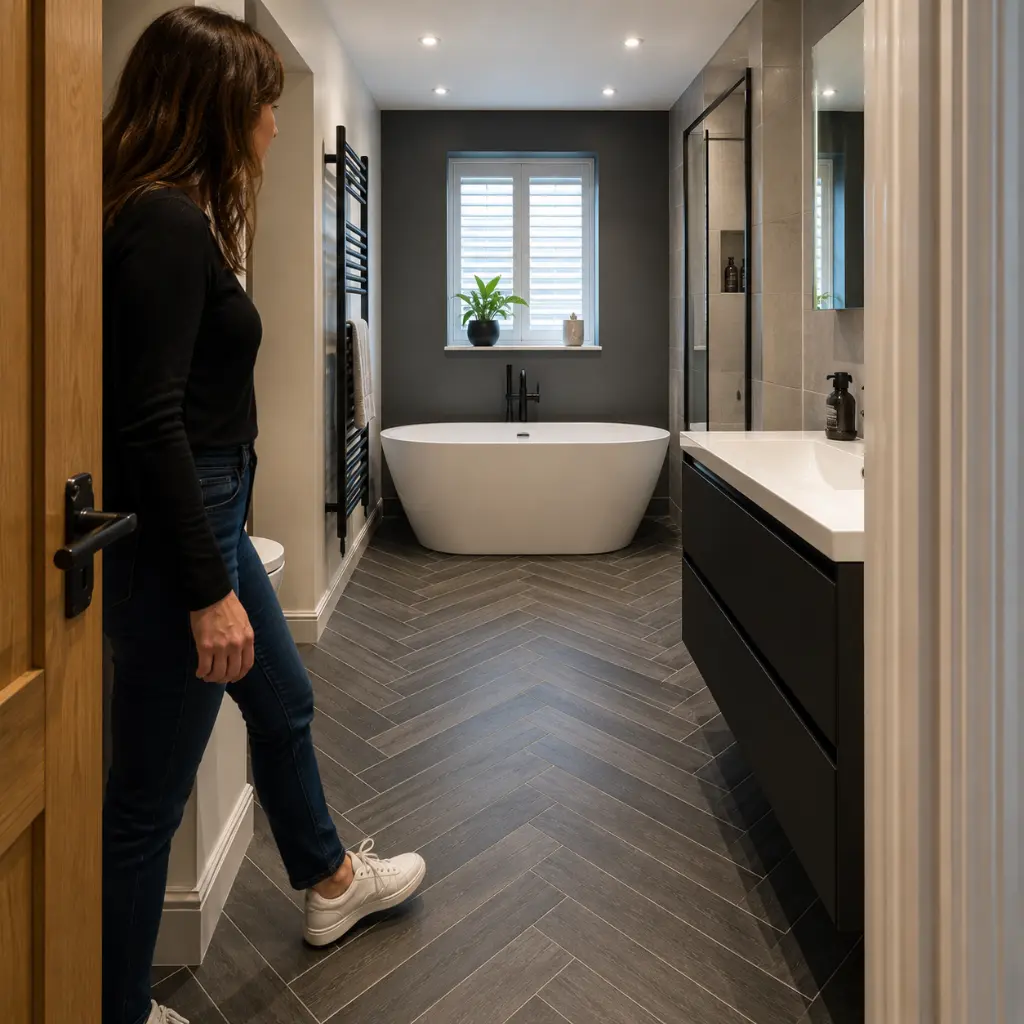
Herringbone and chevron layouts introduce a stronger sense of movement than traditional straight lay patterns. Their distinctive arrangement can help draw attention towards particular areas within the room.
These designs are often selected when homeowners want the flooring itself to contribute more prominently to the overall scheme.
Offset Layouts and Brick Bond Patterns
Offset tile patterns and brick bond layouts offer a balance between traditional and contemporary styling. The staggered arrangement creates visual rhythm without overwhelming the space.
These patterns are often used with rectangular porcelain tiles to add character while maintaining a practical and timeless appearance.
The Relationship Between Grout Lines and Tile Direction
Matching Grout for a Seamless Look
Grout colour can significantly influence how tile direction is perceived. Matching grout tones minimises visual interruptions between tiles and helps create a more continuous surface.
This approach is often used when homeowners want a seamless flooring effect and a calmer overall appearance.
Contrasting Grout and Pattern Definition
A contrasting grout colour highlights the outline of each tile and makes the chosen pattern more prominent.
This approach can add character and detail to the floor, although it also places greater emphasis on the arrangement and spacing of the tiles.
Coordinating Floors with Walls and Showers
Floor to Wall Continuity
Extending design principles across both floors and walls can help create a more unified bathroom interior. Consistent tile positioning encourages a smoother transition between surfaces.
This approach is commonly used in modern renovations where a cohesive finish is preferred throughout the room.
Shower Areas and Feature Walls
Shower enclosures and feature walls provide opportunities to introduce contrast without disrupting the overall layout. A carefully planned shower tile layout can complement the floor while adding visual interest.
Feature wall tiling is often used to highlight specific areas while maintaining balance across the wider bathroom design.
Tile Direction in Different Bathroom Styles
Contemporary Bathrooms
Contemporary bathroom designs often focus on simplicity, clean lines, and uncluttered surfaces. Tile direction is frequently used to reinforce these characteristics and support the overall design concept.
When combined with suitable tile sizes and finishes, the layout can contribute to a calm and organised appearance.
Period Property Bathrooms
Bathrooms within Victorian and Edwardian homes often feature layouts that differ from those found in modern properties. Alcoves, chimney breasts, and irregular dimensions can all influence flooring decisions.
Selecting an appropriate tile arrangement can help integrate contemporary materials while respecting the character of the property.
Common Layout Mistakes That Affect Appearance
Ignoring Room Shape
Tile direction should always be considered in relation to the shape of the room. A layout that enhances one bathroom may be less successful in another with different proportions.
Reviewing dimensions before installation begins can help avoid choices that make the space feel narrower, shorter, or unbalanced.
Overlooking Tile Size and Proportions
Tile size and tile direction should always be considered together. Large format tiles, rectangular tiles, and smaller mosaic designs each interact differently with room dimensions.
Choosing a layout without considering these relationships can reduce the effectiveness of the overall design.
Planning the Best Tile Direction for Your Bathroom
Combining Design and Practicality
A successful tile layout should complement both the design of the bathroom and the way the space is used. Factors such as room proportions, movement through the room, and everyday requirements all play a part in determining the most suitable arrangement.
Why Professional Layout Planning Matters
The success of a tiled floor often depends on decisions made before installation begins. Assessing room dimensions, tile sizes, and key sightlines allows adjustments to be made while changes are still straightforward. Considerations such as tile positioning and appropriate expansion gaps should also be addressed during the planning stage. This approach helps create a floor that feels considered and proportionate once the project is complete.
Conclusion
Floor tile direction can influence how a bathroom is experienced, affecting the sense of width, depth, and overall balance within the room. Although the physical dimensions remain unchanged, the chosen arrangement can alter how the space is perceived.
Alongside layout decisions, factors such as tile size, format, and installation considerations can also play a role in the overall success of a bathroom tiling project.
The most suitable option depends on the room itself, the tiles being used, and the overall design objectives. For bathroom floor tiling projects in London, Abel Tiler can provide guidance on layouts that complement both the property and the intended finish.