Introduction
Planning a Victorian floor often starts with one key question: how long will it take? Understanding the tiling project timeline is essential, particularly in London homes where period features and structural conditions can influence the process.
Victorian houses and terraced properties often require adjustments before installation begins, especially when using specialist Victorian slate tiling in London.
Pre-Project Planning and Scheduling
Before any physical work begins, time is often spent on planning and coordination. This includes site visits, measuring the space, selecting materials, and confirming layout details.
In London homes, scheduling can also depend on access, property type, and coordination with other ongoing work. This early stage is often overlooked when estimating timelines but plays an important role in how smoothly the project begins.
What A Typical Tiling Project Timeline Looks Like
A Victorian tiling project follows a structured sequence, with each stage contributing to the final result. Unlike standard ceramic floor tiles UK homeowners may be familiar with, period floors require more planning and coordination between stages.
The process moves through a series of preparation, planning, installation, and finishing stages, each of which must be completed correctly before the next begins. Because of this, progress depends on how well each stage is carried out, particularly in period properties where conditions can vary.
Each step builds on the previous one, so delays in one part of the process can affect the overall schedule.
In most Victorian properties, the first stage that influences this timeline is subfloor preparation.
Subfloor Preparation And Its Impact On Timing – not explain
The condition of the subfloor is often the first factor that shapes the overall project duration.
Tasks such as levelling uneven areas, repairing damaged sections, or strengthening timber floors can extend the initial phase of the project. While these steps add time, they create a reliable foundation that allows the installation to proceed without interruptions later.
Drying and curing periods are equally important. Materials used during preparation must be given sufficient time to set before tiles are fixed. Attempting to move forward too quickly can lead to delays further down the line, as adjustments or corrections may be required.
Because all subsequent stages depend on the readiness of the base, subfloor preparation often sets the pace for the entire project. A properly prepared surface allows each step to follow in sequence, helping the work move forward in a more controlled and predictable manner.
Working Conditions in London Properties
Practical conditions within the property can influence how work progresses. Narrow hallways, limited storage space, and restricted access are common in Victorian homes.
These factors can slow material handling and movement during installation. In occupied properties, work may also need to be planned around daily routines, which can affect the pace and sequencing of tasks.
Tile Layout Planning And Pattern Setup
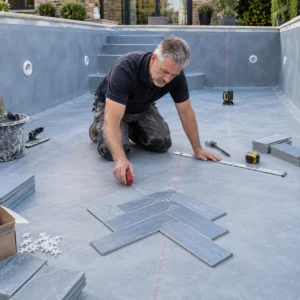
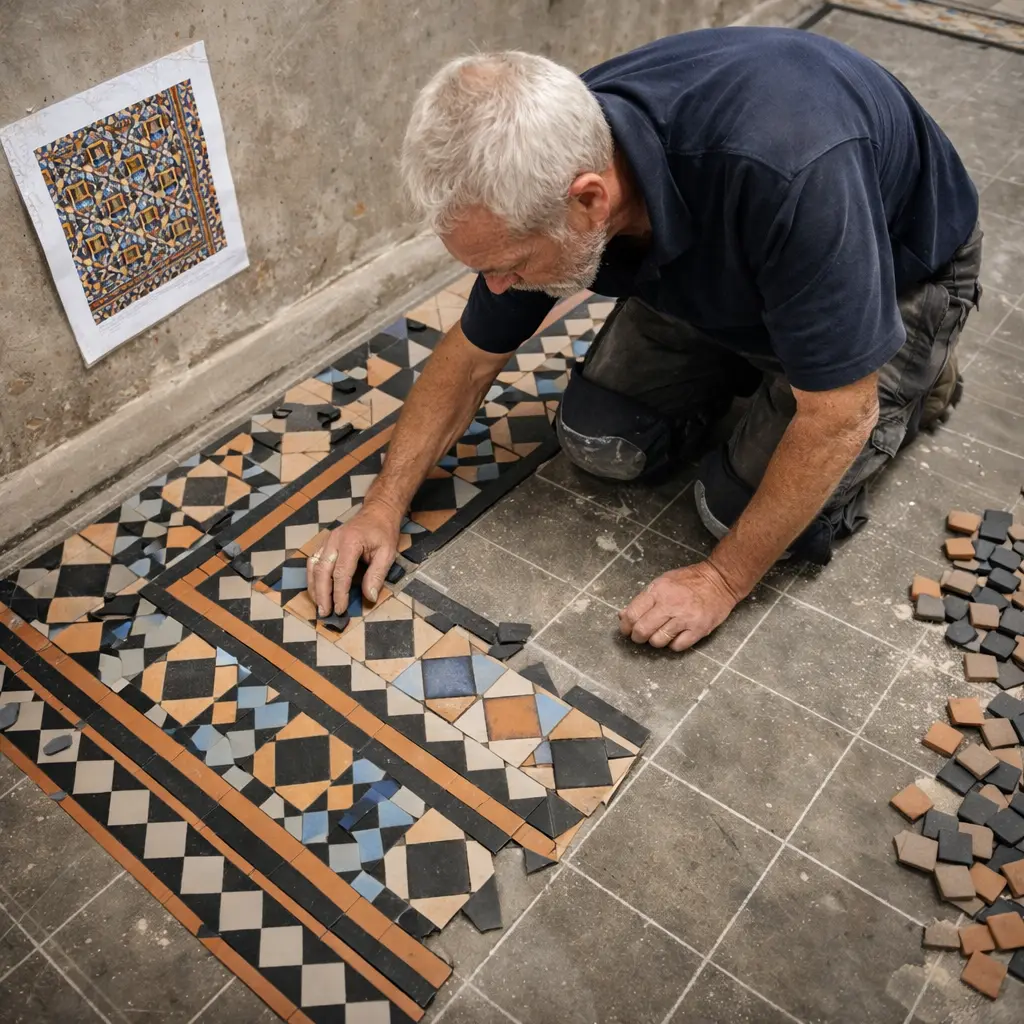
Victorian geometric patterns involve borders, directional cuts, and precise spacing that modern flooring does not. The layout must be planned before fixing begins, often through dry laying sections to check placement.
Victorian and Edwardian floor tiles share geometric influences, although Edwardian designs often feature simpler layouts and lighter colour tones. Both styles require accuracy to maintain balance and achieve a consistent finish across the floor.
Bespoke tiles are often used in period properties to match original designs or create custom patterns suited to the space. These tiles may require additional planning and cutting to achieve a well-balanced finish.
At the start of the fixing stage, adjustments are made to grout joint spacing so the pattern sits correctly within the space. This step centres the design properly and prevents misalignment once tiles are fixed permanently.
How Long Does Tile Installation Take Per m2
The fixing stage varies depending on the complexity of the design and the size of the area. While modern flooring can be installed quickly, Victorian mosaic hallway tiles require more time due to their size and the number of cuts and joints involved.
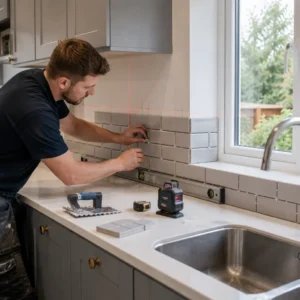
Tiles must be checked against reference lines continuously during installation. This approach maintains consistency across the floor and avoids small gaps that become visible over longer runs.
Fixing Tiles And Adhesive Setting Time
Once the layout is confirmed, tiles are fixed using adhesive. The tile depth measurement, mm, and adhesive bed thickness must be considered together to maintain the correct floor build-up thickness.
After fixing, the adhesive must be left to set properly before further work continues. This stage allows the tiles to stabilise and prevents shifting when grout is applied.
How Long Does Tiling Take To Dry
Drying time is a key part of the overall tiling project timeline. Once the adhesive has fully set, grouting can begin, followed by additional drying before sealing.
Drying times can vary depending on:
- Room temperature and airflow
- Moisture levels in the property
- Type of materials used
In older London homes, limited ventilation and damp conditions can slow the drying process.
Curing Time Before Full Use
Even after the visible work is complete, the floor may require additional time before it can be used fully. This includes allowing adhesives, grout, and sealers to settle completely.
During this period, limiting foot traffic helps preserve the finish and prevents disruption to the newly installed surface. This final stage is part of the overall timeline, even though the installation itself has been completed.

Repairs And Factors That Extend The Timeline
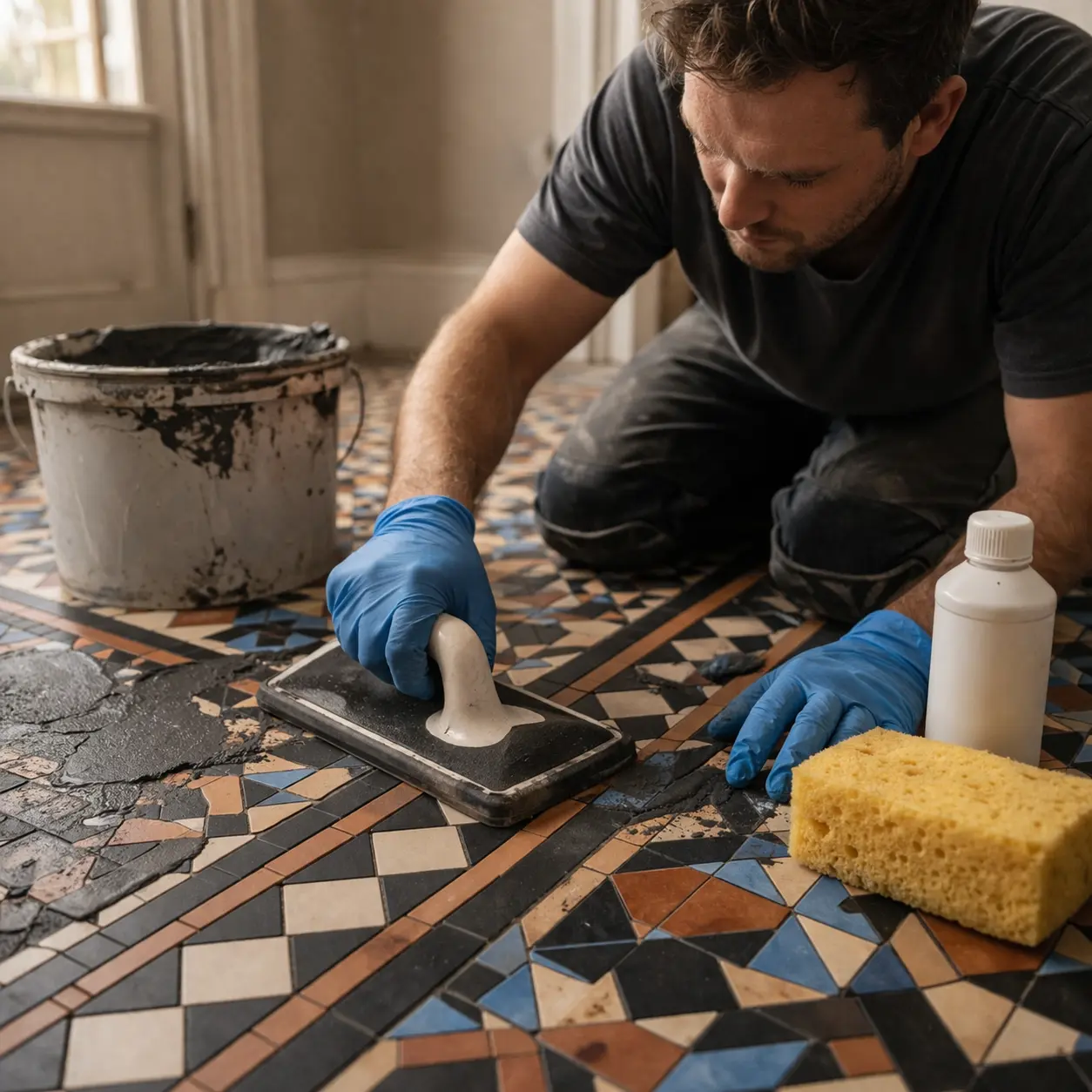
Some projects take longer due to additional work uncovered during installation. Period properties often reveal issues once existing layers are removed.
Common factors that extend timelines include:
- Removing old adhesive or coverings
- Repairing damaged or loose tiles
- Levelling uneven surfaces
- Addressing moisture or subfloor movement
These are common in Victorian floor tiles in UK homes and should be considered when estimating timelines.
How Many Days Does It Take to Tile A Floor UK Homes Typically Need
The number of days required depends on the size of the space and the level of detail involved. Smaller hallways often take longer due to pattern complexity and restricted working space.
Maintaining the same level of precision throughout the installation is essential, particularly in narrow areas where positional accuracy is more visible. Larger spaces may progress more steadily, but intricate patterns will always require additional time.
Typical Duration of Each Stage
While timelines vary depending on property condition and design complexity, most Victorian tiling projects follow a general timeframe:
- Planning and preparation: 1–3 days
- Subfloor preparation and levelling: 1–2 days (plus drying time)
- Layout planning and dry fitting: 1 day
- Tile installation: 2–5 days
- Drying and curing: 1–3 days
- Grouting and sealing: 1–2 days
These estimates can vary depending on access, materials, and environmental conditions within the property.
Why Professional Installation Makes A Difference
Victorian tiling requires experience and an understanding of period properties. From managing tile positioning and joint consistency to working with older subfloors, each stage must be handled correctly.
Abel Tiler specialises in working with period property tiles that UK homeowners value, helping avoid common issues such as uneven layouts or poor bonding. If you are unsure about your project timeline, getting professional guidance early can help prevent delays and unnecessary rework.
Conclusion
Victorian floor installations rarely follow a fixed schedule, as the condition of the existing floor often determines how the work progresses. Working with someone familiar with London period properties helps reduce uncertainty and provides a more accurate timeline from the outset.