Introduction
Victorian flooring remains one of the most recognisable design features in British homes, particularly in hallways, bathrooms, porches, and kitchens. Traditional layouts such as Victorian slate tiling in London continue to appeal to homeowners because they combine durability with strong period character. However, modern flooring decisions now focus just as heavily on safety, practicality, and maintenance as appearance alone.
Many homeowners assume Victorian tiles become slippery when wet, but slip resistance depends largely on the tile material, surface texture, installation quality, and room conditions. Kitchens, bathrooms, porches, and hallways all experience different levels of moisture and foot traffic, making it important to choose flooring suited to each environment.
Why Some Victorian Tiles Feel Safer Underfoot
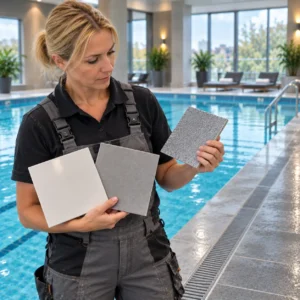
Victorian tiles vary significantly in texture and finish, which means some surfaces naturally provide more grip than others. Matt Victorian tiles and textured Victorian tiles generally offer stronger slip resistance because the surface creates greater friction beneath footwear, making them more practical in areas exposed to moisture and regular foot traffic.
Highly polished or heavily glazed surfaces often become noticeably smoother when wet, which can reduce stability underfoot in bathrooms, kitchens, and entrance areas. For this reason, gloss floor tiles are usually better suited to decorative spaces rather than areas regularly exposed to rainwater or condensation.
Tile size also influences slip resistance. Smaller geometric Victorian tiles and encaustic tiles contain more grout joints across the surface, which naturally increases grip underfoot and reduces the uninterrupted smoothness created by larger format flooring.
Material choice also affects floor safety. Unglazed clay tiles and textured porcelain flooring generally provide better grip because their surfaces create more traction when exposed to moisture, while highly glazed ceramic finishes can become considerably more slippery once wet.
Understanding Slip Resistance Ratings
Homeowners choosing anti slip Victorian tiles often come across terms such as R10 tiles, R11 tiles, and pendulum test ratings. These classifications indicate how much grip a tile surface can provide in wet and dry conditions.
R10 floor tiles are commonly used throughout domestic interiors including kitchens, bathrooms, and hallways because they offer balanced everyday slip resistance. R11 floor tiles provide greater traction and are usually preferred for wet rooms, porches, and outdoor entrances where water exposure is more frequent.
Pendulum test ratings measure friction between footwear and the floor surface. This becomes particularly important in older homes where uneven floors, worn grout joints, or slight structural movement may already affect stability. Choosing suitable slip-resistant flooring can improve safety significantly in these conditions.
Are Victorian Hallway Tiles Practical for Everyday Use?
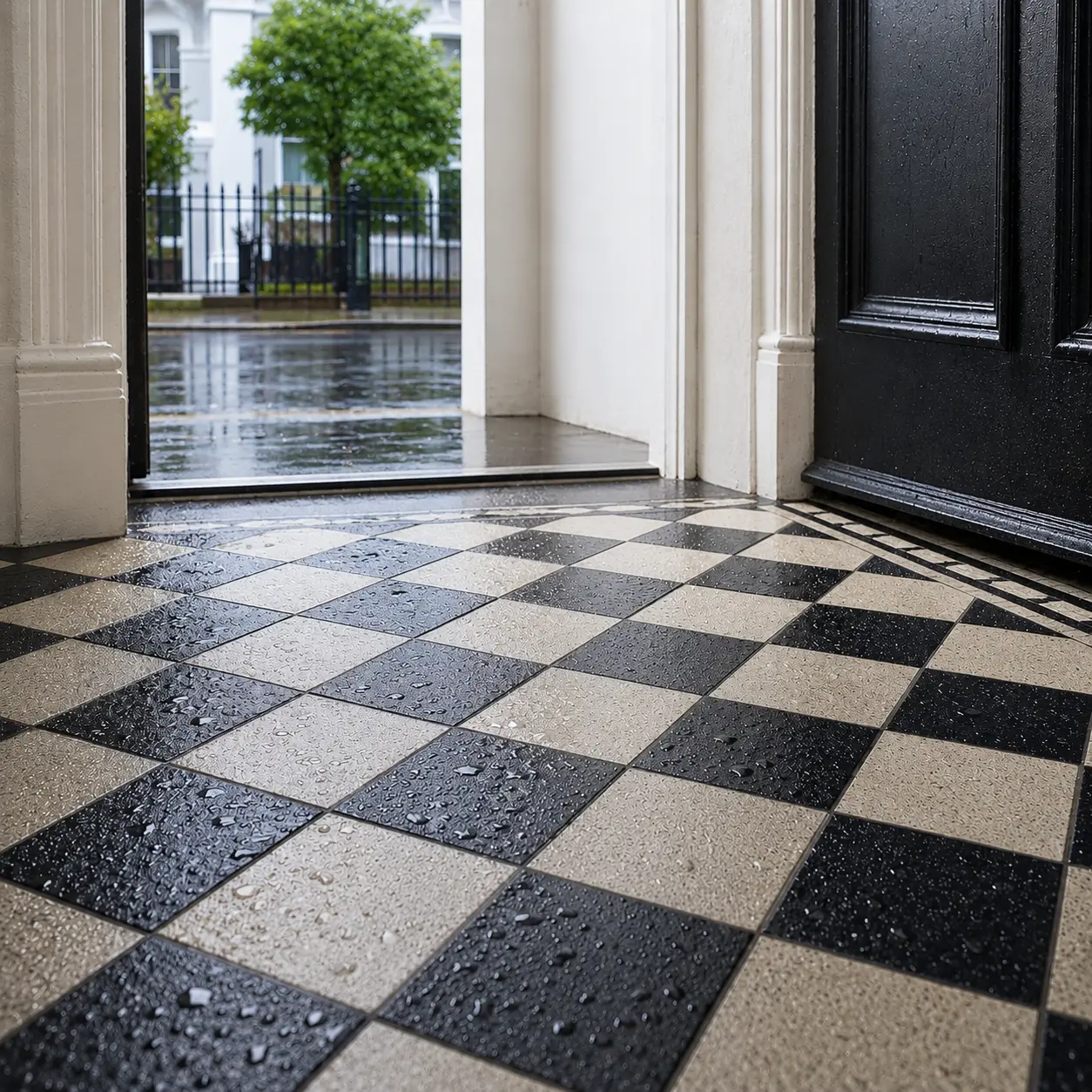
Hallways experience constant exposure to wet footwear, rainwater, and outdoor debris, especially during colder months. For this reason, non slip hallway tiles remain one of the most practical flooring choices for busy homes.
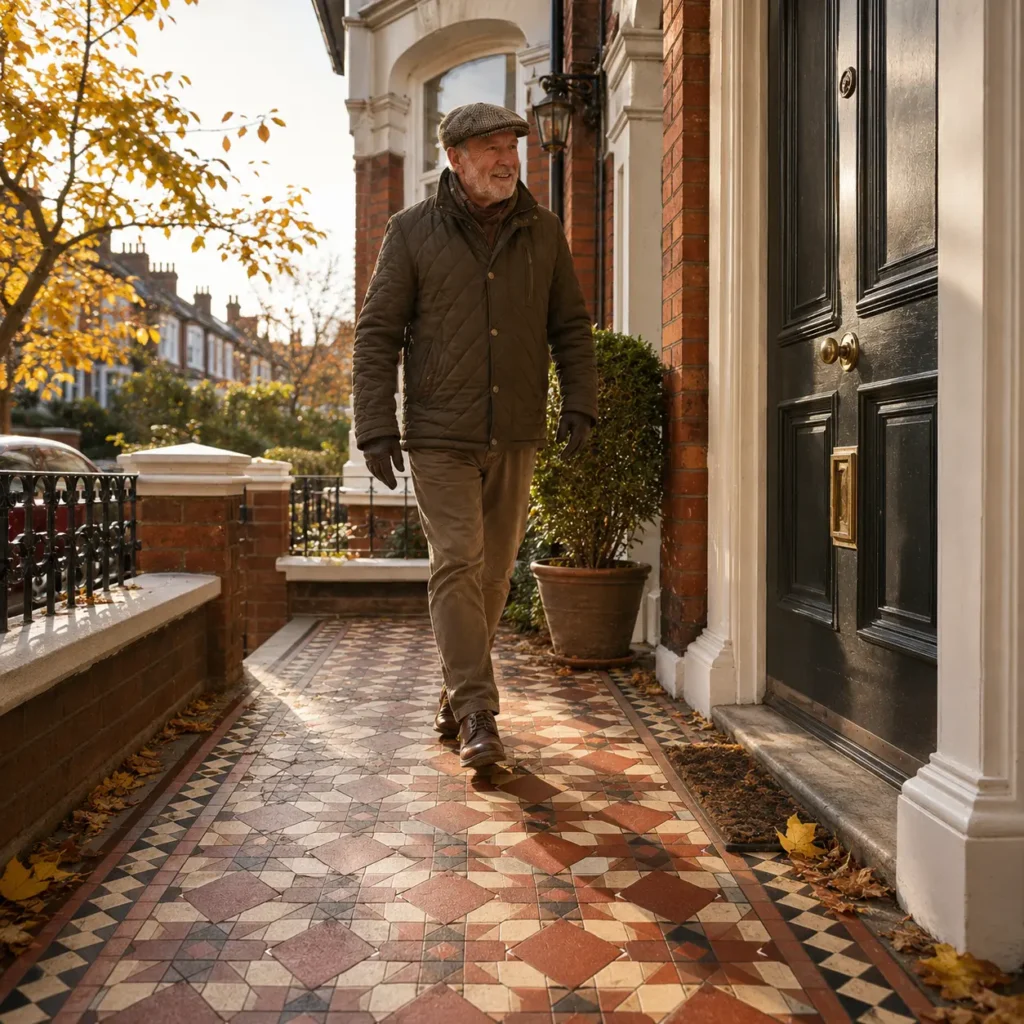
Traditional Victorian entrance flooring was originally designed for durability and grip in high-traffic areas. Textured Victorian tiles and geometric mosaic flooring still perform particularly well because surface texture combined with multiple grout lines naturally improves stability underfoot.
Black and white checkerboard Victorian tiles are often chosen for hallways because they combine decorative character with practicality. Multi coloured Victorian tiles can also help reduce the visibility of moisture marks and dirt brought indoors during wet weather.
Simple maintenance measures such as entrance matting and regular cleaning further improve hallway safety by reducing standing moisture and debris on the tiled surface
Bathroom Flooring and Wet Area Safety
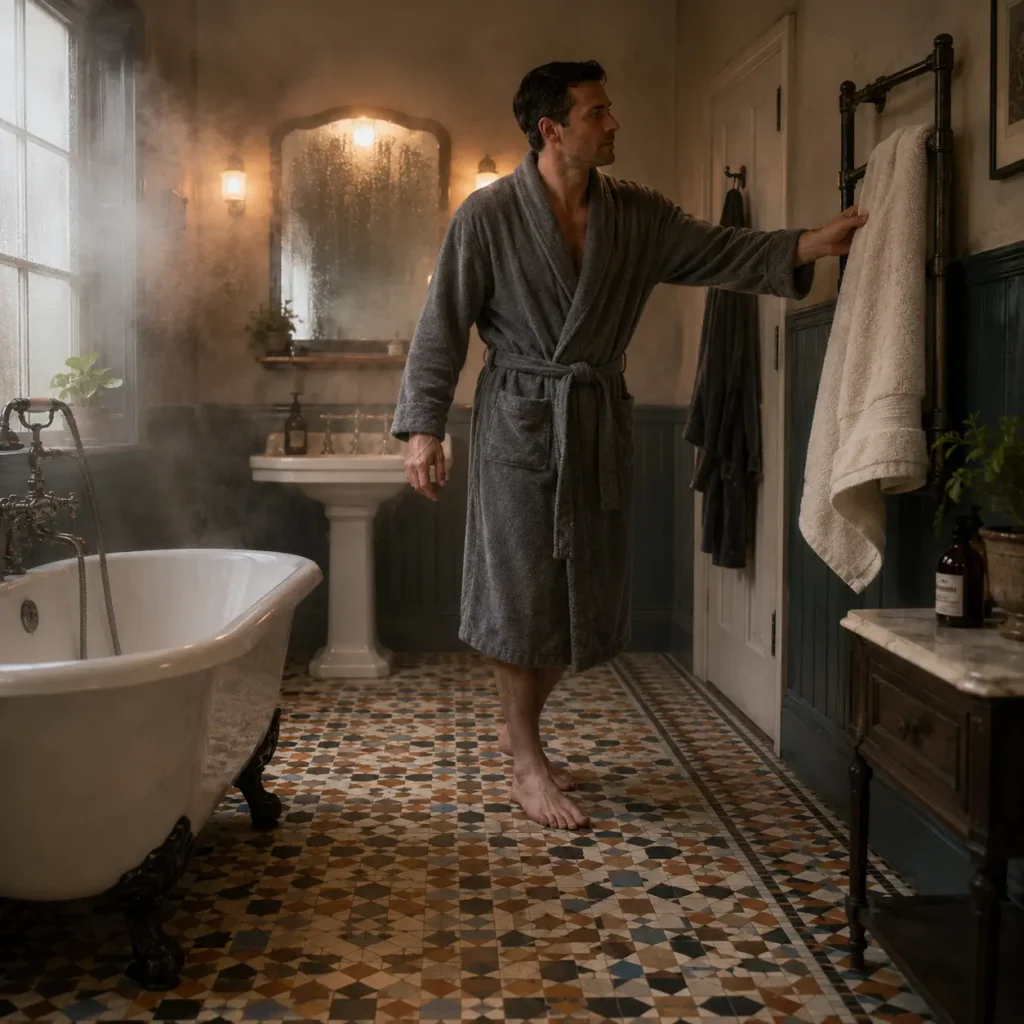
Bathrooms require particularly careful flooring selection because surfaces remain exposed to water, condensation, and steam every day. Victorian bathroom tiles can still provide reliable slip resistance when suitable finishes are selected.
Matt finish Victorian tiles and textured porcelain surfaces generally perform better in wet conditions than polished alternatives. Smaller geometric layouts are also widely used because additional grout lines help increase floor grip in shower areas and around baths.
Wet rooms require even greater attention to safety due to constant water exposure. Slip resistant porcelain tiles are often preferred because they provide dependable traction while remaining highly moisture resistant.
Ventilation also affects long-term bathroom safety. In older homes with limited airflow, trapped moisture can increase the likelihood of slippery surfaces forming around showers, baths, and tiled corners.
Kitchen Flooring and Daily Wear
Kitchen floors regularly face water spills, cooking oils, food residue, and heavy foot traffic. Choosing tiles that maintain stable grip under these conditions helps improve everyday safety.
Matt Victorian tiles and textured anti slip finishes usually perform better than highly polished surfaces in busy family kitchens. Porcelain Victorian flooring is particularly popular because it combines durability, moisture resistance, and reliable traction.
Maintenance also plays an important role in preserving slip resistance. Wax-based or glossy cleaning products can gradually leave smooth coatings across the tile surface, reducing natural grip. Using pH neutral cleaners helps preserve the original texture without creating additional slipperiness.
Outdoor Victorian Tiles and British Weather Conditions
Exterior Victorian flooring faces far more demanding conditions than indoor surfaces. Rainfall, frost, algae growth, and temperature changes all affect outdoor floor safety.
Victorian porch tiles and pathway flooring require stronger slip resistance because they remain regularly exposed to moisture. Anti-slip porch tiles with textured finishes usually provide better wet-weather grip than smooth glazed surfaces, particularly during winter.
Frost resistance is equally important outdoors. Tiles with high water absorption may crack over time when trapped moisture freezes and expands. Outdoor Victorian tiles designed specifically for British weather conditions are manufactured to withstand these changes while maintaining durability.
Drainage also affects safety. Even high-quality anti-slip flooring can become hazardous if water pools across the surface due to poor installation or incorrect floor gradients.
How Maintenance Affects Slip Resistance
Slip resistance does not depend solely on the tile itself. Dirt, grease, soap residue, and unsuitable cleaning products can gradually reduce floor grip over time if surfaces are neglected.
Many homeowners unintentionally make tiled floors more slippery by using glossy cleaning products that coat the textured surface responsible for natural traction. Textured porcelain flooring and unglazed Victorian tiles usually perform best when cleaned using pH neutral products that preserve the original finish.
Loose grout joints and chipped Victorian floor tiles may also create uneven surfaces that affect stability, particularly in busy entrances and hallways.
Choosing the Right Victorian Tiles for Different Rooms
Different rooms place different demands on flooring, meaning no single Victorian tile suits every area equally well. Bathrooms and wet rooms require stronger moisture resistance, while hallways and entrances benefit from durable textured surfaces capable of handling heavy daily use.
Victorian porch flooring also requires better weather resistance and drainage compatibility. Smaller geometric patterns often work especially well in bathrooms and entrances because grout lines naturally improve grip.
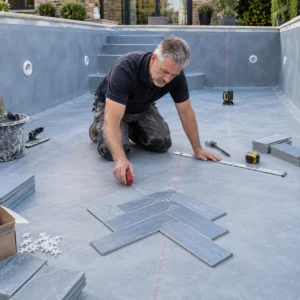
Professional installation is equally important. Uneven subfloors, poor levelling, or incorrect grouting can reduce floor stability regardless of how slip resistant the tile surface appears initially. Proper preparation helps ensure the flooring remains durable, stable, and safe over the long term.
Conclusion
Non-slip Victorian floor tiles can provide an excellent balance between traditional design and modern household safety when suitable materials and finishes are selected. Textured surfaces, matt finishes, and appropriate slip-resistance ratings all contribute to safer flooring across kitchens, bathrooms, porches, hallways, and other high-traffic areas.
Choosing Victorian flooring involves more than appearance alone. Moisture levels, maintenance, installation quality, and room usage all influence long-term performance. With professional installation from Abel Tiler, homeowners can achieve Victorian flooring that preserves period character while supporting modern practical requirements.