Introduction
Choosing the right tile adhesive is one of the most important steps in any wall tiling project. Whether you are installing a kitchen splashback, tiling bathroom walls, or creating a decorative feature, the adhesive directly affects both performance and appearance.
Many London homeowners focus on tile design but overlook the importance of proper bonding materials. Using the wrong adhesive can result in tile slippage or uneven alignment. This is especially common in older UK properties where walls are rarely perfectly level.
Selecting the right product ensures a stable bond and a clean finish.
What Is Tile Adhesive and Why Does It Matter for Walls
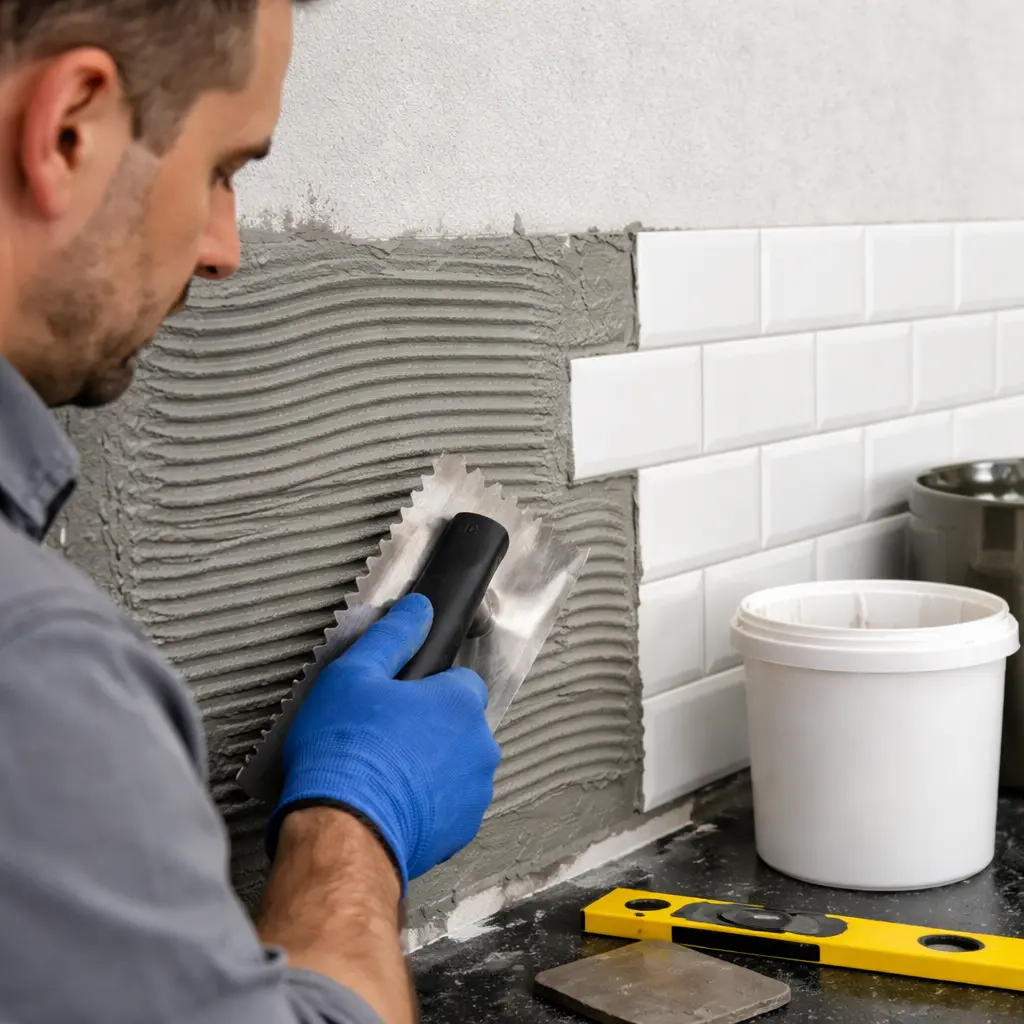
Tile adhesive is a specially developed compound used to hold tiles firmly in place on surfaces like plasterboard, cement render, or previously tiled walls. Unlike traditional mortar, modern adhesives provide a stronger grip while allowing slight movement during installation.
This makes a noticeable difference when working on walls that vary in flatness, helping maintain straight alignment and keeping tiles firmly in position.
Main Types of Tile Adhesive for Wall Tiling
Cement-based adhesive is the most commonly used option for wall tiling in London homes. It bonds reliably to solid surfaces such as plaster or render and works effectively with ceramic tiles in standard kitchen and bathroom settings.
Polymer-modified adhesive offers enhanced strength through added bonding agents. It is often chosen for porcelain or larger tiles and performs well in environments where the substrate flexes slightly, helping tiles sit true on the wall.
Ready-mixed adhesive provides convenience and ease of use for smaller indoor projects. It allows easy adjustment during installation and is commonly used for splashbacks or decorative areas. It is not suitable for areas exposed to damp or steam, nor for heavier tiles.
Shower enclosures and commercial kitchens need materials that can cope with constant exposure. Epoxy adhesive performs consistently in these conditions, forming a strong bond that holds under water, cleaning chemicals, and regular use.
Working Time and Setting Time Explained
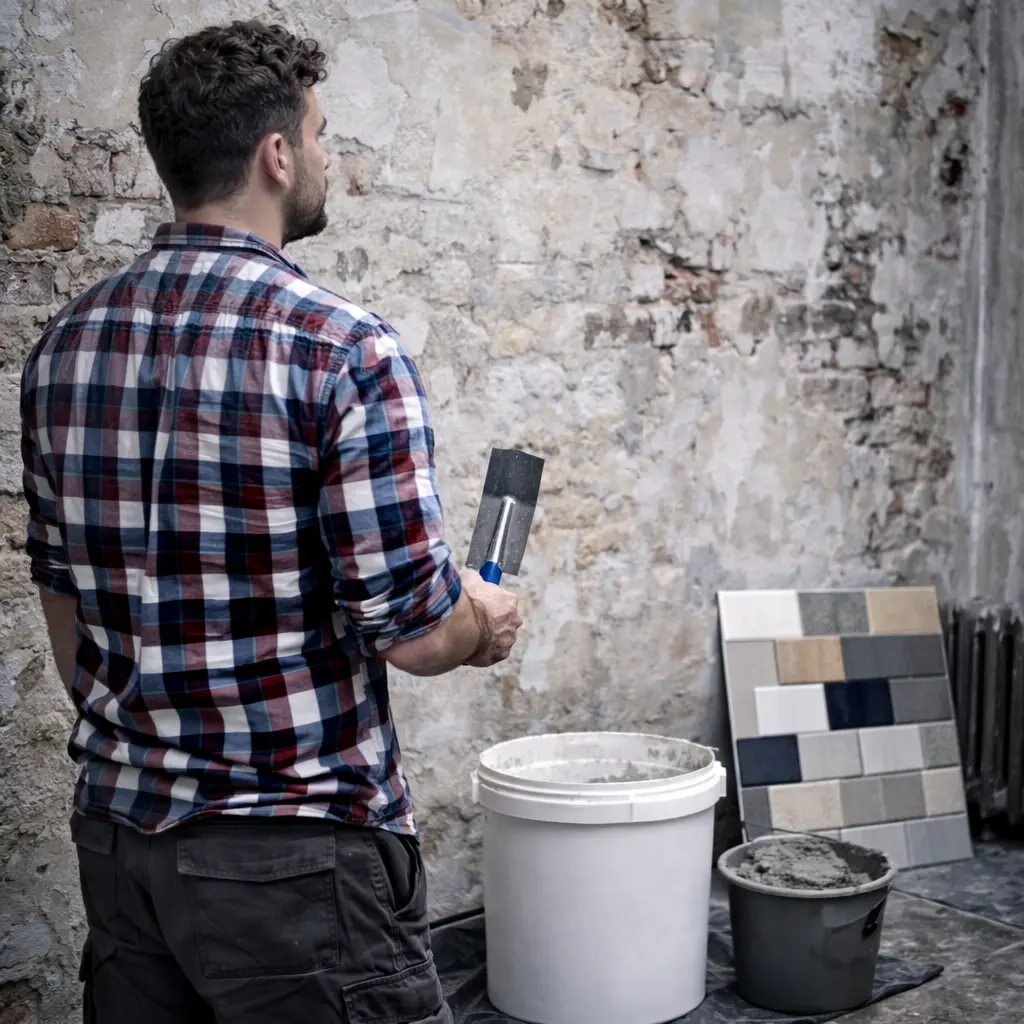
Tile adhesive comes with specific working and setting times, and understanding these is key to a smooth installation. Working time refers to how long the adhesive remains usable after being applied, while setting time indicates how long it takes to harden and secure the tiles.
Rushing the process or exceeding the working time can lead to weak bonding. Similarly, adjusting tiles after the adhesive has started to set may affect alignment. Following the manufacturer’s guidelines helps maintain consistency and ensures a professional finish.
Environmental Factors That Affect Tile Adhesive Performance
Temperature and humidity can significantly influence how tile adhesive behaves during application and curing. In colder conditions, adhesives may take longer to set, while high temperatures can reduce working time and cause premature drying.
Areas such as bathrooms and kitchens also introduce moisture and steam, which can affect adhesive performance if the wrong type is used. Being aware of these environmental factors helps in selecting the right product and applying it under suitable conditions.
Tile Adhesive vs Cement Mortar for Walls
Modern tile adhesives are far more suited to wall tiling than traditional mortar. Adhesive allows for thinner and more controlled application, which helps maintain consistent positioning on walls.
It also responds to slight settling, making tiles less likely to shift after setting. For most wall tiling projects, this approach delivers a more reliable finish.
Common Tile Adhesive Mistakes to Avoid
Even when the correct materials are selected, mistakes during application can still affect the final result. Using the wrong adhesive for the tile type, applying it unevenly across the wall, or not allowing sufficient setting time can all lead to issues such as poor bonding or misalignment.
Tiling over unstable or damp surfaces can also cause tiles to loosen over time. Avoiding these problems helps ensure a cleaner finish and reduces the likelihood of future repairs.
Tile Size and Weight Considerations
Tile size plays an important role when selecting adhesive. Larger or heavier tiles place more strain on the wall and require stronger bonding products.
Smaller tiles, such as mosaics, allow more flexibility and are often easier to install with standard adhesives. For larger formats, stronger or polymer-modified adhesives help maintain alignment and prevent slipping during installation.
Why Professional Wall Tiling Makes a Difference
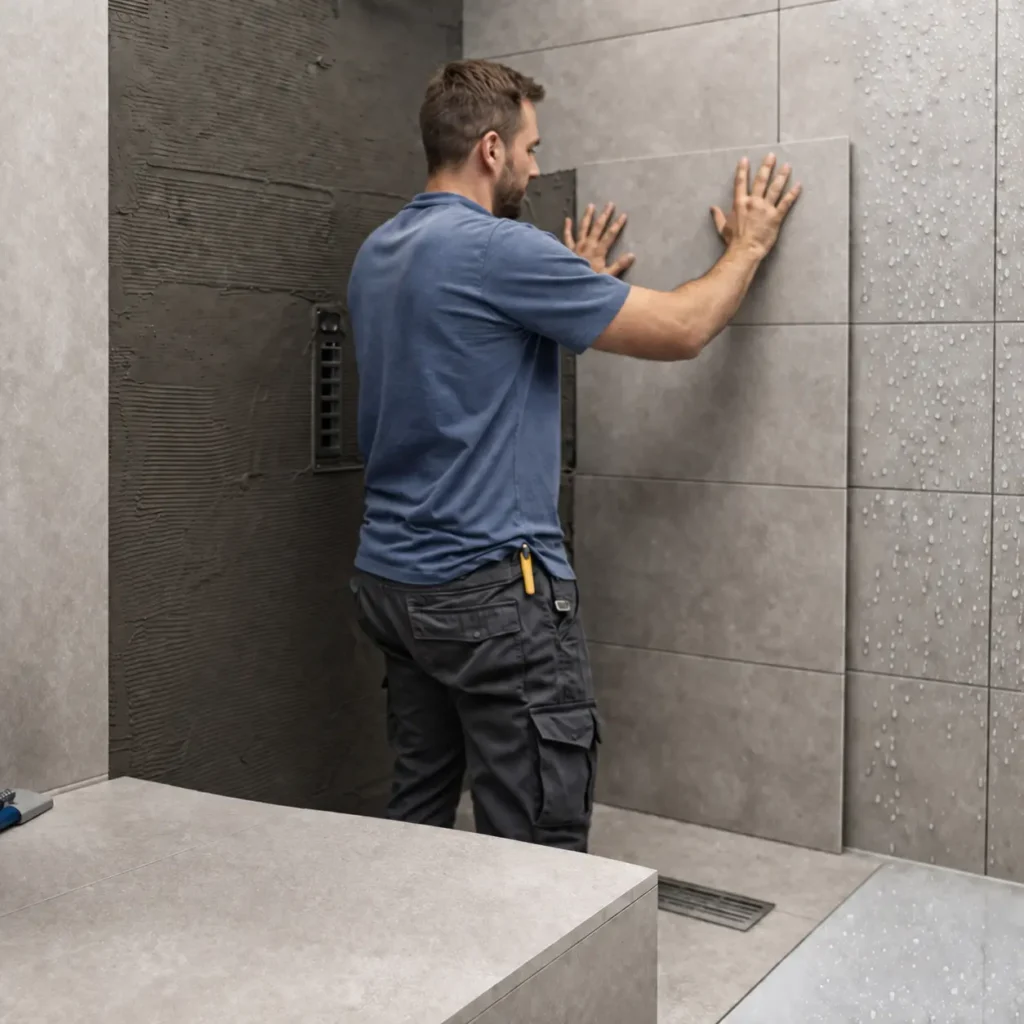
Wall tiling requires precision, as any misalignment is immediately visible. Proper preparation, accurate spacing, and careful placement all contribute to the final result.
You can expect a professional tiler in the UK to assess wall conditions, recommend suitable materials, and ensure precise alignment throughout the installation. They will also prepare surfaces properly and apply tiles with care to achieve a neat and reliable finish.
Abel Tiler approaches each project by assessing the surface, selecting appropriate materials, and carrying out installation with attention to detail. This ensures consistent results across different property types where surfaces may be uneven.
Maintenance and Longevity of Tiled Walls
Once tiles are properly installed, maintaining them correctly helps preserve both appearance and durability. Using appropriate cleaning products and avoiding excessive moisture build-up can extend the life of the adhesive bond.
Regular checks for loose tiles or grout deterioration can also prevent minor issues from becoming larger problems. A well-installed and maintained tiled wall can last for many years without requiring significant repairs.
Conclusion
Understanding tile adhesive types for wall tiling helps you make informed decisions and avoid common installation issues. Each wall surface presents different challenges, and choosing appropriately from the outset supports a stable and well finished result.
Taking the time to match the adhesive with the tile type, wall condition, and environment can make a noticeable difference in both durability and overall appearance. It also reduces the risk of problems such as tile movement, uneven alignment, or early failure, which can be costly to correct later.
A well-planned approach, supported by the right materials and proper application, ensures that your tiled walls remain secure and visually consistent over time. Whether you are working on a small decorative area or a full wall installation, attention to these details contributes to a cleaner finish and long-lasting performance.