Kitchen walls in London homes are exposed to more moisture than many people realise. Everyday activities such as cooking, washing up, and cleaning regularly introduce steam, splashes, and condensation into the space. While tiles provide a durable and attractive surface, they are not completely waterproof on their own. This often leads homeowners to ask whether waterproofing behind kitchen tiles is really necessary.
For those planning kitchen tiling or upgrading existing finishes, understanding waterproofing for tiled kitchen walls is essential. Areas around sinks, worktops, and splashbacks are particularly vulnerable to moisture penetration over time. Professional kitchen tiling carried out with the right preparation helps protect walls, maintain hygiene, and avoid costly repairs later.
Why Kitchens Are Prone to Moisture Damage
Kitchens are classed as wet areas due to regular exposure to water, steam, and cleaning products. In London properties, this is intensified by the city’s damp climate and limited natural ventilation in many older homes. Moisture can slowly work its way through grout lines and tile edges, especially where splashing is frequent.
Without a moisture barrier behind kitchen tiles, water seepage can affect plaster, plasterboard, and masonry. Over time, this leads to staining, mould growth, and surface deterioration that may not be visible until significant damage has occurred.
Do You Need Waterproofing Behind Kitchen Tiles
Many homeowners ask do you need waterproofing behind kitchen tiles or whether tiles alone are enough. In most modern kitchens, especially around sinks and cooking areas, waterproofing is strongly recommended. Tiles are water resistant, but grout joints and tile edges allow moisture to pass through gradually.
Waterproofing behind tiled kitchen walls creates a protective layer that prevents water reaching the structure beneath. This extra step helps ensure the tiling system performs properly over the long term rather than relying solely on surface finishes.
Areas Where Kitchen Tile Waterproofing Is Essential
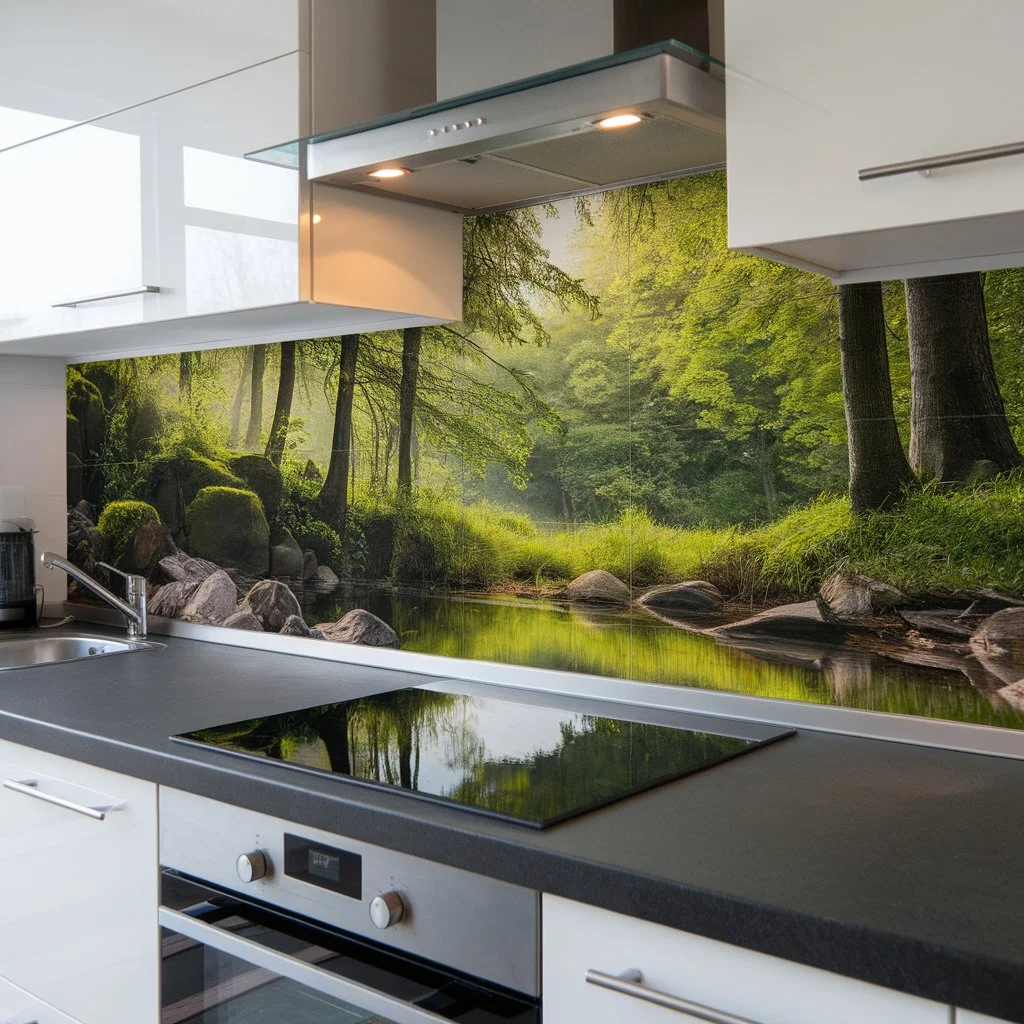
Not every kitchen wall faces the same level of exposure. Certain areas benefit significantly from waterproofing before tiling due to regular contact with water and steam, particularly where homeowners explore different kitchen tile splashback ideas to balance style with everyday practicality.
These include:
- Walls behind sinks and taps
- Kitchen splashback zones behind cookers and hobs
- Areas near dishwashers and washing machines
- Corners where worktops meet tiled walls
Waterproofing behind sink tiles and splashbacks provides targeted protection where it matters most, reducing the risk of hidden damage.
What Happens Without a Waterproof Membrane Behind Kitchen Tiles
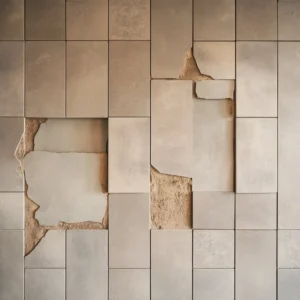
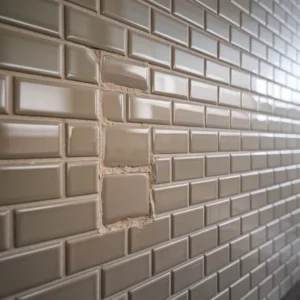
Skipping waterproofing can lead to gradual but serious problems. Water seepage behind kitchen tiles often goes unnoticed until tiles loosen or walls show signs of damp. In London homes, this is a common cause of tile failure and plaster damage.
Over time, moisture trapped behind tiles can weaken tile adhesive, cause grout deterioration, and encourage mould growth. Repairing these issues usually involves removing tiles and repairing wall surfaces, which is far more disruptive and expensive than installing waterproofing at the outset.
Waterproofing Kitchen Walls Before Tiling
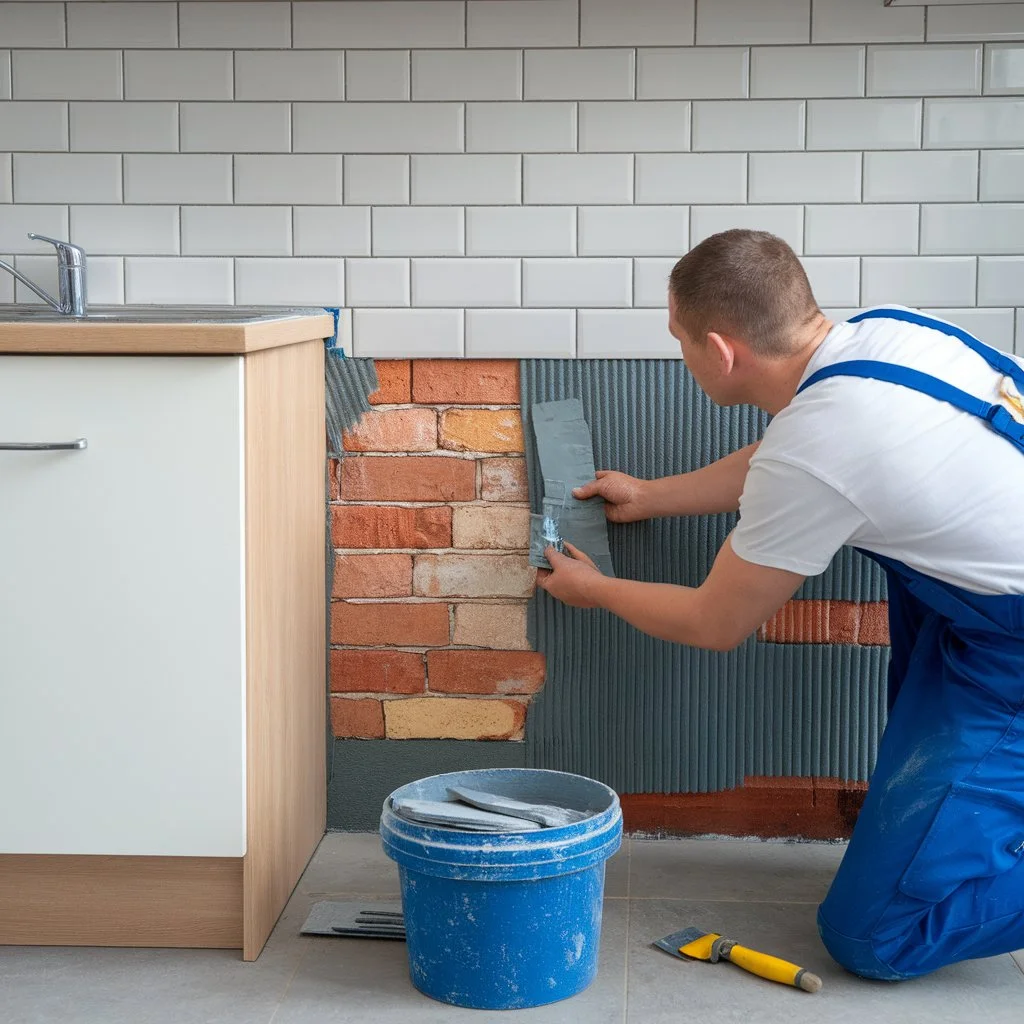
Waterproofing kitchen walls before tiling involves applying a suitable waterproof membrane or coating to the prepared surface. This creates a continuous barrier that prevents moisture from penetrating the wall structure.
Professional kitchen tile waterproofing uses products designed to work alongside tile adhesives and grout systems. Correct preparation ensures the membrane bonds properly and remains effective throughout the lifespan of the tiled surface, even with daily kitchen use.
Tile Adhesive and Waterproofing Layers Working Together
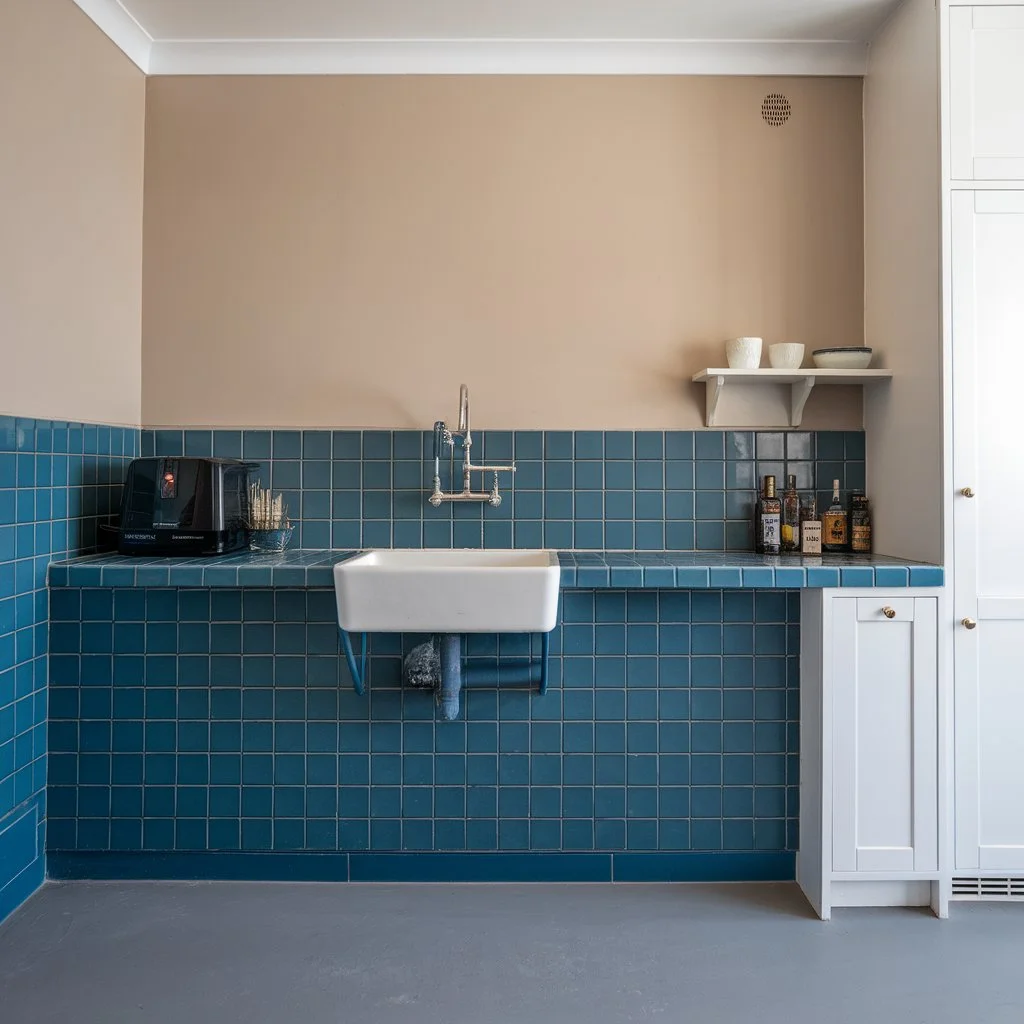
A common misconception is that waterproofing replaces the need for good adhesives or grout. In reality, waterproofing behind kitchen tiles works as part of a complete system. The waterproof membrane protects the wall, while tile adhesive secures the tiles and grout seals surface joints.
When these layers are installed correctly, they work together to provide durability, moisture protection, and a clean finish. This integrated approach is essential for meeting modern kitchen tiling waterproofing standards.
How Waterproofing Helps Prevent Long Term Kitchen Damage
Preventing water damage behind kitchen tiles protects both appearance and structure. Waterproofing reduces the risk of mould, damp patches, and wall deterioration, all of which can affect indoor air quality and hygiene.
For homeowners investing in kitchen renovations, waterproofing ensures the finished space remains easy to maintain and visually consistent. It also supports long term property value by protecting walls from moisture related deterioration common in London kitchens.
Choosing Professional Waterproofing for Kitchen Tiling
Applying waterproofing correctly requires experience, attention to detail, and knowledge of suitable products. Poorly applied membranes can be ineffective or interfere with tile adhesion, particularly in high use kitchen areas.
Professional kitchen tiling ensures waterproofing for tiled kitchen walls is applied evenly, sealed properly at joints and corners, and fully compatible with the chosen tiles. This level of care provides confidence that the kitchen will perform as expected for years to come.
Protect Your Kitchen with Expert Waterproofed Tiling
Waterproofing behind kitchen tiles is a smart investment for London homes where moisture exposure is unavoidable. From protecting walls to extending the life of tiled surfaces, proper waterproofing prevents hidden damage before it starts.
Abel Tiler provides professional kitchen tiling solutions across London, combining expert waterproofing techniques with precise installation and high quality materials. Contact Abel Tiler today to ensure your kitchen tiles are protected, durable, and built for long term performance.